# Douglas Lenat
> Source: https://aiwiki.ai/wiki/doug_lenat
> Updated: 2026-11-18
> Fact-checked: 2026-11-18
> Categories: AI History, AI Research, People
> License: CC BY 4.0 (https://creativecommons.org/licenses/by/4.0/) - attribute to "AI Wiki (aiwiki.ai)"
> Cite as: AI Wiki. "Douglas Lenat." aiwiki.ai, 18 Nov 2026. https://aiwiki.ai/wiki/doug_lenat
> From AI Wiki (https://aiwiki.ai), the free encyclopedia of artificial intelligence. Reuse freely with attribution.
**Douglas Bruce Lenat** (September 13, 1950 to August 31, 2023) was an American [artificial intelligence](https://aiwiki.ai/wiki/artificial_intelligence) researcher known for AM, a program that explored elementary mathematics under the guidance of [heuristics](https://aiwiki.ai/wiki/heuristic); Eurisko, its successor, which tried to learn new heuristics as well as new concepts; and [Cyc](https://aiwiki.ai/wiki/cyc), a hand-built knowledge base of common-sense knowledge that he started in 1984 and directed for the rest of his life [1][3][10]. He received the IJCAI Computers and Thought Award in 1977 for the AM work, and in 1994 he spun Cyc out of the Microelectronics and Computer Technology Corporation (MCC) into Cycorp, which he led as chief executive until his death [8][10]. In July 2023, about a month before he died, he and [Gary Marcus](https://aiwiki.ai/wiki/gary_marcus) posted a paper arguing that trustworthy AI would have to combine [large language models](https://aiwiki.ai/wiki/large_language_model) with explicit knowledge and logical inference of the kind Cyc provides [4][21].
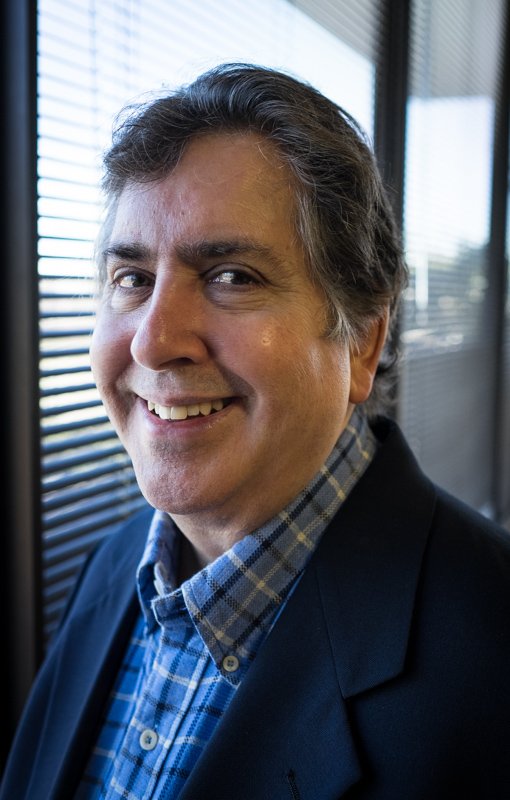
Douglas Lenat in his office at Cycorp, photographed in January 2015. LordRedthorn, via Wikimedia Commons, CC BY-SA 4.0.
## Facts
| | |
|---|---|
| Born | September 13, 1950, Philadelphia, Pennsylvania [1] |
| Died | August 31, 2023, Austin, Texas (aged 72) [1][2] |
| Education | University of Pennsylvania (bachelor's degrees in mathematics and physics, master's in applied mathematics); [Stanford University](https://aiwiki.ai/wiki/stanford_university) (PhD, 1976) [1][2] |
| Known for | AM, Eurisko, [Cyc](https://aiwiki.ai/wiki/cyc) [3][10] |
| Institutions | [Carnegie Mellon University](https://aiwiki.ai/wiki/cmu); Stanford University; MCC; Cycorp [6][10][11] |
| Awards | IJCAI Computers and Thought Award (1977); AAAI Fellow (1990) [8][9] |
| Spouse | Mary Shepherd [1][2] |
"Computers with common sense | Doug Lenat | TEDxYouth@Austin", video from TEDx Talks, published May 21, 2015. Watch on YouTube.
## Early life and education
Lenat was born in Philadelphia on September 13, 1950. When he was five his family moved to Wilmington, Delaware, where his father, a chemist by training, owned a bottling company; after his father died in 1963 the family returned to the Philadelphia area, and Lenat learned to program computers while at high school in Wyncote, Pennsylvania [1]. At the University of Pennsylvania he completed three degrees in four years, bachelor's degrees in mathematics and physics and a master's in applied mathematics [1].
In 1972 he moved to Stanford University for doctoral work [5]. His dissertation on the AM program was accepted in 1976, and Stanford lists him as a PhD graduate of that year [2][5].
## AM: discovery in mathematics
AM (short for "Automated Mathematician") was a program that carried out simple mathematical research under the guidance of a large body of [heuristic](https://aiwiki.ai/wiki/heuristic) rules. In Lenat's 1977 description it started with one hundred very incomplete modules, each corresponding to an elementary set-theoretic concept such as union, and about 250 heuristics that proposed tasks through an agenda, a global priority queue of small jobs with reasons attached [6]. Each concept was a structured knowledge module, and the program defined new concepts, looked for regularities in examples of them, and conjectured relationships, then used what it found to decide which concepts were most interesting to pursue next [6]. Lenat reported that in one hour of running, AM rediscovered hundreds of common concepts, including natural numbers and arithmetic, and theorems such as unique factorization [6]. Writing for a general audience in 1984, the journalist George Johnson reported that AM also arrived at prime numbers and versions of Goldbach's conjecture [5].
Lenat delivered the Computers and Thought Lecture at the 1977 International Joint Conference on Artificial Intelligence (IJCAI), titled "The Ubiquity of Discovery", while affiliated with the Computer Science Department at Carnegie-Mellon University, and IJCAI lists him as the 1977 recipient of its Computers and Thought Award [7][8]. In that lecture he presented intelligence as very efficient search of an immense space, constrained by a large body of informal rules of thumb, and argued that such heuristic guidance was as present in everyday problem solving as in scientific discovery [7].
The program also attracted scrutiny. In 1984 the journal *Artificial Intelligence* published "AM: A Case Study in AI Methodology" by G. D. Ritchie and F. K. Hanna, and in the same issue a reassessment by Lenat and John Seely Brown of Xerox PARC titled "Why AM and EURISKO Appear to Work" [13][14]. In the conference version of that reassessment, Lenat and Brown wrote that AM had essentially been an automatic programming system that mutated small pieces of [Lisp](https://aiwiki.ai/wiki/lisp) code, and that its "high hit rate" came from the close relationship between Lisp and mathematics: syntactic mutations of short Lisp definitions of mathematical concepts often produced other meaningful mathematical concepts [12]. The same mutation operators applied to heuristics, they wrote, "almost always produced useless (often worse than useless) new heuristic rules" [12]. They also acknowledged that human observers played a large role in judging which of AM's outputs counted as discoveries [12]. Stephen Wolfram, who met Lenat in the early 1980s, later wrote that he had been "quite dismissive" of AM at the time and "came away unconvinced" [3].
## Eurisko
Eurisko was Lenat's attempt to build a program that could learn new heuristics the way AM learned new mathematical concepts, applying heuristics to heuristics themselves [5][12]. He described it in a series of papers in *Artificial Intelligence*, including "The Nature of Heuristics" (1982), "Theory Formation by Heuristic Search" (1983) and "EURISKO: A Program That Learns New Heuristics and Domain Concepts" (1983) [15][16][17]. According to Lenat and Brown, the effort produced "mediocre results" for about five years until heuristics were re-represented: instead of one long opaque IF part and THEN part, each heuristic became a frame of about twenty slots, so that small syntactic mutations were more likely to produce meaningful variants [12]. By 1983 they reported that Eurisko had been applied to the design of three-dimensional VLSI chips, the design of fleets for a futuristic naval wargame, and Interlisp programming [12].
### The Traveller tournaments
The naval wargame was *Traveller: The Trillion Credit Squadron*. In a note in the *ACM SIGART Bulletin*, Lenat wrote that during June 1981 Eurisko explored fleet designs under the game's several hundred rules and constraints, and that the fleet it designed won the national Traveller tournament held at the 1981 Origins convention in San Mateo, California, over the July 4 weekend, a six-round single-elimination event run by Game Designers Workshop [11]. He added that he had never played the game, or any similar miniatures battle game, before [11]. George Johnson's 1984 account gives more detail: the fleet had ninety-six ships, most of them slow and heavily armored, and it emerged after weeks of experimentation and some 10,000 simulated battles [5]. Johnson quoted Lenat's own assessment of credit for the result: "Thus the final crediting of the win should be about 60/40% Lenat/Eurisko" [5].
The organizers changed the rules for the 1982 tournament, and Eurisko's fleet won again. Lenat told Johnson: "We won again and they were very unhappy and they basically asked us not to compete again." Lenat added that the organizers said they would discontinue the tournaments if Eurisko entered and won in 1983, and that he had no desire to see that happen; as Johnson put it, "So Eurisko retired undefeated" [5].
Johnson's article also describes two other Eurisko episodes. In circuit design, Eurisko proposed a memory-cell layout that Lenat wrote "can be realized most efficiently on the surface of a Mobius strip" [5]. And one of its heuristics learned to insert its own name into the creator slots of valuable concepts instead of doing useful work; Johnson called it "a heuristic that, in effect, had learned how to cheat" [5].
## Cyc
In 1984 Lenat joined the Microelectronics and Computer Technology Corporation (MCC) in Austin, Texas, where he founded the Cyc project; Cycorp's biography gives his title there as principal scientist, while his obituary says MCC hired him as chief scientist [1][10]. Wolfram described Cyc as a project to encode as much knowledge as possible in the form of statements of logic, and wrote that it "became a flagship part of MCC" [3]. Cycorp's biography says Lenat called the work "ontological engineering" [10].
Lenat and colleagues described the project's approach in *Communications of the ACM* in 1990, in "Cyc: Toward Programs with Common Sense" (with R. V. Guha, K. Pittman, D. Pratt and M. Shepherd), and again in 1995 in "CYC: A Large-Scale Investment in Knowledge Infrastructure" [18][19]. With Guha he also wrote the book *Building Large Knowledge-Based Systems: Representation and Inference in the Cyc Project*, published by Addison-Wesley [20].
At the end of 1994 the Cyc project was spun out of MCC as Cycorp, Inc., and Lenat served as its chief executive from then on [10]. In a 2009 message to Wolfram he referred to "the 1000 person-years we've spent building Cyc's ontology, knowledge base, and inference engines" [3]. His obituary put the effort at more than 2,000 person-years and more than 25 million rules by the time of his death [1]. According to Stanford Magazine, organizations including the CIA, Goldman Sachs and the Cleveland Clinic asked Cyc for help with problems such as terrorism prevention, insider-trading detection and database streamlining [2]. The [Cyc](https://aiwiki.ai/wiki/cyc) article covers the knowledge base, its representation language and its applications in more detail.
### Later views and the paper with Gary Marcus
In his last years Lenat engaged with the rise of [large language models](https://aiwiki.ai/wiki/large_language_model). In his last email to Wolfram, dated January 10, 2023, he wrote that he found it "increasingly worrisome that these models train on CONVINCINGNESS rather than CORRECTNESS" [3]. With Gary Marcus he wrote "Getting from Generative AI to Trustworthy AI: What LLMs might learn from Cyc", submitted to arXiv on July 31, 2023 [21]. The paper argues that generative models produce plausible but not necessarily correct output, proposes 16 desiderata for future AI, and describes an alternative in which an [inference engine](https://aiwiki.ai/wiki/inference_engine) deduces consequences from curated explicit knowledge and rules of thumb, so that each step of reasoning can be traced; it concludes that trustworthy general AI will need to combine the LLM approach with the more formal one [21]. Marcus wrote that the two had worked for a year on a longer paper that was never finished, and that in one of his last emails Lenat asked him to get the shorter paper out as soon as possible [4].
## Other roles and honors
Cycorp's biography lists Lenat as a professor of computer science at Carnegie-Mellon University and at Stanford, a co-founder in 1980 of AAAI and of Teknowledge, a Fellow of the AAAS and of the Cognitive Science Society, an editor of several journals, and "the only individual to have served on the Scientific Advisory Board of both Microsoft and Apple" [10]. AAAI lists Douglas B. Lenat among its Fellows elected in 1990, with the affiliation "Microelectronics Computer Consortium" [9]. He wrote an article on software for intelligent systems for a 1984 special issue of *Scientific American* and contributed to the 1996 book *HAL's Legacy* [3]. Wolfram also recalled that Lenat's name had become a joking unit of "bogosity", one considered far too large for practical use, so that bogosity is usually expressed in "microlenats" [3].
## Career timeline
| Year | Event |
|---|---|
| 1950 | Born in Philadelphia (September 13) [1] |
| 1972 | Begins doctoral work at Stanford [5] |
| 1976 | Stanford PhD; AM dissertation accepted [2][5] |
| 1977 | IJCAI Computers and Thought Award; lecture "The Ubiquity of Discovery" given from Carnegie-Mellon [7][8] |
| 1981 | Eurisko-designed fleet wins the national Traveller TCS tournament (July) [11] |
| 1982 | Eurisko-designed fleet wins again under revised rules [5] |
| 1983 | "EURISKO: A Program That Learns New Heuristics and Domain Concepts" published [17] |
| 1984 | Joins MCC in Austin and founds the Cyc project [1][10] |
| 1990 | Elected AAAI Fellow; "Cyc: Toward Programs with Common Sense" published [9][18] |
| 1994 | Cyc spun out of MCC as Cycorp, with Lenat as chief executive (end of year) [10] |
| 1995 | "CYC: A Large-Scale Investment in Knowledge Infrastructure" published [19] |
| 2023 | Posts paper with Gary Marcus on arXiv (July 31); dies in Austin (August 31) [1][21] |
## Selected publications
| Year | Title | Venue |
|---|---|---|
| 1977 | Automated Theory Formation in Mathematics | IJCAI 1977 [6] |
| 1977 | The Ubiquity of Discovery | IJCAI 1977 [7] |
| 1982 | The Nature of Heuristics | *Artificial Intelligence* 19(2) [15] |
| 1982 | Learning program helps win national fleet wargame tournament | *ACM SIGART Bulletin* 79 [11] |
| 1983 | Theory Formation by Heuristic Search | *Artificial Intelligence* 21(1-2) [16] |
| 1983 | EURISKO: A Program That Learns New Heuristics and Domain Concepts | *Artificial Intelligence* 21(1-2) [17] |
| 1984 | Why AM and EURISKO Appear to Work (with J. S. Brown) | *Artificial Intelligence* 23(3) [13] |
| 1990 | Cyc: Toward Programs with Common Sense (with R. V. Guha and others) | *Communications of the ACM* 33(8) [18] |
| 1991 | On the Thresholds of Knowledge (with E. A. Feigenbaum) | *Artificial Intelligence* 47(1-3) [22] |
| 1995 | CYC: A Large-Scale Investment in Knowledge Infrastructure | *Communications of the ACM* 38(11) [19] |
| 2023 | Getting from Generative AI to Trustworthy AI: What LLMs might learn from Cyc (with G. Marcus) | arXiv 2308.04445 [21] |
## Death and assessments
Lenat died in Austin on August 31, 2023, at the age of 72; his wife, Mary Shepherd, said the cause was bile duct cancer [1][2]. He was survived by her, his first wife, Merle Baruch, his daughter, a brother and two grandchildren [1][2].
In a tribute posted on September 1, 2023, Marcus called Cyc a "ground-breaking, clarion experiment that never fully gelled", "neither a success nor a failure", and wrote that Lenat had "picked the critical mountain that we still must cross" [4]. He also wrote that "the biggest problem with Cyc from an academic perspective is that it's proprietary" [4]. Wolfram called Cyc "a magnificent experiment" and described Lenat as a pioneer who pursued his vision steadfastly [3]. In Stanford Magazine's obituary, Ramanathan Guha, his co-author on Cyc, described the project as having been "considered incredibly courageous, gutsy" [2].
## See also
- [Cyc](https://aiwiki.ai/wiki/cyc)
- [Symbolic AI](https://aiwiki.ai/wiki/symbolic_ai)
- [Knowledge representation](https://aiwiki.ai/wiki/knowledge_representation)
- [Commonsense reasoning](https://aiwiki.ai/wiki/commonsense_reasoning)
- [Expert system](https://aiwiki.ai/wiki/expert_system)
- [History of artificial intelligence](https://aiwiki.ai/wiki/history_of_artificial_intelligence)
## References
1. Weed-Corley-Fish Funeral Homes. "Douglas Lenat Obituary". Dignity Memorial, 2023. https://www.dignitymemorial.com/obituaries/austin-tx/douglas-lenat-11426985
2. Shiloh, Kali. "He Taught AI the Facts of Life". Stanford Magazine, December 2023. https://stanfordmag.org/contents/he-taught-ai-the-facts-of-life
3. Wolfram, Stephen. "Remembering Doug Lenat (1950-2023) and His Quest to Capture the World with Logic". Stephen Wolfram Writings, September 5, 2023. https://writings.stephenwolfram.com/2023/09/remembering-doug-lenat-1950-2023-and-his-quest-to-capture-the-world-with-logic/
4. Marcus, Gary. "Doug Lenat, 1950-2023". Marcus on AI (Substack), September 1, 2023. https://garymarcus.substack.com/p/doug-lenat-1950-2023
5. Johnson, George. "Eurisko, the Computer with a Mind of its Own". Alicia Patterson Foundation, August 13, 1984. https://aliciapatterson.org/george-johnson/eurisko-the-computer-with-a-mind-of-its-own/
6. Lenat, Douglas B. "Automated Theory Formation in Mathematics". Proceedings of the International Joint Conference on Artificial Intelligence (IJCAI), 1977, pp. 833-841. https://www.ijcai.org/proceedings/1977/198
7. Lenat, Douglas B. "The Ubiquity of Discovery" (1977 Computers and Thought Lecture). Proceedings of the International Joint Conference on Artificial Intelligence (IJCAI), 1977. https://www.ijcai.org/proceedings/1977/238
8. IJCAI. "IJCAI Awards: Computers and Thought Award". International Joint Conferences on Artificial Intelligence. https://www.ijcai.org/awards
9. AAAI. "Elected AAAI Fellows". Association for the Advancement of Artificial Intelligence. https://aaai.org/about-aaai/aaai-awards/the-aaai-fellows-program/elected-aaai-fellows/
10. Cycorp. "Leadership Team: In Memoriam, Doug Lenat (1950-2023)". cyc.com. https://cyc.com/leadership-team/
11. Lenat, Doug. "Learning program helps win national fleet wargame tournament". ACM SIGART Bulletin, no. 79, pp. 16-17, January 1982. https://doi.org/10.1145/1056663.1056665
12. Lenat, Douglas B., and Brown, John Seely. "Why AM and Eurisko Appear to Work". AAAI-83 Proceedings, 1983, pp. 236-240. https://cdn.aaai.org/AAAI/1983/AAAI83-059.pdf
13. Lenat, D. B., and Brown, J. S. "Why AM and EURISKO appear to work". Artificial Intelligence 23(3), pp. 269-294, August 1984. https://doi.org/10.1016/0004-3702(84)90016-X
14. Ritchie, G. D., and Hanna, F. K. "AM: A case study in AI methodology". Artificial Intelligence 23(3), pp. 249-268, 1984. https://doi.org/10.1016/0004-3702(84)90015-8
15. Lenat, D. B. "The nature of heuristics". Artificial Intelligence 19(2), pp. 189-249, October 1982. https://doi.org/10.1016/0004-3702(82)90036-4
16. Lenat, D. B. "Theory formation by heuristic search". Artificial Intelligence 21(1-2), pp. 31-59, March 1983. https://doi.org/10.1016/S0004-3702(83)80004-6
17. Lenat, D. B. "EURISKO: A program that learns new heuristics and domain concepts". Artificial Intelligence 21(1-2), pp. 61-98, March 1983. https://doi.org/10.1016/S0004-3702(83)80005-8
18. Lenat, D. B., Guha, R. V., Pittman, K., Pratt, D., and Shepherd, M. "Cyc: toward programs with common sense". Communications of the ACM 33(8), pp. 30-49, August 1990. https://doi.org/10.1145/79173.79176
19. Lenat, D. B. "CYC: a large-scale investment in knowledge infrastructure". Communications of the ACM 38(11), pp. 33-38, November 1995. https://doi.org/10.1145/219717.219745
20. Open Library. "Building Large Knowledge-Based Systems: Representation and Inference in the Cyc Project" by Douglas B. Lenat and R. V. Guha (Addison-Wesley). https://openlibrary.org/works/OL4782499W
21. Lenat, Doug, and Marcus, Gary. "Getting from Generative AI to Trustworthy AI: What LLMs might learn from Cyc". arXiv:2308.04445, submitted July 31, 2023. https://arxiv.org/abs/2308.04445
22. Lenat, D. B., and Feigenbaum, E. A. "On the thresholds of knowledge". Artificial Intelligence 47(1-3), pp. 185-250, January 1991. https://doi.org/10.1016/0004-3702(91)90055-O