# Michael Kratsios
> Source: https://aiwiki.ai/wiki/michael_kratsios
> Updated: 2026-11-18
> Fact-checked: 2026-11-18
> Categories: AI Policy & Regulation, People
> License: CC BY 4.0 (https://creativecommons.org/licenses/by/4.0/) - attribute to "AI Wiki (aiwiki.ai)"
> Cite as: AI Wiki. "Michael Kratsios." aiwiki.ai, 18 Nov 2026. https://aiwiki.ai/wiki/michael_kratsios
> From AI Wiki (https://aiwiki.ai), the free encyclopedia of artificial intelligence. Reuse freely with attribution.
**Michael Kratsios** (Michael J. Kratsios) is an American technology policy official who was confirmed by the United States Senate in March 2025 as the 13th director of the White House Office of Science and Technology Policy (OSTP), a post he holds together with the title of Assistant to the President for Science and Technology in the second administration of [Donald Trump](https://aiwiki.ai/wiki/donald_trump).[5][6] In Trump's first term he was the fourth Chief Technology Officer of the United States, confirmed in August 2019, and from July 2020 he was also acting Under Secretary of Defense for Research and Engineering.[1][2] Between the two administrations he was a managing director at [Scale AI](https://aiwiki.ai/wiki/scale_ai).[4][13]
Much of his work in the second administration concerns [artificial intelligence](https://aiwiki.ai/wiki/artificial_intelligence) policy. He co-signed "Winning the Race: America's [AI Action Plan](https://aiwiki.ai/wiki/ai_action_plan)" in July 2025, provides general leadership of the [Genesis Mission](https://aiwiki.ai/wiki/genesis_mission) under the executive order that created it, and in April 2026 signed a memorandum to federal agencies on what it called adversarial distillation of American AI models.[14][18][21] He is not a scientist by training; STAT News noted in 2025 that his nomination broke with the custom of presidents choosing respected scientists or engineers as science adviser.[7]
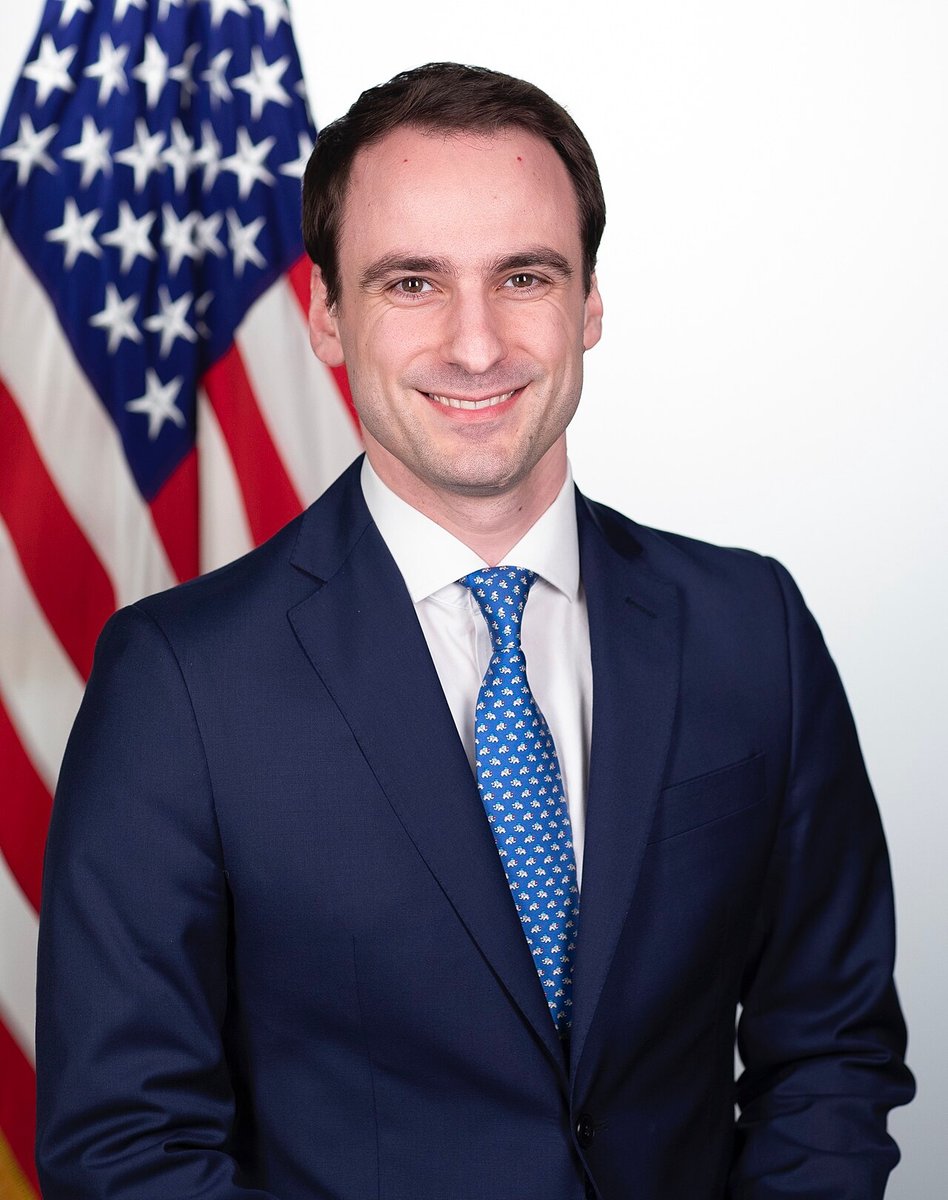
Official White House photograph of Michael Kratsios, taken on 13 February 2019. Official Photo by the White House, via Wikimedia Commons, Public domain.
## Early life and education
Kratsios graduated from Princeton University in 2008. He concentrated in politics, earned a certificate in Hellenic studies, and was editor-in-chief and president of the student publication Business Today.[2] He was later a visiting scholar at [Tsinghua University](https://aiwiki.ai/wiki/tsinghua_university) in Beijing.[1]
"Conversation with White House OSTP Director Michael Kratsios | Global Conference 2026", video from Milken Institute, published July 18, 2026. Watch on YouTube.
## Finance career and work for Peter Thiel
Shortly after leaving Princeton, Kratsios went to work for [Peter Thiel](https://aiwiki.ai/wiki/peter_thiel).[2] His earlier roles also included analyst positions at Lyford Group International and Barclays Capital.[3] He was chief financial officer and chief compliance officer of Clarium Capital Management, a Thiel-founded investment firm, and later a principal and chief of staff at Thiel Capital.[2][3] After the 2016 presidential election, Thiel helped him join Trump's transition team.[2]
## First Trump administration (2017-2021)
### Deputy chief technology officer
In March 2017, Nextgov reported that the White House had selected Kratsios, then at Thiel Capital, as deputy chief technology officer in the Office of Science and Technology Policy.[3] He served as deputy U.S. CTO until his confirmation as CTO.[2] On February 11, 2019, the day Trump signed the executive order launching the American AI Initiative, Kratsios published an op-ed in Wired arguing that the initiative would ensure AI "continues to be fueled by American ingenuity, reflects American values, and is applied for the benefit of the American people."[8] The OSTP summary of the initiative listed five areas of emphasis, beginning with federal AI research and development, access to federal data, models and computing resources, and AI governance standards.[9]
### Chief Technology Officer of the United States
Trump nominated Kratsios to be the U.S. Chief Technology Officer, and on August 1, 2019 the Senate confirmed him unanimously as the fourth person to hold the job.[1] The confirmation was by voice vote, with no recorded tally.[4] His White House biography credited him with initiatives on artificial intelligence, [quantum computing](https://aiwiki.ai/wiki/quantum_computing), 5G and broadband, autonomous vehicles, commercial drones, STEM education and advanced manufacturing.[1] He led the U.S. delegation at G7 technology ministerials in Italy, Canada and France, G20 digital economy ministerials in Argentina and Japan, and an OECD Ministerial Council Meeting in Paris.[1]
Several of his public statements in the first term concerned AI policy:
| Date | Venue | Subject |
| --- | --- | --- |
| 2019-02-11 | Wired op-ed | Launch of the American AI Initiative[8] |
| 2020-01-07 | Bloomberg op-ed | Proposed regulatory principles for private-sector AI development[10] |
| 2020-05-27 | Wall Street Journal op-ed | U.S. participation in the G7's Global Partnership on Artificial Intelligence[11] |
| 2020-08-26 | White House article with Chris Liddell | More than $1 billion in awards for 12 AI and quantum research institutes[12] |
In the January 2020 op-ed he described the White House proposal as "a first-of-its-kind set of regulatory principles to govern AI development in the private sector," presented as part of the American AI Initiative, and argued that the U.S. did not have to choose between advancing the technology and its values.[10] In May 2020 he wrote that the Chinese Communist Party was reportedly using AI to punish critics of its pandemic response, and announced that G7 technology ministers would launch the Global Partnership on Artificial Intelligence (GPAI) with other democratic countries.[11] The Daily Princetonian credited him with leading the U.S. entry into GPAI, which it described as a coalition to counter China's influence over AI.[2] He was also a leader in releasing Executive Order 13960 of 2020, which set guardrails for the federal government's own use of AI; [Joe Biden](https://aiwiki.ai/wiki/joe_biden)'s [Executive Order 14110](https://aiwiki.ai/wiki/executive_order_14110) later built on it.[4]
The August 2020 awards created seven NSF-led AI Research Institutes, funded with $140 million over five years, and five Department of Energy quantum information science centers at national laboratories, with up to $625 million over five years.[12]
### Acting Under Secretary of Defense
In July 2020 Kratsios took on a second post as acting Under Secretary of Defense for Research and Engineering at the Department of Defense, while remaining CTO.[2]
## Scale AI
Out of government, Kratsios was a managing director of Scale AI, a company focused on AI training data.[4][13] On October 18, 2023 he testified at a joint subcommittee hearing of the House Science, Space and Technology Committee on managing AI risk, where he urged lawmakers to rely on federal agencies applying existing law, to "pursue a use case and sector-specific, risk-based approach rooted in high quality testing and evaluation," and to create and fund the National AI Research Resource.[13][29] He also co-wrote op-eds on security risks from Chinese technology, one in Foreign Policy in November 2022 on state and local governments buying from Chinese companies the federal government had designated as national security threats, and one in Newsweek in September 2023 on Chinese-made cranes at U.S. ports.[4]
## Director of the Office of Science and Technology Policy (2025-present)
### Nomination and confirmation
Trump announced in December 2024 that he would nominate Kratsios to lead OSTP, saying the science and technology officials he named would work with AI and crypto adviser [David Sacks](https://aiwiki.ai/wiki/david_sacks); Lynne Parker was named in the same announcement as executive director of the President's Council of Advisors on Science and Technology.[4] The nomination reached the Senate on January 22, 2025.[4] STAT News described him in February 2025 as a 38-year-old technologist with venture capital experience rather than a researcher, and reported that former colleagues called him a thoughtful and tactful leader; in his first stint his focus had been AI and quantum computing, avoiding over-regulation and keeping U.S. technology ahead of China.[7]
At his confirmation hearing before the Senate Commerce, Science and Transportation Committee in February 2025, Democrats questioned him about mass firings in the federal workforce. The committee advanced the nomination by 24 to 4, and the full Senate confirmed him on March 25, 2025 by 74 to 25.[5] The White House announced him as the 13th OSTP director and published statements of support from industry groups, including the Consumer Technology Association, which said it had led a coalition backing the nomination.[6]
### America's AI Action Plan
Executive Order 14179 of January 23, 2025, "Removing Barriers to American Leadership in Artificial Intelligence," directed three officials, the Assistant to the President for Science and Technology, the Special Advisor for AI and Crypto, and the Assistant to the President for National Security Affairs, to develop and submit an AI action plan within 180 days.[25] OSTP requested public input for the plan in February 2025.[5] The finished document, "Winning the Race: America's AI Action Plan," carries the signatures of Kratsios, Sacks and Marco Rubio.[14] The White House released it on July 23, 2025, describing more than 90 federal policy actions under three pillars (accelerating innovation, building American [AI infrastructure](https://aiwiki.ai/wiki/ai_infrastructure), and leading in international diplomacy and security), and quoted Kratsios as saying the plan "charts a decisive course to cement U.S. dominance in artificial intelligence."[15]
At a Center for Strategic and International Studies event on July 30, 2025, Kratsios traced the plan to Trump's 2019 AI executive order and said OSTP's request for information had drawn about 10,000 responses. According to the CSIS transcript, he argued that other countries needed a packaged American alternative for AI exports and that the highest-end chips should be kept out of China through better enforcement of [export controls](https://aiwiki.ai/wiki/export_controls). He contrasted what he described as a European, precautionary-principle-driven model of a single horizontal AI regulation, the approach of the [EU AI Act](https://aiwiki.ai/wiki/eu_ai_act), with a U.S. approach of use case and sector-specific, risk-based rules written by existing regulators such as the Food and Drug Administration. He said the Center for AI Standards and Innovation, formerly the [AI Safety Institute](https://aiwiki.ai/wiki/ai_safety_institute), would concentrate on measurement science and standards, and that preempting state AI laws would require Congress.[16]
### Science policy and the Genesis Mission
Executive Order 14303, "Restoring Gold Standard Science," signed on May 23, 2025, directed the OSTP director to issue guidance to agencies on putting its standards for federal scientific work into practice within 30 days.[17]
Executive Order 14363 of November 24, 2025 launched the Genesis Mission, a national effort to apply AI to scientific discovery. It states that the Assistant to the President for Science and Technology "shall provide general leadership of the Mission," coordinating participating agencies through the National Science and Technology Council, while the Secretary of Energy implements it within the Department of Energy. The Energy Secretary sends Kratsios's office a list of science and technology challenges for him to review, and the Energy Secretary's annual report on the Mission goes to the President through him and the Director of the Office of Management and Budget.[18]
### Federal preemption of state AI laws
Executive Order 14365, "Ensuring a National Policy Framework for Artificial Intelligence," signed on December 11, 2025, directed the Special Advisor for AI and Crypto and the Assistant to the President for Science and Technology to jointly prepare a legislative recommendation for a uniform federal AI framework that would preempt conflicting state AI laws. It also listed the Assistant to the President for Science and Technology among the officials to be consulted by the Justice Department's AI Litigation Task Force and by the Commerce Department in its evaluation of state laws.[19] The White House released the resulting framework on March 20, 2026. Roll Call described it as a four-page document in seven categories that sought broad [preemption of state AI laws](https://aiwiki.ai/wiki/ai_federal_preemption), with states keeping authority over generally applicable laws, data center zoning and their own procurement.[20] AI Wiki covers the order and the framework in [Federal AI preemption executive order (2025)](https://aiwiki.ai/wiki/national_ai_policy_framework_eo) and [National Policy Framework for Artificial Intelligence](https://aiwiki.ai/wiki/white_house_national_ai_policy_framework).
### Distillation of American AI models
On April 23, 2026, Kratsios signed NSTM-4, a memorandum to the heads of executive departments and agencies titled "Adversarial Distillation of American AI Models." It states that the government has information indicating that "foreign entities, principally based in China, are engaged in deliberate, industrial-scale campaigns to distill U.S. frontier AI systems," using tens of thousands of proxy accounts and jailbreaking techniques.[21] The memo accepts [knowledge distillation](https://aiwiki.ai/wiki/knowledge_distillation) used legitimately to build smaller models as part of a competitive ecosystem, and commits the administration to share information with U.S. AI companies, help the private sector coordinate, develop best practices with industry, and "explore a range of measures to hold foreign actors accountable."[21] It names no companies.[22] AI Wiki's [distillation attack](https://aiwiki.ai/wiki/distillation_attack) article covers the wider dispute.
On July 22, 2026, in a post on X, Kratsios accused China-based [Moonshot AI](https://aiwiki.ai/wiki/moonshot_ai) of running large-scale distillation against U.S. models and of distilling Anthropic's Fable model to build its open-weight [Kimi K3](https://aiwiki.ai/wiki/kimi_k3). He also said Moonshot had "acquired GB300-equipped servers and has accessed GB300s in Thailand, likely to train its AI models," which raised the question of whether it had broken U.S. export rules on Nvidia's Blackwell-generation chips.[24][26] Treasury Secretary Scott Bessent said the same day that sanctions and Entity List designations would be "on the table" for Chinese firms that conducted covert, industrial-scale distillation, while some experts disputed that Kimi K3 could have been developed primarily through distillation from Fable, which had been publicly available only since July 1.[24]
### Congressional oversight
At a House Science, Space and Technology Committee hearing on July 22, 2026, committee Democrats led by ranking member Zoe Lofgren pressed Kratsios about reports of White House and DOGE involvement in National Science Foundation grantmaking. He said "the White House is not involved in which proposals get funding at" the NSF and denied the allegations, and he pointed instead to the administration's "Science: A New Golden Age" report, published the day before.[27] At the same hearing he told Representative Jay Obernolte, sponsor of a bill to write the Center for AI Standards and Innovation into law, that "CAISI can certainly benefit from more resources," citing the difficulty of recruiting testing and evaluation experts into government.[28]
### International AI governance
At a United Nations Security Council meeting on AI in September 2025, Kratsios spoke for the United States and said: "We totally reject all efforts by international bodies to assert centralized control and global governance of AI." He argued that a good AI future lay in "the independence and sovereignty of nations" rather than "bureaucratic management."[23]
## Career summary
| Period | Position |
| --- | --- |
| Before 2017 | Analyst at Lyford Group International and Barclays Capital; CFO and chief compliance officer of Clarium Capital Management; principal and chief of staff at Thiel Capital[3] |
| 2017-2019 | Deputy U.S. Chief Technology Officer, Office of Science and Technology Policy[2][3] |
| 2019-2021 | Chief Technology Officer of the United States (confirmed 2019-08-01)[1] |
| 2020 | Also acting Under Secretary of Defense for Research and Engineering (from July 2020)[2] |
| After 2021 | Managing director, Scale AI[4][13] |
| 2025- | Director, Office of Science and Technology Policy, and Assistant to the President for Science and Technology (confirmed 2025-03-25)[5] |
## See also
- [AI Action Plan](https://aiwiki.ai/wiki/ai_action_plan)
- [David Sacks](https://aiwiki.ai/wiki/david_sacks)
- [Executive Order on AI](https://aiwiki.ai/wiki/ai_executive_order)
- [Genesis Mission](https://aiwiki.ai/wiki/genesis_mission)
- [AI regulation](https://aiwiki.ai/wiki/ai_regulation)
## References
1. The White House (archived). "Michael Kratsios". trumpwhitehouse.archives.gov, 2021. https://trumpwhitehouse.archives.gov/people/michael-kratsios/
2. Shen, Allan. "Michael Kratsios '08: Chief Technology Officer of the United States". The Daily Princetonian, 2020-11-01. https://www.dailyprincetonian.com/article/2020/10/2020-alumni-politics-influence-michael-kratsios-chief-technology-officer-united-states
3. Kuldell-Ware, Heather. "White House Selects Deputy CTO From Peter Thiel's Rolodex". Nextgov, 2017-03-06. https://www.nextgov.com/digital-government/2017/03/white-house-selects-deputy-cto-peter-thiels-rolodex/135928/
4. Alder, Madison. "Trump sends Kratsios's OSTP nomination to Senate". FedScoop, 2025-01-22. https://fedscoop.com/trump-sends-kratsioss-ostp-nomination-to-senate/
5. Alder, Madison. "Senate confirms Michael Kratsios to lead White House science, technology office". FedScoop, 2025-03-25. https://fedscoop.com/senate-confirms-michael-kratsios-white-house-ostp-director/
6. The White House. "Michael Kratsios Overwhelmingly Confirmed as 13th OSTP Director". whitehouse.gov, March 2025. https://www.whitehouse.gov/releases/2025/03/ostp-press-release/
7. Wosen, Jonathan. "Trump nominee Michael Kratsios is a rarity. He's not controversial". STAT News, 2025-02-05. https://www.statnews.com/2025/02/05/trump-nominee-michael-kratsios-ostp-office-science-technology-policy/
8. Kratsios, Michael. "Why the U.S. Needs a Strategy for AI". The White House (archived; first published by Wired on 2019-02-11), 2019-02-12. https://trumpwhitehouse.archives.gov/articles/u-s-needs-strategy-ai/
9. Office of Science and Technology Policy. "Accelerating America's Leadership in Artificial Intelligence". The White House (archived), 2019-02-11. https://trumpwhitehouse.archives.gov/articles/accelerating-americas-leadership-in-artificial-intelligence/
10. Kratsios, Michael. "AI That Reflects American Values". The White House (archived; first published by Bloomberg on 2020-01-07), 2020-01-08. https://trumpwhitehouse.archives.gov/articles/ai-that-reflects-american-values/
11. Kratsios, Michael. "Artificial Intelligence Can Serve Democracy". The White House (archived; first published by the Wall Street Journal on 2020-05-27), 2020-06-26. https://trumpwhitehouse.archives.gov/articles/artificial-intelligence-can-serve-democracy/
12. Kratsios, Michael; Liddell, Chris. "The Trump Administration Is Investing $1 Billion in Research Institutes to Advance Industries of the Future". The White House (archived), 2020-08-26. https://trumpwhitehouse.archives.gov/articles/trump-administration-investing-1-billion-research-institutes-advance-industries-future/
13. Edwards, Jane. "Scale AI's Michael Kratsios: Lawmakers Should Advance Sector-Specific, Risk-Based Approach to AI Regulation". ExecutiveGov, 2023-10-23. https://www.executivegov.com/articles/scale-ais-michael-kratsios-lawmakers-should-advance-sector-specific-risk-based-approach-to-ai-regulation
14. Executive Office of the President. "Winning the Race: America's AI Action Plan". The White House, July 2025. https://www.whitehouse.gov/wp-content/uploads/2025/07/Americas-AI-Action-Plan.pdf
15. The White House. "White House Unveils America's AI Action Plan". whitehouse.gov, 2025-07-23. https://www.whitehouse.gov/releases/2025/07/white-house-unveils-americas-ai-action-plan/
16. Center for Strategic and International Studies. "Unpacking the White House AI Action Plan with OSTP Director Michael Kratsios". CSIS, 2025-07-30. https://www.csis.org/analysis/unpacking-white-house-ai-action-plan-ostp-director-michael-kratsios
17. The White House. "Restoring Gold Standard Science" (Executive Order 14303). whitehouse.gov, 2025-05-23. https://www.whitehouse.gov/presidential-actions/2025/05/restoring-gold-standard-science/
18. The White House. "Launching the Genesis Mission" (Executive Order 14363). whitehouse.gov, 2025-11-24. https://www.whitehouse.gov/presidential-actions/2025/11/launching-the-genesis-mission/
19. The White House. "Ensuring a National Policy Framework for Artificial Intelligence" (Executive Order 14365). whitehouse.gov, 2025-12-11. https://www.whitehouse.gov/presidential-actions/2025/12/eliminating-state-law-obstruction-of-national-artificial-intelligence-policy/
20. Mollenkamp, Allison. "White House AI framework calls for preemption of state laws". Roll Call, 2026-03-20. https://rollcall.com/2026/03/20/white-house-ai-framework-calls-for-preemption-of-state-laws/
21. Kratsios, Michael J. "NSTM-4: Adversarial Distillation of American AI Models". Office of Science and Technology Policy, 2026-04-23. https://www.whitehouse.gov/wp-content/uploads/2026/04/NSTM-4.pdf
22. Graham, Edward; DiMolfetta, David. "White House accuses China of 'deliberate, industrial-scale campaigns' to steal US AI models". Nextgov/FCW, 2026-04-23. https://www.nextgov.com/artificial-intelligence/2026/04/white-house-accuses-china-deliberate-industrial-scale-campaigns-steal-us-ai-models/413083/
23. Perlo, Jared. "U.S. rejects international AI oversight at U.N. General Assembly". NBC News, 2025-09-27. https://www.nbcnews.com/tech/tech-news/us-rejects-international-ai-oversight-un-general-assembly-rcna233478
24. Bellan, Rebecca. "Treasury threatens sanctions after White House claims Moonshot distilled Anthropic's Fable". TechCrunch, 2026-07-22. https://techcrunch.com/2026/07/22/treasury-threatens-sanctions-after-white-house-claims-moonshot-distilled-anthropics-fable/
25. The White House. "Removing Barriers to American Leadership in Artificial Intelligence" (Executive Order 14179). whitehouse.gov, 2025-01-23. https://www.whitehouse.gov/presidential-actions/2025/01/removing-barriers-to-american-leadership-in-artificial-intelligence/
26. Stan, Alina Maria. "White House accuses Moonshot of distilling Anthropic's Fable to build Kimi K3". The Next Web, 2026-07-23. https://thenextweb.com/news/white-house-moonshot-banned-nvidia-chips-kimi-k3
27. Alder, Madison. "OSTP's Kratsios denies White House influence over NSF grants decisions". FedScoop, 2026-07-22. https://fedscoop.com/ostp-michael-kratsios-white-house-nsf-grants/
28. Alder, Madison. "CAISI would benefit from more resources, OSTP director tells lawmakers". FedScoop, 2026-07-23. https://fedscoop.com/caisi-would-benefit-from-more-resources-ostp-director-tells-lawmakers/
29. House Committee on Science, Space, and Technology. "Joint Oversight & Investigations and Research & Technology Subcommittee Hearing - Balancing Knowledge and Governance: Foundations for Effective Risk Management of Artificial Intelligence". science.house.gov, 2023-10-18. https://science.house.gov/2023/10/joint-oversight-investigations-and-research-technology-subcommittee-hearing-balancing-knowledge-and-governance-foundations-for-effective-risk-management-of-artificial-intelligence