# OrCam
> Source: https://aiwiki.ai/wiki/orcam
> Updated: 2026-11-18
> Fact-checked: 2026-11-18
> Categories: AI Companies, Computer Vision, Consumer AI Devices, Healthcare AI
> License: CC BY 4.0 (https://creativecommons.org/licenses/by/4.0/) - attribute to "AI Wiki (aiwiki.ai)"
> Cite as: AI Wiki. "OrCam." aiwiki.ai, 18 Nov 2026. https://aiwiki.ai/wiki/orcam
> From AI Wiki (https://aiwiki.ai), the free encyclopedia of artificial intelligence. Reuse freely with attribution.
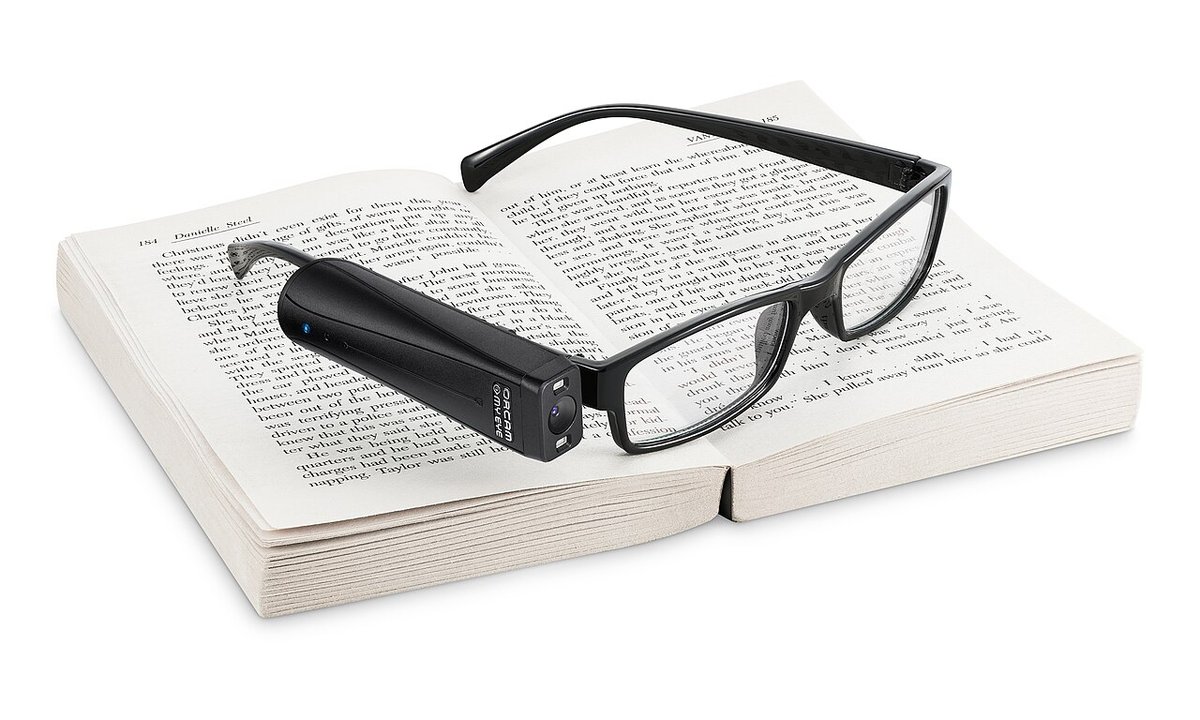
**OrCam** (OrCam Technologies Ltd.) is an Israeli assistive technology company, based in Jerusalem, that builds AI devices for people who are blind, have low vision or have reading difficulties, and later for people with hearing loss. It was founded in 2010 by [Amnon Shashua](https://aiwiki.ai/wiki/amnon_shashua) and Ziv Aviram, who had earlier co-founded the driver-assistance company [Mobileye](https://aiwiki.ai/wiki/mobileye)[1][2]. Its best-known product, the **OrCam MyEye**, is a small camera that clips onto the frame of a pair of glasses and reads text aloud, recognizes faces, products and banknotes, and speaks the result to the wearer[2][4]. Investors valued OrCam at about $1 billion in 2018 and $1.5 billion in 2021, but its sales fell sharply after 2023, as smartphone apps built on [large language models](https://aiwiki.ai/wiki/large_language_model) began to offer similar reading and description functions and sales to Arab countries dropped after the Gaza war began; in July 2024 the company stopped developing new vision devices to concentrate on its hearing product, OrCam Hear[4][6][12][13][18].
The OrCam MyEye 2.0 attached to a pair of glasses, resting on an open book. Ylip, via Wikimedia Commons, CC BY-SA 4.0.
## History
### Founding and first device (2010-2015)
Shashua, a computer science professor at the Hebrew University of Jerusalem, and Aviram started OrCam in Jerusalem in 2010[2][3][5]. In June 2013 the company's only product was a small camera that attached to a user's glasses with a magnet and was wired to a pocket-sized computer; a bone-conduction speaker read out the text or object the user pointed at[3]. The device used [computer vision](https://aiwiki.ai/wiki/computer_vision) to read text found in everyday settings, such as newspapers and bus numbers[3]. At launch it read English text only and was offered through the company's website for $2,500[3]. The New York Times reported that its recognition algorithms were developed by Shashua with Shai Shalev-Shwartz and Yonatan Wexler, OrCam's vice president of research and development, and quoted Shashua as saying the device had to cope with text on flexible surfaces such as a newspaper held in the hand[3].
According to OrCam's media director in 2017, the United States was the first country where the device became available to consumers, in 2015[2]. In 2017 Aviram was OrCam's president and chief executive, and Shashua was its chairman and chief technology officer[2].
### Growth and unicorn valuation (2016-2021)
By March 2017 OrCam had about 125 employees in Jerusalem and sold two devices, the MyEye (priced at $3,500) and the reading-focused MyReader ($2,500), in the United States, Canada, Australia, South Africa, Germany, Israel and France[2]. It had raised $22 million by then, $6 million of it from [Intel](https://aiwiki.ai/wiki/intel) Capital, with Aviv Ventures and the BRM Group as other investors[2]. In April 2017 it closed a $41 million round at a valuation of $600 million, bringing its total funding to $63 million, and Shashua told Reuters that he expected a listing on the NYSE or Nasdaq by the end of 2018[5].
A wireless version of MyEye weighing about 22.5 grams was launched in December 2017; it could be triggered by pointing a finger or by following the wearer's gaze[6]. In February 2018 Calcalist reported, citing people close to investors, that OrCam had raised money at a $1 billion valuation; Reuters put the round at $30.4 million for a 3% stake, from investors including Clal Insurance and Meitav Dash[6]. The company had revenue of $10 million in 2017 and said it expected to become profitable in 2019[6].
In September 2017 OrCam vice president Elad Serfaty gave a release date of 2018 for **MyMe**, a clip-on camera meant for people with prosopagnosia (face blindness) that would draw on a user's social-network contacts to tell them who they were talking to; it had been in development for at least two years[7]. MyEye 2 was named one of Time's best inventions of 2019[8][9].
At CES in January 2020 OrCam showed voice commands for its personal-assistant software, an orientation aid that beeps faster as the wearer nears a door, and an early version of **OrCam Hear**: a necklace-style device that worked with a conventional hearing aid and used the speaker's lip movements to pick out one voice in a noisy room[8]. That prototype won a CES 2020 Best of Innovation award[8]. In September 2020 the footballer Lionel Messi became an OrCam ambassador, with an arrangement to give MyEye devices each year to visually impaired people[10].
In December 2020 Calcalist reported that OrCam, then about 200 employees and with annual revenue estimated at close to $100 million, was preparing a New York IPO in 2021 at a hoped-for $3 billion valuation[11]. The listing did not happen. In March 2021 the company raised $50 million at a $1.5 billion valuation[12]. A software release in August 2021 (version 9.10) added hands-free control with the wake phrase "Hey OrCam" and a table-reading mode for menus and bills, and ran the recently introduced "Smart Reading" search for specific words on a page; the company said its devices needed Wi-Fi only to download updates[9].
### Layoffs and the shift to hearing (2022-2024)
In October 2022 OrCam cut 16% of its 380 staff, most of them in research and development[1]. Its previous chief executive, Rani Hagag, had left about six months earlier, and Elad Serfaty, a former Mobileye executive, became CEO in August 2022[1]. Globes later reported that the cuts followed a decision to move the flagship device's processing from the device to the cloud, using language models including those of [AI21 Labs](https://aiwiki.ai/wiki/ai21_labs), and that about 60 employees who had worked on on-device processing left at the end of 2022[16].
In January 2024 OrCam added generative AI features: the MyEye gained an assistant that uses large language models to answer spoken questions and can look things up online, and the handheld OrCam Read 3 gained "Just Ask", which summarizes a captured page and answers follow-up questions about it[14]. At CES 2024 it presented a redesigned OrCam Hear (described below)[15].
In February 2024 Globes reported a plan to spin the hearing unit off as a separate company that would raise $10 million. About 50 vision-division employees were to be laid off and the roughly 50-person hearing research team moved to the new company, leaving OrCam with 220 of its 320 employees[16]. According to that report, the MyEye 3 and Read 3 product lines each brought in about half of revenue, which had reached $65 million in 2023, up 25% from 2022[16]. A second round of layoffs in June 2024 cut about 100 jobs, mainly in marketing and sales[12]. Calcalist attributed it to a sharp fall in sales to Arab countries, some of them without diplomatic relations with Israel, and cited sources pointing to the war and to generative AI smartphone apps that offered similar reading functions[12].
In late July 2024 OrCam announced that it would stop developing its low-vision products and concentrate on its Hear division, laying off dozens more employees[4][13]. The company said that progress in image processing by language models had made further development of its Low Vision products unnecessary[4][13]. Globes, citing the IVC research group, put its headcount in Israel at 80 and its total funding at $181 million[13]. Calcalist wrote that the company, which had once employed more than 400 people, now had a few dozen staff, and that its glasses-and-camera product had lost appeal as the market moved to software-only tools[4][17].
### Investor dispute (2025)
In March 2025 Globes and Calcalist reported that a dispute between the founders and OrCam's institutional investors (Clal, Harel, Leumi Partners and Meitav) was holding up a recovery plan[18][19]. The plan was to split the company into a smart-glasses business and a hearing business, with new money going to the hearing devices; the founders also planned to sell the vision division[18]. Globes reported that a further $12 million to $15 million was needed[18]. The investors had approved the split and the financing but would not take part in it, and they asked for full protection against dilution[18]. Calcalist reported that the conflict centered on how a SAFE financing round, in which Shashua and Aviram had invested about $9 million, would convert into shares: the founders wanted a valuation of $30 million to $40 million, while the institutional investors had bought in at several hundred million dollars[19]. Globes estimated that OrCam's value had fallen more than 90%, from $1.5 billion in 2021 to about $150 million, and reported that the company had fewer than 100 employees and one product instead of three[18]. The two papers also reported that OrCam was selling off its remaining vision device inventory, that its hearing product was nearly ready but had no revenue, and that the founders were seeking a further $2 million loan[18][19]. OrCam declined to comment to Calcalist[19].
In April 2025 the Tel Aviv-listed R&D partnership Big Tech 50 reported that its $2 million investment in OrCam, made in 2021, was worth $31,000 at the end of 2024 by its own estimate[20].
"All You Need to Know About OrCam MyEye 2", official video from OrCam, published February 28, 2019. Watch on YouTube.
## Products
| Product | Type | Introduced | Notes |
|---|---|---|---|
| OrCam (first device) | Glasses-mounted camera wired to a pocket computer | June 2013 | English text only; $2,500[3] |
| OrCam MyEye | Glasses-mounted reading and recognition camera | US launch 2015 | $3,500 in 2017[2] |
| OrCam MyReader | Reading device | by 2017 | $2,500 in 2017; aimed at people with dyslexia or after a stroke[2] |
| OrCam MyEye (wireless version) | Wireless clip-on camera | December 2017 | About 22.5 g[6] |
| OrCam MyMe | Face-recognition clip for prosopagnosia | Release date given 2017 | Planned for 2018[7] |
| OrCam Read | Handheld reader | March 2020 | CES 2021 Best of Innovation award[9][24] |
| OrCam Read 3 | Handheld reader with AI assistant | by January 2024 | "Just Ask" summaries and questions[14] |
| OrCam MyEye 3 / MyEye 3 Pro | Wireless clip-on camera | by February 2024 | 3 Pro: 22.5 g, 13-megapixel camera[16][21] |
| OrCam Hear | Earbuds, phone dongle and iPhone app | Shown at CES 2024 | Speaker isolation for people with hearing loss[15][22] |
### MyEye
The MyEye is a finger-sized device with a camera and microphone that clips onto a pair of glasses[8]. The wearer gives a voice command, makes a hand gesture or presses a touch bar, and the device reads printed or on-screen text aloud, a task that relies on [optical character recognition](https://aiwiki.ai/wiki/ocr_models) and [text-to-speech](https://aiwiki.ai/wiki/text_to_speech_ai)[3][8][21]. It also recognizes faces, products from their barcodes and banknotes and, on the current model, clothing colors[1][21]. Globes reported in 2022 that it works without an internet connection, and OrCam described its devices in 2021 as needing Wi-Fi only for updates[1][9]; the 2024 assistant features, by contrast, can draw on the internet[14]. OrCam's product page for the MyEye 3 Pro lists a weight of 22.5 grams, a 13-megapixel camera, voice, gesture and touch controls, availability in more than 20 languages, and access to OrCam's Smart Magnifier, a screen-based magnifier that includes the "Just Ask" assistant[21].
### Read
The Read line is handheld rather than worn. The first OrCam Read was launched at the CSUN Assistive Technology Conference in March 2020 as a point-and-click reader that captures and reads aloud full pages of text or screens[24]. OrCam has marketed its reading devices to people with dyslexia, low vision, reading fatigue or other reading difficulties[2][9][23]. OrCam Read 3 added "Just Ask" in January 2024, which captures an image of a page, processes it with AI, and can summarize it, read all of it, or answer questions about it[14].
### Hear
The version of OrCam Hear shown at CES 2024 consists of wireless earbuds, a dongle with a microphone array that plugs into a phone, and an iPhone app that runs the AI voice-separation models[15][22]. The dongle listens to each person for a few seconds to build a voice profile, and the user then drags speaker icons in the app to choose whose voices are amplified while other voices and background noise are muted[15][22]. Audio reaches the earbuds over Bluetooth LE Audio[22]. In an Engadget hands-on, Cherlynn Low called the system "surprisingly effective" in a noisy demo room, while noting a slight delay that produced an echo and some distortion in the selected voices; OrCam described it at the time as a technology preview due to ship later in 2024[15]. Globes reported in February 2024 that OrCam expected US Food and Drug Administration marketing approval within months[16]; no source located for this article confirms that approval or the product's commercial status.
## Business and funding
| Date | Event | Valuation | Source |
|---|---|---|---|
| March 2017 | $22 million raised to date, including $6 million from Intel Capital | | [2] |
| April 2017 | $41 million round | $600 million | [5] |
| February 2018 | $30.4 million for a 3% stake | About $1 billion | [6] |
| March 2021 | $50 million round | $1.5 billion | [12] |
| 2024 | Financing round of $12.5 million begun by the founders, BRM and other private investors (Globes); Calcalist describes a SAFE round in which the founders put in about $9 million | | [18][19] |
| March 2025 | Globes estimate | About $150 million | [18] |
Reported revenue figures vary between sources. Calcalist reported $10 million for 2017 and, in December 2020, an estimate close to $100 million a year[6][11]. Globes reported in February 2024 that the vision products produced $65 million in 2023, but its March 2025 report gave 2023 revenue as $45 million to $50 million and 2024 revenue as $16 million, mostly from reading glasses[16][18]. Calcalist wrote in 2024 that sales had peaked at about $50 million[17].
OrCam's investors have included Intel Capital, Aviv Ventures, BRM, Clal Insurance, Meitav Dash, Harel, Leumi Partners and Big Tech 50[2][13]. Globes and Calcalist both linked the company's decline to two developments: the arrival of general-purpose multimodal AI from companies such as [OpenAI](https://aiwiki.ai/wiki/openai) and [Google](https://aiwiki.ai/wiki/google), which can read and describe images through an ordinary smartphone, and the drop in purchases from Arab countries and philanthropic buyers after the Gaza war began[12][13][18][20]. Globes also named Apple's launch of a competing hearing product among the setbacks[18].
## Status
As of November 2026, OrCam's website lists the MyEye 3 Pro and MyEye 2 Pro wearables, the Read 5 and Read 3 handheld readers, OrCam Learn, and the OrCam Hear app for iPhone, and says its technology is used across 50 countries and in 25 languages[21][22][23]. A notice on the site says the company remains committed to its low-vision users and is working with US-based distributors, with devices warehoused in the United States[23]. No reporting found for this article describes how the 2025 investor dispute was resolved.
## See also
- [Amnon Shashua](https://aiwiki.ai/wiki/amnon_shashua)
- [Mobileye](https://aiwiki.ai/wiki/mobileye)
- [AI glasses](https://aiwiki.ai/wiki/ai_glasses)
- [AI in healthcare](https://aiwiki.ai/wiki/ai_in_healthcare)
- [Vision language model](https://aiwiki.ai/wiki/vision_language_model)
## References
1. Assaf Gilead. "Vision aid co OrCam laying off 16% of workforce". Globes, 2022-10-23. https://en.globes.co.il/en/article-vision-aid-co-orcam-laying-off-16-or-workforce-1001427387
2. Shoshanna Solomon. "Mobileye sale puts spotlight on founders' other startup". The Times of Israel, 2017-03-15. https://www.timesofisrael.com/mobileye-sale-puts-spotlight-on-founders-other-startup/
3. John Markoff (The New York Times News Service). "Camera-based system designed by Israeli start-up gives visually-impaired ability to 'read'". The Irish Times, 2013-06-06. https://www.irishtimes.com/business/technology/camera-based-system-designed-by-israeli-start-up-gives-visually-impaired-ability-to-read-1.1417768
4. Meir Orbach and Sophie Shulman. "OrCam closing glasses department, cutting dozens of jobs in third round of layoffs this year". Calcalist (CTech), 2024-07-28. https://www.calcalistech.com/ctechnews/article/hy0rv6qya
5. Globes correspondent. "Artificial vision co OrCam raises $41m". Globes, 2017-04-02. https://en.globes.co.il/en/article-artificial-vision-co-orcam-raises-41m-1001183595
6. Lilach Baumer. "Latest Venture by Mobileye Founders Valued at $1 Billion". Calcalist (CTech), 2018-02-20. https://www.calcalistech.com/ctech/articles/0,7340,L-3732290,00.html
7. Lilach Baumer. "Wearable Personal Assistant MyMe Sketched for 2018 Release". Calcalist (CTech), 2017-09-19. https://www.calcalistech.com/ctech/articles/0,7340,L-3721544,00.html
8. Lilach Baumer. "OrCam Unveils Wearable Personal Assistant, New Technologies for People With Disabilities". Calcalist (CTech), 2020-01-09. https://www.calcalistech.com/ctech/articles/0,7340,L-3777402,00.html
9. OrCam Technologies. "OrCam's Revolutionary Assistive Technology Now Operates Completely Hands-Free with Voice Commands". PR Newswire, 2021-08-26. https://www.prnewswire.com/news-releases/orcams-revolutionary-assistive-technology-now-operates-completely-hands-free-with-voice-commands-301363901.html
10. CTech. "Messi collaborates with Israel's OrCam to increase awareness for the blind and visually impaired". Calcalist (CTech), 2020-09-09. https://www.calcalistech.com/ctech/articles/0,7340,L-3849011,00.html
11. Sophie Shulman. "OrCam sets sights on $3 billion valuation in 2021 IPO". Calcalist (CTech), 2020-12-14. https://www.calcalistech.com/ctech/articles/0,7340,L-3881590,00.html
12. Sophie Shulman. "OrCam cuts almost half of workforce in second round of layoffs in four months". Calcalist (CTech), 2024-06-03. https://www.calcalistech.com/ctechnews/article/skd15oj4a
13. Meytal Vaizberg. "OrCam to halt developing visual aid devices". Globes, 2024-07-28. https://en.globes.co.il/en/article-1001485309
14. Healio. "OrCam updates low vision products with AI features". Healio Optometry, 2024-01-10. https://www.healio.com/news/optometry/20240110/orcam-updates-low-vision-products-with-ai-features
15. Cherlynn Low. "OrCam Hear hands-on: A surprisingly effective voice isolation platform for people with hearing loss". Engadget, 2024-01-09. https://www.engadget.com/orcam-hear-hands-on-a-surprisingly-effective-voice-isolation-platform-for-those-with-hearing-loss-230243953.html
16. Assaf Gilead. "OrCam to spin off hearing activity ahead of IPO". Globes, 2024-02-28. https://en.globes.co.il/en/article-1001472382
17. Sophie Shulman. "The highs and lows of Amnon Shashua's tech empire". Calcalist (CTech), 2024-08-11. https://www.calcalistech.com/ctechnews/article/hyom5as5c
18. Assaf Gilead. "OrCam stymied by investor dispute with Shashua". Globes, 2025-03-13. https://en.globes.co.il/en/article-orcam-stymied-by-investor-dispute-with-shashua-1001504646
19. Golan Hazani and Sophie Shulman. "OrCam fights for survival as investor battle, layoffs and last-ditch funding push escalate". Calcalist (CTech), 2025-03-12. https://www.calcalistech.com/ctechnews/article/rkp8w111nyg
20. Assaf Gilead. "Big Tech 50 reports more huge falls in startup valuations". Globes, 2025-04-02. https://en.globes.co.il/en/article-1001506860
21. OrCam Technologies. "OrCam MyEye 3 Pro". OrCam, accessed 2026-11-18. https://www.orcam.com/en-us/orcam-myeye-3-pro
22. OrCam Technologies. "OrCam Hear - Listening Redefined". OrCam, accessed 2026-11-18. https://orcam.com/en-us/orcam-hear
23. OrCam Technologies. "Experience the Power of Assistive Technology with OrCam's AI Devices". OrCam, accessed 2026-11-18. https://www.orcam.com/en-us/home
24. OrCam Technologies. "OrCam Technologies Launches First-ever Digital AI Assistive Reading Device". PR Newswire, 2020-03-09. https://www.prnewswire.com/news-releases/orcam-technologies-launches-first-ever-digital-ai-assistive-reading-device-301019837.html