

CtrlK
Template:Infobox robot
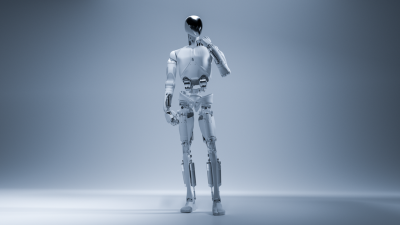
XPeng IRON is an advanced humanoid robot developed by Chinese electric vehicle manufacturer XPeng Motors. First unveiled at XPeng's AI Day 2024 in November, the robot represents the company's ambitious expansion into embodied intelligence and robotics.[1] The next-generation IRON, revealed at the 2025 AI Day on November 5, 2025, attracted global attention for its unprecedented human-like appearance and movement, becoming a viral sensation when the company had to cut the robot open on stage to prove it wasn't a person in a costume.[2]
XPeng positions IRON as part of its broader "Physical AI" ecosystem, alongside AI vehicles, robotaxis, and flying cars. The company aims to achieve mass production by the end of 2026, initially targeting commercial service applications rather than factory floors or households.[3]
XPeng Motors, founded in 2014 and headquartered in Guangzhou, China, is primarily known as an electric vehicle manufacturer. The company produced nearly 200,000 vehicles in 2024 and is listed on both the NYSE (XPEV) and Hong Kong Stock Exchange (9868).[4] In 2025, XPeng officially repositioned itself from a "future mobility explorer" to "a mobility explorer in the physical AI world and a global embodied intelligence company."[1]
Strategic vision: CEO He Xiaopeng articulated a compelling market rationale for XPeng's robotics investment. He noted that while the global automotive market is approximately $10 trillion, the robotics market could potentially reach $20 trillion, though this may take 10-20 years to materialize.[5] He also stated that developing humanoid robots was even more challenging than developing autonomous cars, citing the need for significant investment (on the order of tens of billions of yuan) in AI, chip R&D, and hardware integration.[6] XPeng management has committed ¥50-100 billion (~$6.9-13.8 billion USD) to advance humanoid robotics into commercially viable applications.[7]
The company's robotics strategy leverages seven years of autonomous driving technology development, allowing IRON to share AI perception systems, sensor fusion architecture, and autonomous navigation technology originally developed for vehicles.[8] XPeng executives emphasize they began humanoid robotics research before Tesla, giving them a head start in this emerging field.[8]
XPeng's robotics development spans from 2018 to 2025, encompassing multiple robot generations:[9]
First five generations (2018-2023): Quadruped robots
Strategic pivot (2023-2024): Decision to shift from quadrupeds to humanoid form
Sixth generation (2024): First-generation IRON humanoid (also referred to as "fourth-generation" in some reports)[10]
Seventh/Eighth generation (2025): Next-generation IRON (reporting varies on generation numbering)[11]
The pivot from quadrupeds to humanoids was driven by practical limitations. CEO He Xiaopeng explained that quadrupeds lacked hands and had difficulty navigating complex home environments. More fundamentally, the company concluded that if a robot's structure differs significantly from humans, realistic training data cannot be collected, making it harder to generalize for human-centric scenarios in homes, offices, and shopping malls.[1]
| Model | Unveil Date | Height | Weight | Total Degrees of Freedom (DoF) | Key Features / Notes |
|---|---|---|---|---|---|
| circa 2023-2024 | 180 cm (5 ft 11 in) | 90 kg (198 lbs) | 26 | Payload: 20 kg; Runtime: 4 hours[12] | |
| November 2024 | 178 cm | 70 kg | 60-62 | 15 DoF per hand (30 total); Over 60 joints; 200 DoF passive[13] | |
| November 5, 2025 | 178 cm (5 ft 10 in) | 70 kg (154 lbs) | 82 | All-solid-state battery; 2,250-3,000 TOPS compute; 22 DoF per hand (44 total)[1] |
November 6-8, 2024 - First-generation IRON unveiled[14]
Event: XPeng AI Day 2024 at South China University of Technology, Guangzhou
Specifications: 178 cm tall, 70 kg weight, over 60 joints, 200 degrees of freedom
Computing: Powered by Turing AI chip
Status: Already deployed in XPeng factories for P7+ model assembly and facility tours
Capabilities: Standing, lying down, sitting, walking, grasping
November 5, 2025 - Next-generation IRON revealed[1]
Event: XPeng AI Day 2025 ("Emergence" theme) at XPeng Science Park, Guangzhou
Major advancement: Dramatically improved human-like appearance and movement
Viral moment: So realistic that engineers cut open the robot's leg on stage to prove authenticity
Became trending topic on Chinese social media with over 50% of commenters believing it was a human in disguise
August 23, 2024 - First Turing AI chip successful tape-out[15]
2019-2025 - AI development evolution
Development of autonomous driving technology with LiDAR, stereo cameras, and AI perception systems
2024: Introduction of VLA (Vision-Language-Action) model
2025: Launch of VLA 2.0 and new VLT (Vision-Language-Task) model specifically for robotics
Height: 178 cm (5 feet 10 inches)
Weight: 70 kg (154 pounds)
Total degrees of freedom: 82 (actively controlled)
Active joints: 62 joints throughout the body
Hand dexterity: 22 degrees of freedom per hand (44 total for both hands) - upgraded from 15 DoF per hand in first generation
The next-generation IRON embodies XPeng's "extreme anthropomorphism" design philosophy, featuring:
Humanoid spine: Flexible vertebral structure allowing natural bending, twisting, and weight distribution - capable of bending and twisting, allowing for dynamic balance and even recovery from stumbles
Bionic muscles: Synthetic muscle system that stretches and contracts naturally, providing strength and smooth motion profiles similar to human muscle movements
Full-coverage soft synthetic skin: Embedded with touch sensors throughout for environmental awareness, making the robot feel warmer and more lifelike to the touch
3D curved display head: Wrapping OLED display serving as an expressive "face" capable of showing emotions
Bionic fascia layer: Positioned between skin and actuators for smooth, coordinated movement
Passive toe joints: Shock absorption capability for natural gait on hard surfaces, giving IRON a lighter, more natural stride with heel-to-toe movement
Actuators and joints:
Custom self-developed actuators with bionic muscle system
Industry's smallest harmonic joints achieving true 1:1 human hand proportions[16]
Lattice-like actuator arrays providing fluid motion versus traditional servo motors
Hip configuration: A-R-F (Abduction-Rotation-Flexion) serial configuration
Knee actuator: Relocated to quadriceps position (versus hamstring in previous generation)
Torque density approximately 20% higher than earlier prototypes
Sensors and perception systems:
720-degree AI vision system: Complete environmental awareness adapted from XPeng's autonomous driving technology[17]
LiDAR sensors: Borrowed from autonomous vehicle systems
Stereo cameras: High-resolution depth cameras for spatial awareness
Depth sensors: Additional spatial mapping
Eagle Eye visual system: Precise environmental awareness
Microphone arrays: Positioned near ears for audio input
Touch sensors: Embedded throughout full-body synthetic skin for tactile feedback
Object recognition and obstacle detection: Real-time processing capabilities
Computing hardware:
Three Turing AI chips: XPeng's proprietary in-house silicon development[18]
Total computing power: 2,250-3,000 TOPS (Trillion Operations Per Second)
Four-core architecture: Different computational areas per core
Comparison: Approximately 18.75x more powerful than Intel Core Ultra 200V processor (120 TOPS)
Custom compiler and software stack optimized for chip-operator-model integration
Power system:
Battery technology: World's first humanoid robot with all-solid-state battery[19]
Composition: Uses ceramics or polymers instead of flammable liquid electrolytes
Energy density: Ultra-high (estimated 500+ Wh/kg, approximately 2x Tesla Optimus battery capacity)
Safety advantages: No overheating risks, safer for enclosed environments like homes and offices
Rationale: XPeng chose to debut this technology in IRON (versus cars) due to stringent safety requirements for devices operating near humans in confined spaces
Walking performance:
Speed: 2 meters per second (6.5 feet per second) confirmed in tests[2]
Gait characteristics: Human-like stride with natural, fluid motion
Training method: Trained on thousands of hours of human walking footage using machine learning (not preset movement rules)
Balance system: Dynamic stability with shock-absorbing foot joints
Range of motion:
82 degrees of freedom throughout body enabling natural shrugging, twisting, balancing on uneven ground, catwalk-style walking, and complex human-like actions
Flexible spine allows natural bending and weight distribution
Bionic muscle system provides smooth, coordinated movements
Can perform squatting, bending, sitting down and standing up unaided
Navigation:
Real-time navigation without pre-programming or teleoperation
Avoids obstacles dynamically while moving
Can navigate through crowds
720-degree spatial awareness for path planning
Hand design and dexterity:
22 degrees of freedom per hand (44 total) - upgraded from 15 DoF per hand in first generation
True 1:1 human hand proportions achieved through industry's smallest harmonic/bevel gear joints
Capable of holding small tools with precision
Can grasp large boxes with controlled grip
Flexible enough for various object handling scenarios
Real-world testing: XPeng tested IRON for factory tasks including tightening screws with drills, but found the hands wore out in as little as one month. The company concluded this was not yet viable for repetitive industrial tasks due to high repair costs.[1]
XPeng IRON uses a sophisticated VLT + VLA + VLM cognitive stack:[20]
1. VLT (Vision-Language-Task) - NEW in 2025
Core engine for autonomous actions and decision-making
Enables in-depth thinking and autonomous decision-making in the physical world
Handles reasoning and task planning
Announced for the first time at 2025 AI Day
2. VLA 2.0 (Vision-Language-Action) - Adapted from autonomous driving
Direct "Vision–Implicit Token–Action" path
Eliminates traditional language translation bottleneck
End-to-end generation from visual signals to action commands
Links what IRON sees directly with its next actions
Trained on nearly 100 million video clips (equivalent to 65,000 years of human driving scenarios)
3. VLM (Vision-Language-Model) - From automotive intelligent cockpit systems
Natural language dialogue capabilities
Logical conversation and active reasoning
Real-time interaction with humans
Robot AI models: 30 billion parameters[8]
Cloud base model: 72 billion parameters (ultra-large-scale)
Training data: Nearly 100 million clips without manual annotation
Model iteration: Full-cycle iteration every 5 days in cloud environment
Cloud computing cluster: 30,000-card cluster operating at 90%+ efficiency[1]
Data factory: First embodied intelligence data factory established in Guangzhou
Tianji AIOS: Operating system managing perception, control, and voice interaction[17]
SDK availability: To be opened to global developers, likely coinciding with late 2026 commercial availability
Remote updates: Cloud connectivity for continuous improvement
Privacy architecture: Implements XPeng's "Fourth Law of Robotics" - "Privacy data does not leave the robot," ensuring local processing of sensitive information[1][21]
Target: L3 autonomy minimum standard for mass production by end of 2026[22]
Current capability: Real-time perception, decision-making, and action without pre-programming or teleoperation
Learning approach: Reinforcement learning algorithms with generalization learning
Emerged capabilities: Can recognize hand gestures and respond to traffic light changes (untrained scenarios demonstrating true learning)
Baoshan Iron & Steel (Baosteel)[1]
Announced at 2025 AI Day as primary industrial ecosystem partner
IRON will be deployed at Baosteel facilities
Focus: Industrial inspection applications in complex manufacturing environments
Application: Equipment monitoring for wear detection and fault prediction
Chairman Zou Jixin stated: "XPENG IRON will be stationed at Baosteel to explore application scenarios and iterate and evolve in complex industrial fields such as inspection, empowering Baosteel intelligent manufacturing"
Volkswagen Group[8]
Strategic cooperation agreements signed February 2024 and April 2024
Volkswagen became launch customer of XPeng VLA 2.0 large model (announced November 2025)
XPeng Turing AI Chip secured nomination from Volkswagen
Joint development of electronic and electrical architecture (E/E Architecture)
Platform and software cooperation achieving 30%+ reduction in development cycle
Alibaba/Amap[1]
Announced at 2025 AI Day
First global ecosystem partner for XPeng Robotaxi
Collaboration for ride-hailing integration within broader Physical AI ecosystem
Open SDK Partnership[1]
IRON's Software Development Kit released November 2025
Goal: Collaborate with global developers to build application ecosystem
Open invitation for worldwide developers to create applications
Expected to provide access to vision systems, motion control, sensor data, and AI models
Official pricing: No official pricing has been announced by XPeng as of November 2025.
Industry estimates: Approximately $150,000 USD for corporate and industrial clients based on third-party analysis.[16]
Target market: Commercial and industrial clients initially, with consumer versions planned for future with lower cost structures.
XPeng's investment commitment: ¥50-100 billion (~$6.9-13.8 billion USD) over the next decade for robotics R&D, data collection, and manufacturing infrastructure.[7][22]
Mass production preparation: Starting April 2026
Full mass production target: End of 2026[3]
Initial deployment: XPeng retail stores in 2026
Production capacity: Automated factory ensuring automotive-grade precision (specific annual capacity not disclosed)
CEO vision: Expects to sell more robots than cars within 10 years
Phase 1: Commercial services (2026-2027)
Primary focus on retail and hospitality applications:[1]
Tour guides in XPeng showrooms and commercial settings
Shopping guides and sales assistants
Receptionists in offices and hotels
Customer service representatives
Traffic direction in commercial spaces
First deployment location: XPeng's own retail stores globally (expanding to 60 countries and regions by 2026)
Phase 2: Industrial applications (2026+)
Limited industrial deployment:
Equipment inspection at Baosteel facilities
Visual monitoring and anomaly detection
Safety inspections in hazardous areas
Not for assembly line work: Trials concluded this is uneconomical due to high repair costs and component wear
Phase 3: Future applications (5-10+ years)
Long-term vision includes:
Museum guides
Office environments
Eventually household applications for chores and companionship
Factory work when technology advances and costs decrease
Explicitly ruled out initially:
❌ Factory assembly work: Not cost-effective versus human workers; hands wear out too quickly
❌ Household/domestic environments: Safety concerns and "immense generalization challenge" of navigating unstructured, cluttered homes
Location: South China University of Technology, Guangzhou
Event: First-generation IRON unveiled
Demonstrations: Standing, sitting, lying down, walking, grasping objects
Status: Robot already working in XPeng production lines for P7+ model assembly[14]
Location: XPeng Science Park, Guangzhou, China
Theme: "Emergence"[1]
Major reveal: Next-generation IRON with unprecedented human-like appearance and movement
Viral demonstration: Catwalk-style walk across stage that stunned audiences globally
The controversy: IRON's movements were so realistic that over 50% of online commenters questioned whether a real person was hidden inside the costume.[2] XPeng responded by:
Engineers cutting open the robot's leg on stage to reveal internal mechanisms in what was described as a "zero-warning technological ambush"[23]
CEO He Xiaopeng releasing multiple unedited videos on Weibo[24]
Sharing "Terminator-style" bare-metal walking videos showing the robot without skin covering
Publishing behind-the-scenes footage showing hand details and internal components
Social media response:
Trending topic on Chinese social media (Weibo)
Global viral sensation with "human in a suit" speculation dominating discussions[25]
Comments ranged from amazement ("the most human-like gait out there") to skepticism ("I'll believe it once reviews confirm it's not teleoperated")
XPeng team reaction: The robotics team reported being "too excited to sleep" after the demonstration, staying up late to follow reactions and respond to comments. They were "both delighted and amused" by widespread disbelief.[26]
Market response: XPeng's Hong Kong-listed shares surged nearly 9% to HK$89.4 ($11.50 USD) per share following the demonstration, with the company's market capitalization reaching approximately HK$170.4 billion ($21.8 billion USD).[27]
Industry expert opinions:
Ma Jihua (veteran industry analyst): "Highly human-like AI robots have strong potential in the service industry... They can play key roles in elderly care, hospitality, and education"
Liu Dingding (veteran industry analyst): "XPENG's humanoid robot demonstrates a level of dynamic coordination and embodied intelligence well above the current industry average"
Elon Musk's acknowledgment: Tesla CEO Elon Musk commented on XPeng IRON stating, "Not bad… Tesla and China companies will dominate the market. Other companies in the West are weak."[28]
| Feature | Tesla Optimus | XPeng IRON |
|---|---|---|
| Height | 173 cm (5'8") | 178 cm (5'10") |
| Weight | ~60 kg | 70 kg |
| Computing power | FSD-based (specific TOPS not disclosed) | 2,250-3,000 TOPS (3 Turing chips) |
| Battery | Lithium-ion (~250 Wh/kg) | Solid-state (500+ Wh/kg) |
| Target price | $20,000-$30,000 | ~$150,000 (current corporate) |
| Timeline | Limited 2025, mass 2026 | Mass production end-2026 |
| Initial use cases | Tesla factories, then general purpose | Commercial services first |
| Strategy | Mass consumer affordability | Commercial-first, then consumer |
Key difference: Tesla aims for affordability and mass production for factories/homes, while XPeng targets commercial service applications with higher-end technology. IRON is already deployed in XPeng production facilities, while Optimus faces rare earth export restrictions from China affecting supply chain.[29]
Focus: Research platform with extreme agility and dynamic movements
Status: Not commercially available; estimated cost $1M+
Height: 175 cm (new electric version)
Advantage: Superior dynamic stability, parkour capabilities, advanced locomotion
Disadvantage: Not designed for mass production or affordability
Estimated price: $30,000-$250,000
Focus: Warehouse automation and manufacturing
Status: Pilot deployment phase with BMW partnership
Advantage: Strong enterprise partnerships and funding
G1 model:
Price: $16,000
Height: 127 cm
Design: Hypermobile humanoid
Status: Mass production ready
H1 model:
Price: $90,000
Height: 180 cm
Speed: 5.4 km/h (fastest humanoid robot walking speed)
Advantage: Most affordable options with impressive agility
Disadvantage: Less sophisticated AI compared to IRON/Optimus
Focus: Logistics and warehouse operations
Status: Deployed in Amazon facilities
Design: Bird-like legs, no humanoid face
Advantage: Proven commercial deployment track record
Developer: Xiaomi, another Chinese technology company
Height: 177 cm
Weight: 52 kg
Focus: Research and development platform
Status: Prototype stage
XPeng IRON occupies a unique middle ground: more advanced and realistic than budget options (Unitree), more commercially focused than research platforms (Atlas), but more expensive than mass-market targets (Optimus). The robot's "extreme anthropomorphism" strategy and premium positioning differentiate it from competitors.
XPeng explicitly designed IRON for service-oriented roles where human-like appearance and interaction matter most:[1]
Retail environments: Product demonstrations, customer greeting, shopping assistance, brand ambassadors
Hospitality industry: Hotel receptionists, concierge services, information desks
Corporate settings: Office receptionists, visitor management, tour guides
Event spaces: Conference guides, exhibition staff, crowd management
Equipment monitoring for wear and tear detection
Visual inspection in hazardous or hard-to-reach areas
Fault detection before breakdowns occur
Safety inspections in industrial facilities
Not for: Repetitive assembly line tasks (concluded as uneconomical)
Long-term vision includes:
Domestic chores and cleaning
Eldercare and companionship
Personal assistance
Home security monitoring
Timing rationale: CEO He Xiaopeng cautioned that household applications face significant challenges including safety concerns in unstructured environments and the "generalization challenge" of navigating messy, unpredictable homes. The technology requires 5-10 years to mature sufficiently.[1]
XPeng's conservative commercialization approach stems from real-world testing. The company tested IRON for one year on assembly lines (tasks like tightening screws) but found:
Hands wore out in as little as one month
High repair and replacement costs
Not cost-effective compared to human workers in China
Complexity of humanoid robots versus specialized industrial robots makes them inefficient for repetitive tasks
This testing informed the decision to focus initially on commercial service applications where human-like appearance, movement, and interaction capabilities provide genuine value.[1]
He Xiaopeng (Xiaopeng He)[30]
Title: Chairman and CEO of XPeng Motors
Role: Primary visionary behind IRON project
Background: Former President of Alibaba Mobile Business Group (2014-2017); founded UCWeb Inc. in 2004 (sold to Alibaba in 2014)
Personal commitment: Announced ¥50-100 billion investment in humanoid robotics R&D over next decade
Vision statement: "When digital and physical worlds integrate, it will give rise to 'Physical AI'. The wave of Physical AI is about to arrive, and XPENG is already prepared."
Dr. Brian Hongdi Gu[31]
Title: Honorary Vice Chairman and Co-President
Background: Former Managing Director and Chairman of J.P. Morgan Chase Asia Pacific Investment Bank (2004-2018)
Education: Ph.D. in Biochemistry (University of Washington), MBA (Yale University), B.S. in Chemistry (University of Oregon)
Key statement: Robotics is "the biggest future industry, bigger than automotive"
Strategic insight: Emphasized XPeng started humanoid efforts ahead of Tesla
Ms. Fengying Wang[30]
Title: President
Background: 30+ years automotive industry experience; Former Vice Chairman and General Manager at Great Wall Motor (1991-2022)
Education: Master's degree in Economics (Tianjin Institute of Finance)
Zhao Deli
Title: Founder and President of XPeng AeroHT (flying car subsidiary)
Role: Involved in broader Physical AI ecosystem development connecting flying cars, robots, and autonomous vehicles
XPeng Robotics Division:
Over 5 years of dedicated robotics development
Developed 7+ generations of robots (5 quadrupeds, 2+ humanoids)
Located at XPeng Science Park in Guangzhou
Part of 10,000+ employee workforce ("XPENGers") spanning AI, automotive, robotics, and flying cars
Key technical roles (based on job postings):[32][33]
Staff Reinforcement Learning Engineer - Robotics (Santa Clara, CA)
Machine Learning Engineer, Robotics (Santa Clara, CA)
Staff Machine Learning Engineer - Foundation Model (Santa Clara, CA)
Mechanical Systems Engineer – Humanoid Robots (Shenzhen, China)
Dexterous Hand Design Engineer – Humanoid Robots (Shenzhen, China)
Motion Control Software Engineer/Architect (Shenzhen, China)
System Software Engineer/Architect (Shenzhen/Shanghai, China)
Cloud computing cluster: 30,000-card system with 90%+ operating efficiency[1]
AI model base: 72 billion parameter cloud model with 5-day full-cycle iteration
Data factory: First embodied intelligence data factory in Guangzhou
Manufacturing: Automotive-grade production facilities in Guangzhou
R&D centers: Guangzhou (headquarters), Shenzhen, Shanghai, and Santa Clara (USA)
On "extreme anthropomorphism":
CEO He Xiaopeng: "Whether robots should be human-like is a topic that has attracted a lot of attention in the industry. XPENG's answer is to 'extreme anthropomorphism'. Because when humanoid robots achieve 'extreme anthropomorphism', several major problems that are easier to commercialize, easier to generalize, and easier to obtain training data can be solved."[1]
He further explained: "If a robot's structure is totally different from humans, then we cannot collect realistic data," making it harder to generalize for human-centric scenarios like homes, offices, and shopping malls.
On personalization:
He Xiaopeng: "In the future, robots will be life partners and colleagues. I suspect that, just like when you buy a car, you can choose different colors, exteriors, and interiors. In the future, when you buy a robot, you can choose the sex, hair length, or clothing for your desired purpose."[1]
This vision extends to offering customization options including different body shapes (slimmer or fuller builds), gender presentations, hair styling, and industry-specific clothing.
Privacy and safety commitment:
XPeng extended Asimov's traditional Three Laws of Robotics with a "Fourth Law": "Privacy data does not leave the robot." This architectural decision ensures local processing of sensitive information, addressing data security concerns for home and public deployment.[1][21]
On robotics market size:
CEO He Xiaopeng stated: "The global car market is approximately $10 trillion, but the robotics market potential could reach $20 trillion. This may take 10-20 years, but we could see hundreds of millions of humanoid robots deployed."[5]
Corporate identity evolution:
At 2025 AI Day, XPeng officially upgraded its positioning to "a mobility explorer in the physical AI world and a global embodied intelligence company." This marks the company's seventh AI Day and represents a significant evolution from its original identity as an electric vehicle manufacturer.[1]
The company's "Physical AI" vision encompasses four pillars:
AI Cars (electric vehicles with autonomous driving)
Robotaxis (autonomous ride-hailing vehicles)
Humanoid Robots (IRON)
Flying cars (ARIDGE eVTOL)
On technology synergy:
XPeng emphasizes that IRON "shares the same technology origin as AI cars" and is "expected to be the first to achieve large-scale mass production" among advanced humanoid robots. The company's full-stack self-developed system covers chips, operating systems (large models), and intelligent hardware.[1]
On competitive positioning:
XPeng Co-President Brian Gu stated: "What we are pursuing from a tech and product perspective, there are some similarities with Tesla... There are some areas that we probably started earlier than Tesla," referring specifically to flying cars and humanoid robots. He noted XPeng began its humanoid effort seven years ago, ahead of Tesla's more recent entry.[8]
Two major challenges identified:
Lack of training data: Solved by establishing the first embodied intelligence data factory in Guangzhou, training on nearly 100 million video clips
Achieving large-scale mass production: Addressed by leveraging automotive supply chain expertise and Physical AI Full Stack Self-Research System
He Xiaopeng noted: "The humanoid robot field hasn't formed a mature software/hardware supply chain. It's 'software-driven hardware' design requiring extremely high self-research and cross-integration capabilities."[1]
XPeng IRON is the world's first humanoid robot to use an all-solid-state battery. This technology uses ceramics or polymers instead of flammable liquid electrolytes found in conventional lithium-ion batteries.[19]
Advantages:
Ultra-high energy density (estimated 500+ Wh/kg, approximately 2x Tesla Optimus)
Enhanced safety with no overheating risks
Safer for enclosed environments (homes, offices)
Lightweight construction
Longer runtime potential
Strategic rationale: XPeng chose to debut this technology in IRON (rather than vehicles) due to stringent safety requirements for devices operating in close proximity to humans in confined spaces.
IRON features the industry's smallest harmonic/bevel gear joints, achieving true 1:1 human hand proportions. This innovation enables:[16]
22 degrees of freedom per hand (44 total)
Human-sized hands without oversizing
Precise manipulation of small objects
Genuine dexterity for complex tasks
The Vision-Language-Task (VLT) model, announced for the first time at 2025 AI Day, represents a novel approach to robotic cognition:[20]
Core decision-making engine for autonomous actions
Enables in-depth thinking in physical world contexts
Integrated with VLA 2.0 and VLM for comprehensive perception-action pipeline
Eliminates language translation bottleneck through direct vision-to-action pathways
IRON's "born from within" design philosophy implements multiple biological inspirations:
Humanoid spine: First humanoid robot with flexible vertebral structure
Bionic muscles: Synthetic muscle system mimicking human muscular contraction and extension
Bionic fascia layer: Positioned between skin and actuators for smooth movement coordination
Full-coverage synthetic skin: Touch sensor integration throughout entire body surface
Current market size (2024-2025): $1.55-$3.28 billion
Near-term projections (2030):
Low estimate: $4 billion (Grand View Research)
Mid estimate: $15.26 billion (MarketsandMarkets, 39.2% CAGR)
High estimate: $66 billion (Fortune Business Insights, 45.5% CAGR)
Long-term projections:
2035: $38 billion (Goldman Sachs)
2050: $5 trillion (Morgan Stanley)
Unit shipments: 195,000 by 2030 (ABI Research)
Key growth drivers:
AI/ML advancements, especially large language models adapted for robotics
40% annual reduction in manufacturing costs (faster than projected 15-20%)
Global labor shortages in aging populations
Component supply chain maturation in China
Government investments (China's 14th Five-Year Plan)
Previous estimates: $50,000-$250,000 per unit Current estimates: $30,000-$150,000 per unit Trend: 40% annual cost reduction observed versus 15-20% originally projected
Goldman Sachs noted that factory applications are arriving 1 year sooner than expected, and consumer applications are 2-4 years ahead of prior estimates due to faster-than-anticipated cost reductions and technological improvements.
China versus Western companies: Elon Musk's acknowledgment that "Tesla and China companies will dominate the market" while "other companies in the West are weak" signals a significant shift in competitive dynamics.[28][34] Chinese manufacturers benefit from:
Integrated supply chain advantages
Government support and funding
Domestic market access
Lower manufacturing costs
Rapid iteration capabilities
Market segmentation emerging: Rather than a winner-take-all scenario, the market appears to be segmenting into:
Budget segment: Unitree ($16,000 G1, $90,000 H1)
Mass market target: Tesla Optimus ($20,000-$30,000 goal)
Premium commercial: XPeng IRON (~$150,000 current)
Enterprise specialized: Figure 01/02, Agility Robotics Digit
Research platforms: Boston Dynamics Atlas ($1M+ equivalent)
XPeng announced the release of IRON's Software Development Kit in November 2025, inviting global developers to create applications and build a humanoid robot application ecosystem.[1] The SDK is expected to provide access to:
Vision systems and sensor data
Motion control APIs
AI model interfaces
Environmental perception data
This open platform strategy mirrors successful approaches in mobile computing and aims to accelerate application development beyond what XPeng can accomplish internally.
IRON offers unprecedented customization options for a humanoid robot platform:[1]
Different body shapes (slimmer or fuller proportions, including "chubby, athletic, tall, or short")[35]
Male and female gender presentations
Variable hair length and styling
Industry-specific clothing and uniforms
Adjustable facial features via 3D display
CEO He Xiaopeng compared this to automotive customization: "Just like when you buy a car, you can choose different colors, exteriors, and interiors. In the future, when you buy a robot, you can choose the sex, hair length, or clothing for your desired purpose."
Unlike many competitors showcasing prototypes, XPeng has been testing IRON in real production environments:
Already deployed in XPeng factories for P7+ model assembly line work
Serves as tour guide in XPeng facilities
One year of factory testing for tasks like tightening screws
Testing revealed durability limitations (hand components wearing out in ~1 month)
Informed strategic decision to focus on commercial services rather than industrial assembly
This real-world experience distinguishes XPeng's approach from purely demonstration-focused competitors.
IRON's AI systems were trained using novel approaches:[1]
Learning from video: Trained on thousands of hours of human movement footage rather than programmed rules
Emerged capabilities: Demonstrated ability to recognize hand gestures and respond to traffic lights without specific training
2-hour learning cycle: CEO demonstrated IRON could learn complex movements from human data in approximately 2 hours
Generalization: System designed to generalize across scenarios rather than memorize specific actions
XPeng plans to expand its retail presence to 60 countries and regions by 2026, with IRON robots serving as brand ambassadors and product guides in these locations. This represents one of the most ambitious international deployment plans for humanoid robots announced to date.[1]
XPeng
Tesla Optimus
Boston Dynamics
Xiaomi CyberOne
Figure (robotics)
1X (company)
Solid-state battery
Robotics
Embodied intelligence
Physical AI
Three Laws of Robotics