

Figure 02
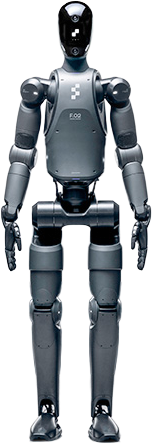
Figure 02, also styled F.02, was the second-generation humanoid robot developed by Figure AI. Figure unveiled it on August 6, 2024 as a ground-up redesign of Figure 01, with more onboard computing, a torso-mounted battery, concealed cabling, six cameras, and redesigned hands.[1] The robot was developed for general-purpose manipulation and manufacturing work, but its best-documented deployment was a specific sheet-metal loading task at BMW's Plant Spartanburg in South Carolina.[2]
 | |
| Developer | Figure AI |
| Type | Humanoid robot |
| Generation | Second |
| Unveiled | August 6, 2024 |
| Height | About 170 cm |
| Weight | 70 kg |
| Load capacity | 20 kg |
| Battery | 2.25 kWh torso pack |
| Cameras | Six RGB cameras |
| Hands | 16 active degrees of freedom per hand |
| Onboard compute | Two NVIDIA RTX GPU-based modules |
| AI software | OpenAI-assisted speech at launch; Helix from February 2025 |
| Successor | Figure 03 |
| Status | Retired. Fleet retirement announced November 19, 2025; most units melted down in Finland, decommissioning announced September 30, 2026 |
BMW first tested Figure 02 for several weeks in 2024. A larger 2025 pilot later supported production of more than 30,000 BMW X3 vehicles. BMW described ten months of production support, while Figure described the overall deployment as eleven months. The difference reflects how the two organizations defined the project window, so both durations require attribution.[14][15] Figure announced fleet-wide retirement of Figure 02 in November 2025 after introducing its successor, Figure 03.[14][17] On September 30, 2026, Figure said it had melted most of the fleet in a 75-ton electric arc furnace at a foundry in Imatra, Finland, after training robots in simulation to jump into molten steel autonomously; the idea came from a suggestion by Arnold Schwarzenegger. The company said a few units remained in storage at its headquarters and that metal recovered from the melt was being made into commemorative artifacts for sale.[23]
Public specifications for Figure 02 are incomplete. Figure and BMW disclosed several headline values, but they did not publish a complete engineering specification, a sales price, a rated operating time, a maximum walking speed, or a verified total body degree-of-freedom count. Values for those fields that circulate in secondary summaries should not be treated as manufacturer specifications.[1][3][4][7]
Development and launch
Figure announced a commercial agreement with BMW Manufacturing in January 2024. The agreement used a milestone-based process: first identify suitable automotive tasks, then begin staged deployment at BMW Manufacturing's Spartanburg plant.[13] Figure 02 had not yet been unveiled when that agreement was signed.
The robot's public launch followed on August 6, 2024. Figure described it as a ground-up hardware and software redesign, not a cosmetic update to Figure 01.[1] On the same day, BMW reported that a several-week test had already taken place in its body shop. Figure 02 inserted sheet-metal parts into fixtures that fed a later chassis assembly step. BMW also said that no Figure robots remained at the plant after that test and that there was then no definite timetable for bringing them back.[2] This chronology matters because the 2024 trial and the later 2025 production pilot were separate phases.
IEEE Spectrum's launch coverage noted that many performance descriptions came directly from Figure's announcement and that the BMW work described at launch was data collection and use-case training.[21] The distinction between a vendor claim, a controlled demonstration, and a measured customer deployment remains important throughout the robot's public record.
Hardware
Dimensions and handling
BMW published the clearest independent physical summary: about 170 cm tall, 70 kg in mass, and a 20 kg load capacity.[3] The sources do not specify whether that load figure applies to the whole robot, both arms together, or a particular test posture. Figure's launch release did not publish separate arm or hand payload ratings.[1]
Figure disclosed a custom 2.25 kWh battery pack in the torso and said it provided more than 50 percent additional energy. It did not give a rated number of operating hours or describe the duty cycle behind the energy comparison.[1] Asked by IEEE Spectrum how much runtime the pack gave, Figure replied: "We are targeting a 5-hour run time for our product." It also said the battery was swappable, "but it is not a quick swap procedure."[21] Five hours was therefore a stated target, not a published measurement, and cannot be presented as an official Figure 02 specification.
The robot used six onboard RGB cameras. Its fourth-generation human-scale hands had 16 active degrees of freedom per hand. Figure described their strength as human-equivalent, while BMW repeated that description in its own overview.[1][3] Neither publication disclosed a complete joint-by-joint map for the robot, so the 16-degree hand figure does not establish a 41-degree total body count.
Compute and packaging
Figure moved power and compute wiring inside the robot's structure. The company said that concealed cabling allowed tighter packaging and higher reliability.[1] NVIDIA reported that Figure added a second NVIDIA RTX GPU-based module to Figure 02, producing three times the inference capability of the first-generation robot.[4] This supports a dual-module configuration, not three RTX modules.
At launch, microphones and speakers supported speech-to-speech interaction through custom models trained in partnership with OpenAI.[1][5] Figure also described an onboard vision-language model for visual reasoning, but the launch materials did not identify its architecture or publish benchmark results.[1]
AI and control software
OpenAI collaboration and transition
The OpenAI-assisted speech system was part of the August 2024 launch configuration.[1] In February 2025, Figure ended that collaboration and said it would vertically integrate its robot AI. TechCrunch reported that Figure attributed the move to a "major breakthrough" in in-house AI, and quoted CEO Brett Adcock: "We found that to solve embodied AI at scale in the real world, you have to vertically integrate robot AI." Adcock gave few specifics, and the report did not provide independent validation of the claim.[6]
On February 20, 2025, Figure introduced Helix, its in-house vision-language-action model for Figure robots.[7] In robotics research, a vision-language-action model conditions robot actions on visual observations and language. The earlier RT-2 paper helped establish this model category by converting action outputs into tokens within a vision-language model.[8]
Helix architecture
Figure described the original Helix release as a two-part system running entirely on the robot:
| Component | Figure's description | Published rate |
|---|---|---|
| System 2 | A 7-billion-parameter, internet-pretrained vision-language model for scene and language understanding | 7 to 9 Hz |
| System 1 | An 80-million-parameter cross-attention transformer for reactive visuomotor control | 200 Hz |
System 2 produced a latent representation of the task, and System 1 converted that representation, current images, and robot state into continuous upper-body actions. Figure said the deployed pipeline split the two components across the robot's dual embedded GPUs.[7] The company reported a 35-degree-of-freedom upper-body action space at 200 Hz. That is a Helix control-space figure, not a specification for the robot's total mechanical degrees of freedom.[7]
Figure said it trained Helix end to end on about 500 hours of teleoperated behavior from multiple robots and operators. An automatic vision-language labeling process generated hindsight instructions for segmented demonstrations. Figure also said that one set of model weights handled its published grocery-storage, object-picking, drawer, and refrigerator examples without task-specific fine-tuning.[7]
The Helix publication was a company-authored technical post, not a peer-reviewed paper. It did not release Helix model weights, training code, evaluation data, or a reproducible benchmark package. Its novelty and generalization results therefore remain vendor-reported demonstrations rather than independently replicated findings.[7]
Logistics demonstrations
Figure applied Helix to package handling in 2025. Its February report described a conveyor task in which the robot moved varied packages and oriented shipping labels for scanning. Figure said eight hours of curated demonstration data could train the task and described changes including implicit stereo perception, multiscale visual features, self-calibration across robots, and a test-time speed-up mode.[9]
In June 2025, Figure published controlled evaluations using roughly 10, 20, 40, and 60 hours of demonstrations. In the company's results, increasing the dataset from 10 to 60 hours reduced mean handling time from about 6.84 seconds to 4.31 seconds and increased barcode-orientation success from 88.2 percent to 94.4 percent. A larger model later reached 4.05 seconds per package while keeping accuracy above 92 percent.[10] These are different evaluation conditions and metrics; the 4.05-second result should not be paired with the separate 95 percent headline as though both came from the same measured configuration.
The June post also identified Figure 02 as using force feedback in the package-handling policy, along with visual memory and recent state history.[10] All of these logistics figures came from Figure's own tests. No customer, academic group, or third-party laboratory published a replication before the research cutoff.[9][10]
Learned walking
In March 2025, Figure described a locomotion policy trained with reinforcement learning in a GPU-accelerated simulator. The company said it randomized simulated robot properties and environments, then transferred one policy to ten Figure 02 robots without hardware-specific tuning. It combined the learned policy with kilohertz-rate torque feedback on the physical robot.[11] Domain randomization is an established sim-to-real method, but Figure did not publish code, quantitative robustness data, or an external evaluation for this walking system.[12]
What did not run on Figure 02
Figure introduced Helix 02 in January 2026, about two months after it announced the start of Figure 02's retirement. The Helix 02 publication describes a new System 0 whole-body controller and explicitly ties palm cameras and tactile sensing to Figure 03 hardware.[18] It does not establish that Figure 02 received Helix 02, palm cameras, fingertip tactile sensing, or the four-minute dishwasher capability. Those successor-system results should not be attributed to Figure 02.
BMW deployment
2024 trial
During the several-week 2024 trial, Figure 02 placed sheet-metal parts into specific fixtures in BMW's body shop. BMW said the trial was intended to evaluate task suitability, integration requirements, and safe use in automobile production.[2] Its later overview reported millimeter-level placement and said safety was under constant assessment.[3] Those statements describe the tested use case, not general autonomy across a factory.
2025 production pilot
Figure's November 2025 retrospective described an eleven-month project and said the robots ran ten-hour shifts from Monday through Friday. It reported more than 90,000 parts loaded, more than 1,250 operating hours, an estimated 1.2 million steps, and support for production of more than 30,000 X3 vehicles.[14] BMW independently confirmed the same aggregate totals in February 2026, describing ten months of production support.[15] BMW again confirmed more than 30,000 X3 vehicles over ten months in June 2026.[16] In October 2025, Time quoted a BMW spokesperson as saying that multiple Figure 02 robots had been "working 10 hours a day, five days a week" at Spartanburg since the companies expanded the partnership in April; both companies declined to say how many robots were involved or to share financial details.[22]
The task remained narrow and repeatable. Figure 02 picked sheet-metal components and placed them into a welding fixture; conventional industrial robots performed the welding and moved the parts onward.[14] Figure said its internal requirements included an 84-second total cycle, a 37-second loading period, greater than 99 percent placement success per shift, and zero human interventions. Those numbers were targets, not a published series of achieved results. Figure separately described the placement challenge as a 5 mm tolerance within two seconds.[14]
Figure's retrospective identified the forearm as the robot's most frequent hardware failure area during the BMW work. It said the resulting lessons influenced Figure 03's wrist electronics and removal of dynamic wrist cabling.[14] BMW's later account said the pilot helped establish integration requirements involving production IT, occupational safety, process management, and shop-floor logistics.[15]
The public record does not disclose the fleet size, contract value, total cost of operation, charging schedule, intervention logs, or per-shift success distribution. The deployment supports the conclusion that Figure 02 performed one production task for an extended period. It does not by itself demonstrate reliable general-purpose factory autonomy.
Safety and public evidence
BMW said in 2024 that it was continuously assessing safe use of humanoids in production.[2][3] In 2026, BMW characterized the completed Figure 02 pilot as demonstrating precise and repeatable work under real production conditions.[15][16] Public descriptions do not provide the risk assessment, incident log, separation distances, or full safety-control design, so those statements cannot substitute for an independent safety certification.
A former Figure safety engineer filed a federal employment and whistleblower lawsuit against the company in November 2025. The plaintiff alleged that Figure had not adequately addressed robot safety concerns and that his termination was retaliatory. Figure denied that account and filed counterclaims, including allegations of poor performance and misuse of company documents.[19][20] A July 2026 discovery order recited both sides' positions and expressly declined to decide their merits.[20] A case management order later that month set a fact-discovery cutoff of November 14, 2026 and a trial-setting conference for December 3, 2026, and in August 2026 the parties stipulated to a private ADR process, telling the court they had tentatively agreed to private mediation.[39][40] As of October 2026, the public case record did not establish that Figure 02 had a product defect.[33]
Figure's public demonstrations, including Helix household manipulation and logistics sorting, are useful evidence of what the company tested. They are not substitutes for independently reproduced benchmarks. IEEE Spectrum raised the same general caution at launch, and Time later noted that promotional robot videos are limited indicators of real-world capability.[21][22] The BMW production data is the strongest external evidence for Figure 02 because the customer separately confirmed the task and aggregate operating totals.
Retirement and decommissioning
Retirement from service
Figure introduced Figure 03 on October 9, 2025. The company said Figure 02 had been designed primarily for CNC-based prototype manufacture, while Figure 03 was redesigned for high-volume production using tooling such as die casting, injection molding, and stamping.[17] On November 19, Figure announced that the Figure 02 units were returning from BMW as part of a fleet-wide retirement.[14] Before the retirement, Time, which visited Figure in August 2025, reported that while some Figure 02s worked shifts at BMW, most remained on Figure's San Jose campus collecting data used to train Figure 03, and that the robots it saw folding towels there were Figure 02s running the same software intended for Figure 03.[22]
The sendoff poll and Schwarzenegger's suggestion
On August 19, 2026, Brett Adcock posted a video with the text: "We loved Figure 02, it was a workhorse. We're out of room at HQ. It has to go", adding, "It deserves a proper sendoff. Any ideas?"[24] Replying to a follower in the same thread, he wrote: "Unfortunately, we need to destroy them so our IP doesn't leak".[24] A follow-up poll asking "What should we do?" closed with 1,422 votes: 46.3 percent for "BLOW THEM UP", 35.6 percent for "Turn them into art", and 18.1 percent for "Livestream disassembly".[25] The same day, Arnold Schwarzenegger replied to Adcock's post: "You should melt them." Adcock answered, "Arnold! DM sent".[26] Humanoids Daily noted the reference to the ending of Terminator 2: Judgment Day, in which Schwarzenegger's T-800 is lowered into molten steel so that its technology does not survive.[35]
On September 28, 2026, Adcock posted a short clip captioned "Goodbye F.02".[38] Humanoids Daily reported that the clip was labeled "Made with AI", ended with the date 09.30.26, and was a teaser rather than footage of a melt.[35] On September 29 (US Pacific time), Adcock wrote that Figure had "something to show that is mind blowing" and that "It's a bit of a detour".[41]
Figure's account of the decommissioning
Figure published "F.02 Decommission" on its news site on September 30, 2026, together with a film. Everything in this subsection is Figure's own description of the project.[23]
- Reasons. Figure said that F.02 had marked several company firsts: its first deployment at BMW, "the birth of Helix", its first robot doing household chores, and its first logistics deployment. As the F.03 fleet grew, it said, maintaining the F.02 fleet "no longer makes sense". The robots were full of custom-built actuators and other intellectual property, Figure needed a disposal method that protected its proprietary hardware, and disassembling each robot would take technical staff so long that "it would delay the launch of F.04".[23]
- Schwarzenegger. Figure said it "asked the internet" what to do, that Schwarzenegger told it to melt the robots, and that when Figure contacted him "he said he wanted to be involved".[23] He appears in the film.[36]
- Finding a foundry. According to Figure, none of the metal foundries it contacted in the United States and Mexico would let it jump a robot with lithium-ion batteries into their equipment, and it asked former MythBusters to help with the search. It described a foundry in Imatra, Finland, as "the only place in the world we could find willing to take this on". Figure did not name the foundry.[23]
- Training. Training began at Figure's San Jose campus, where the team set up large airbags and taught robots to jump off the second floor of one of its buildings. Using movements from stunt artists as reference, the team trained "a new AI model in simulation" to let the robots jump accurately into a bucket of molten steel at a foundry the team had never visited.[23] Figure did not say whether this model was part of Helix or describe its architecture.
- The melt. Figure said three graphite electrodes power the foundry's 75-ton electric arc furnace, which melts solid steel scrap. The team had 24 hours and six melts, and each melt gave a 20-minute window before the molten steel cooled and formed a crust. Figure said the robots "ran their AI policies seamlessly" despite heat and electromagnetic fields, "even as camera equipment and other electronics failed".[23]
- Afterward. Figure said the resulting metal bars were shipped back to the US and were being machined into "a limited series of artifacts commemorating F.02". It wrote: "Most of the F.02 fleet is gone. Just a few remain in storage at HQ."[23]
- Authenticity. Figure added: "In an age of AI-generated footage, it's worth being clear: we really trained robots to jump autonomously, shipped them to Finland, and had them leap into a vat of molten steel."[23] Its X account and Adcock repeated the statement alongside behind-the-scenes footage.[28][34]
Film and commemorative artifacts
Figure posted the film on X and on its YouTube channel on September 30, 2026. The YouTube upload, titled "F.02 Decomission" (sic), runs about 3 minutes 40 seconds.[27][29] Humanoids Daily described it as showing a Figure 02 lowered on a chain into a glowing furnace and giving a final thumbs-up, followed by bonus clips of robots jumping into the furnace.[36] Schwarzenegger shared the film with the words "Hasta la vista, F.02."[30] Adcock wrote that the project "started by Arnold ratio'n me on X, ended in Finland with our humanoid robots doing flips into a 75-ton electric arc furnace".[31]
Figure's X account announced "limited edition F.02 Decommission Artifacts" made from "the metal recovered when F.02 robots were melted down".[28] On October 1, 2026, Figure's online shop listed two pre-order items described as scale models of an F.02 head unit: a one-third-scale version at $500 and a two-thirds-scale version at $1,900, the larger one marked sold out.[32]
What Figure did not disclose
Figure's post did not say how many robots were melted, how many jumped autonomously into the furnace rather than being lowered or placed in it, how many remain at headquarters, how large the Figure 02 fleet was, or how much the project cost. It did not name the foundry, say whether Schwarzenegger traveled to Finland, or describe the jump policy's success rate. The artifact prices appear on the shop page, not in the post.[23][32]
Coverage
Interesting Engineering and Humanoids Daily both described the event as a Terminator-style sendoff, Humanoids Daily attributed the technical details of the jumps and the melt to Figure, while Interesting Engineering restated several of them in its own voice.[36][37]
Legacy
Figure 02's documented contribution was narrower than many launch descriptions suggested, but it was consequential: it joined a modern humanoid platform with a sustained automotive production pilot, and it provided hardware and operational data used in the next generation. Its record is best understood through separately attributed evidence: Figure's technical disclosures and test metrics, BMW's confirmation of a specific production task, and independent reporting that places promotional claims in context.[14][15][16][21] Figure's own summary at the end of the robot's life credited it with the company's first BMW deployment, the first version of Helix, its first household-chore work, and its first logistics deployment; the post did not name the logistics customer.[23] The same post referred to the upcoming launch of F.04 without giving a date.[23]
References
- ^1 ^2 ^3 ^4 ^5 ^6 ^7 ^8 ^9 ^10Figure AI. "Figure unveils Figure 02, its second-generation humanoid, setting new standards in AI and robotics." PR Newswire, August 6, 2024.
- ^1 ^2 ^3 ^4BMW Group. "Successful test of humanoid robots at BMW Group Plant Spartanburg." August 6, 2024.
- ^1 ^2 ^3 ^4 ^5BMW Group. "Humanoid Robots for BMW Group Plant Spartanburg." September 11, 2024.
- ^1 ^2NVIDIA. "Figure Unveils Next-Gen Conversational Humanoid Robot With 3x AI Computing for Fully Autonomous Tasks." August 8, 2024.
- ^Brian Heater. "Figure's new humanoid robot leverages OpenAI for natural speech conversations." TechCrunch, August 6, 2024.
- ^Brian Heater. "Figure drops OpenAI in favor of in-house models." TechCrunch, February 4, 2025.
- ^1 ^2 ^3 ^4 ^5 ^6Figure AI. "Helix: A Vision-Language-Action Model for Generalist Humanoid Control." February 20, 2025.
- ^Brianna Zitkovich et al. "RT-2: Vision-Language-Action Models Transfer Web Knowledge to Robotic Control." Proceedings of the 7th Conference on Robot Learning, 2023.
- ^1 ^2Figure AI. "Helix Accelerating Real-World Logistics." February 26, 2025.
- ^1 ^2 ^3Figure AI. "Scaling Helix: a New State of the Art in Humanoid Logistics." June 7, 2025.
- ^Figure AI. "Natural Humanoid Walk Using Reinforcement Learning." March 25, 2025.
- ^Josh Tobin et al. "Domain Randomization for Transferring Deep Neural Networks from Simulation to the Real World." IEEE/RSJ International Conference on Intelligent Robots and Systems, 2017.
- ^Figure AI. "Figure announces commercial agreement with BMW Manufacturing to bring general purpose robots into automotive production." PR Newswire, January 18, 2024.
- ^1 ^2 ^3 ^4 ^5 ^6 ^7 ^8Figure AI. "F.02 Contributed to the Production of 30,000 Cars at BMW." November 19, 2025.
- ^1 ^2 ^3 ^4 ^5BMW Group. "BMW Group to deploy humanoid robots in production in Germany for the first time." February 27, 2026.
- ^1 ^2 ^3BMW Group. "BMW Group advances the use of Physical AI in production with Figure 03 project in Spartanburg." June 25, 2026.
- ^1 ^2Figure AI. "Introducing Figure 03." October 9, 2025.
- ^Figure AI. "Introducing Helix 02: Full-Body Autonomy." January 27, 2026.
- ^U.S. District Court for the Northern District of California. "Gruendel v. Figure AI, Inc., docket no. 5:25-cv-10094." Filed November 21, 2025.
- ^1 ^2U.S. District Court for the Northern District of California. "Order re June 9, 2026 Discovery Dispute, Gruendel v. Figure AI, Inc." July 6, 2026.
- ^1 ^2 ^3 ^4Evan Ackerman. "Figure 02 Robot Is a Sleeker, Smarter Humanoid." IEEE Spectrum, August 6, 2024.
- ^1 ^2 ^3Billy Perrigo. "The Robot in Your Kitchen." Time, October 9, 2025.
- ^1 ^2 ^3 ^4 ^5 ^6 ^7 ^8 ^9 ^10 ^11 ^12Figure AI. "F.02 Decommission." September 30, 2026.
- ^1 ^2Brett Adcock (@adcock_brett). "We loved Figure 02, it was a workhorse. We're out of room at HQ. It has to go" Post on X, August 19, 2026; reply "Unfortunately, we need to destroy them so our IP doesn't leak." August 19, 2026.
- ^Brett Adcock (@adcock_brett). "What should we do?" Poll on X, August 19-20, 2026.
- ^Arnold Schwarzenegger (@Schwarzenegger). "You should melt them." Reply on X, August 19, 2026; Brett Adcock, "Arnold! DM sent", August 19, 2026.
- ^Figure (@Figure_robot). "F.02 Decommission." Video post on X, September 30, 2026.
- ^1 ^2Figure (@Figure_robot). "Today we're selling a limited edition F.02 Decommission Artifacts." Post on X, September 30, 2026; "It's worth being clear: we really trained robots to jump autonomously..." September 30, 2026.
- ^Figure. "F.02 Decomission." YouTube, September 30, 2026.
- ^Arnold Schwarzenegger (@Schwarzenegger). "Hasta la vista, F.02." Post on X, September 30, 2026.
- ^Brett Adcock (@adcock_brett). "This started by Arnold ratio'n me on X, ended in Finland with our humanoid robots doing flips into a 75-ton electric arc furnace." Post on X, September 30, 2026.
- ^1 ^2Figure AI. "Figure AI Merch Shop: F.02 Decommission Artifact." Accessed October 1, 2026.
- ^U.S. District Court for the Northern District of California. "Gruendel v. Figure AI, Inc., case 5:25-cv-10094-EJD." Docket via CourtListener, accessed October 1, 2026.
- ^Brett Adcock (@adcock_brett). "Here are some of the behind the scenes for the F.02 Decommission." Post on X, September 30, 2026.
- ^1 ^2Humanoids Daily. "Hasta La Vista, Figure 02: Adcock Teases a Terminator-Style Sendoff." September 28, 2026.
- ^1 ^2 ^3Humanoids Daily. "Figure Melts Figure 02 With Arnold Schwarzenegger in a Terminator-Style Sendoff." September 30, 2026.
- ^Aamir Khollam. "Humanoid robot fleet decommissioned in wild Terminator-style leap into molten steel." Interesting Engineering, September 30, 2026.
- ^Brett Adcock (@adcock_brett). "Goodbye F.02." Video post on X, September 28, 2026.
- ^U.S. District Court for the Northern District of California. "Case Management Order, Gruendel v. Figure AI, Inc." July 28, 2026.
- ^Gruendel v. Figure AI, Inc. ["Stipulation and [Proposed] Order Selecting ADR Process."](storage.courtlistener.com/....cand.460223.51.0.pdf) Filed August 7, 2026.
- ^Brett Adcock (@adcock_brett). "Tomorrow we have something to show that is mind blowing." Post on X, September 30, 2026 (UTC).
Improve this article
Add missing citations, update stale details, or suggest a clearer explanation. Every suggestion is reviewed for sourcing before it goes live.
12 revisions · v12 · 4,232 words · full history
Fact-checks are independent of edits: a reviewer re-verifies the article against its sources and stamps the date. How we verify
Research and drafting on this wiki are AI-assisted, under named human editorial standards. How AI is used here
Reviewer note: Independently fact-checked 1 Oct 2026 against Figure's decommissioning post and film, the Schwarzenegger and Adcock posts, Figure's shop, Time, IEEE Spectrum, TechCrunch and the Gruendel docket; 5 defects corrected
Cite this page: AI Wiki. "Figure 02." aiwiki.ai, updated 1 Oct 2026, fact-checked 1 Oct 2026. CC BY 4.0. https://aiwiki.ai/wiki/figure_02