

Émile P. Torres
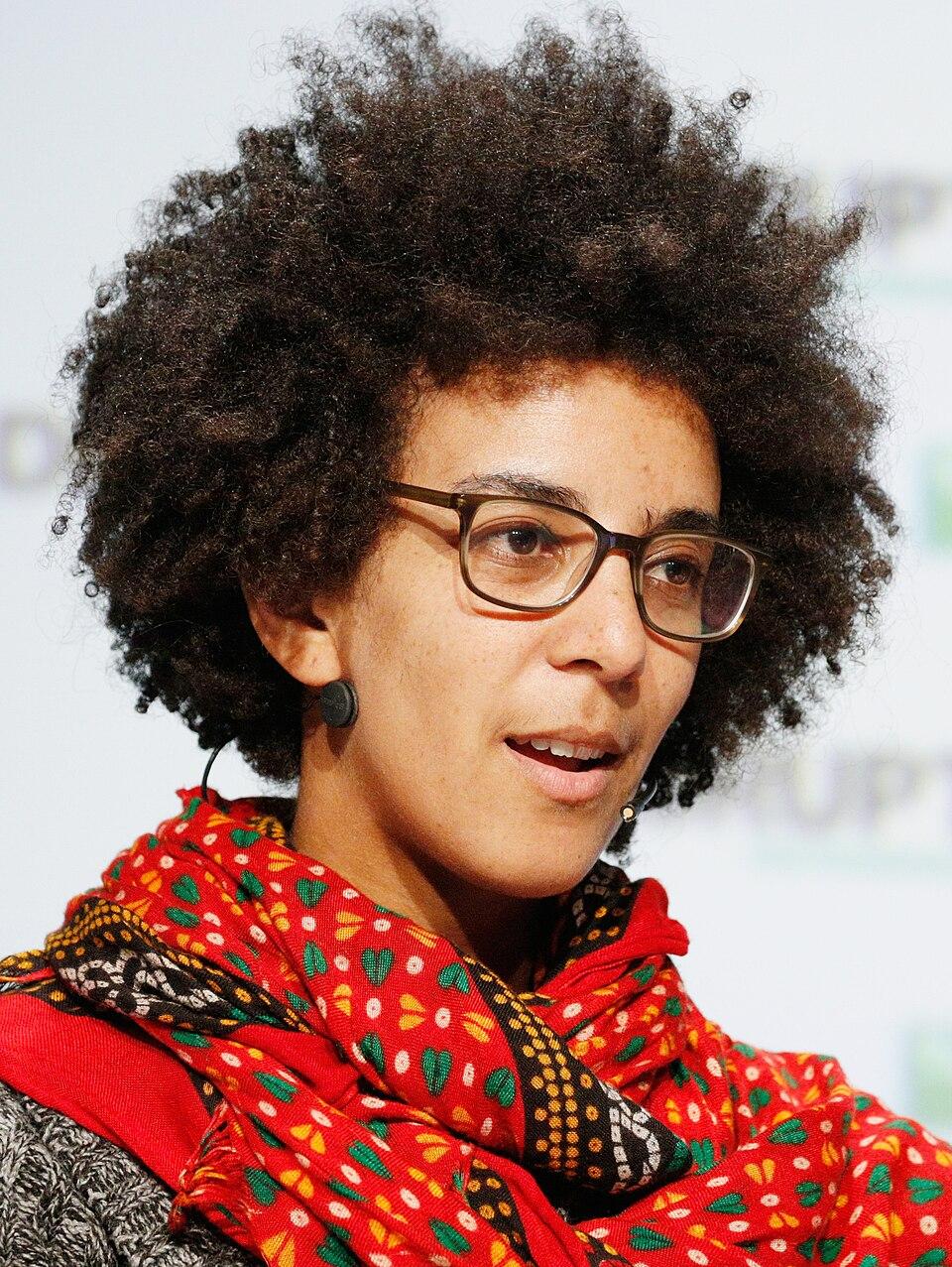
Émile P. Torres is an American philosopher and intellectual historian whose work concerns existential risk, the ethics of human extinction and the ideologies behind the push to build artificial general intelligence. Torres published earlier work under the name Phil Torres, became a transhumanist and longtermist in the early 2010s, and from 2019 became a prominent public critic of longtermism and effective altruism [1][3][10]. With the computer scientist Timnit Gebru, Torres coined the acronym TESCREAL for a bundle of seven techno-utopian ideologies that the two argue descends from twentieth-century eugenics and drives the race to build AGI [4][6]. Torres earned a PhD in philosophy from Leibniz Universität Hannover in 2023, wrote Human Extinction: A History of the Science and Ethics of Annihilation (Routledge), and has been a postdoctoral scholar at the Inamori International Center for Ethics and Excellence at Case Western Reserve University [1][7][12]. Torres is non-binary and uses they/them pronouns [3][11].
Early life and education
Torres grew up in an evangelical Christian family in Maryland. The Observer reported in 2023 that after losing that faith Torres had a "religion-shaped hole". The paper reported that transhumanism filled much the same role for Torres as Christianity had, offering in Torres's words "the promise of immortality, the promise of a future in which suffering is abolished" [3]. On their own website Torres describes the path in three stages: early sympathy for anarcho-primitivism, a turn to transhumanism and longtermism in the early 2010s, and public criticism of those ideas from 2019 onward [1].
According to the same biography, Torres received a BA with honors in philosophy from the University of Maryland, College Park, in 2007 and an MS in neuroscience from Brandeis University two years later, and spent time as a "special student" at Harvard University before working for roughly a decade as an independent scholar [1]. Torres received a PhD in philosophy from Leibniz Universität Hannover in Germany in 2023; the dissertation became the Routledge book Human Extinction [1]. During the 2022-2023 winter semester at Leibniz, Torres taught a course titled "The Ethics of Human Extinction", which they believe was the first course on what they call Existential Ethics [1].
Career
Existential risk research
Torres's early academic work belonged to the field of existential and global catastrophic risk. A large part of it concerned what Torres called "agential risks", beginning with "Agential Risks: A Comprehensive Introduction" in the Journal of Evolution and Technology (2016) and continuing with "Who Would Destroy the World? Omnicidal Agents and Related Phenomena" in Aggression and Violent Behavior (2018) [2]. Other papers from this period include "Space colonization and suffering risks: Reassessing the 'maxipok rule'" in Futures (2018) [17], "Existential risks: a philosophical analysis" in Inquiry (published online in 2019) [16], and "The future of war: could lethal autonomous weapons make conflict more ethical?", written with Steven Umbrello and Angelo F. De Bellis for AI & Society [18]. Torres also contributed a chapter on superintelligence and governance to Artificial Intelligence Safety and Security (CRC Press, 2018), edited by Roman Yampolskiy [2]. Several of these were published under the name Phil Torres [16][17][18].
Two popular books came out of this work, both from Pitchstone Publishing and both under the name Phil Torres. The End: What Science and Religion Tell Us About the Apocalypse (2016) has a foreword by Russell Blackford, and Morality, Foresight, and Human Flourishing: An Introduction to Existential Risks (2017) has a foreword by the Astronomer Royal Martin Rees [1][27][24][25]. The Observer later described the 2017 book as one that "essentially reiterated longtermist arguments" [3].
Torres's website lists a number of affiliations with organisations in this field: writing for the Future of Life Institute (FLI), an affiliate scholar post at the Institute for Ethics and Emerging Technologies, a few days as a visiting scholar at Oxford's Future of Humanity Institute in 2017, where they gave a talk on agential risks, and several months at the Centre for the Study of Existential Risk at Cambridge [1]. The site also says Torres worked as a research assistant for Ray Kurzweil's 2024 book The Singularity Is Nearer [1]. A 2022 Politico Europe report on FLI's lobbying in Brussels said that FLI's techno-optimism eventually turned Torres against the organisation. Torres said, "None of them seem to consider that maybe we should explore some kind of moratorium," and told the paper that raising such points with an FLI staff member led to a sort of excommunication; Politico noted that Torres's articles had been removed from FLI's website [9].
Academic posts and writing
By January 2024 Torres was a postdoctoral scholar at the Inamori International Center for Ethics and Excellence at Case Western Reserve University, and the author note on the TESCREAL paper published that April gives the same affiliation [12][4]. The short biography on Torres's website also lists this post [1].
Alongside academic work, Torres writes for general audiences. They are a contributing writer at Truthdig and were previously one at Salon [1][22][23], and their website lists essays in outlets including The Washington Post, Aeon, New Statesman and the Bulletin of the Atomic Scientists [1]. Torres hosts the podcast Dystopia Now with the comedian Kate Willett and writes a newsletter called Realtime Techpocalypse [1].
Critique of longtermism
Torres's essay "Against longtermism" appeared in Aeon on 19 October 2021 [5]. Writing as "a former longtermist who published an entire book four years ago in defence of the general idea", Torres called the view "quite possibly the most dangerous secular belief system in the world today" [5]. The essay traces longtermism to the work of Nick Bostrom and Nick Beckstead, names Toby Ord as its most public defender, and notes the Oxford research centres connected to it, including the Forethought Foundation run by William MacAskill [5]. Its central objections are that measuring catastrophes against humanity's vast potential future makes the suffering of people alive now "hardly even register" by comparison; that the longtermist idea of "our potential" rests on transhumanism, space expansionism and total utilitarianism; and that this kind of utilitarian reasoning treats people as "containers" of value rather than as valuable in themselves [5].
Torres has developed the argument in interviews and news coverage. In a May 2023 Current Affairs interview with the editor Nathan J. Robinson, Torres explained what they see as the "dystopian tendencies" of effective altruism and longtermism, including the effective altruist argument for "earning to give" by taking a high-paying job and donating much of the salary [10]. Torres told The Observer that after studying utopian movements that turned violent, they concluded that longtermism "is similar in all of the most important respects" to them, and that they worry about what the ideology "could justify in the minds of true believers" [3]. In an August 2023 report by Agence France-Presse, Torres said longtermism rested on the kind of principles used in the past to justify mass killing, and argued that talk of human extinction draws attention away from present harms such as the low pay of Kenyan workers and the exploitation of artists and writers [11].
TESCREAL
The acronym TESCREAL (pronounced "tess-cree-all", according to Torres) stands for "transhumanism, Extropianism, singularitarianism, (modern) cosmism, Rationalism, Effective Altruism, and longtermism" [4][6]. In a June 2023 Truthdig essay, Torres wrote that they proposed the acronym while writing a then-unpublished paper with Gebru, as shorthand for a list of ideologies that was awkward to repeat, and that it combines the first letters of the ideologies "in roughly the same order they appeared over the past three and a half decades" [6]. The same essay introduced the derived terms "TESCREALism" for the bundle as a whole and "TESCREAList" for someone who endorses most or all of it, and noted that the venture capitalist Marc Andreessen had for a time described himself as a "TESCREAList" in his Twitter profile [6].
The paper, "The TESCREAL bundle: Eugenics and the promise of utopia through artificial general intelligence", was published in First Monday on 14 April 2024, in the issue dated 1 April 2024; the journal records it as received on 21 September 2023 and accepted on 10 March 2024 [4]. Gebru and Torres argue that the normative framework motivating the goal of AGI "is rooted in the Anglo-American eugenics tradition of the twentieth century", that the seven ideologies are "direct descendants of first-wave eugenics", and that the movement to build AGI produces "systems that harm marginalized groups and centralize power, while using the language of 'safety' and 'benefiting humanity' to evade accountability" [4]. The paper also argues that systems as undefined as AGI cannot be properly tested for safety, and urges researchers to build well-scoped systems for defined tasks instead [4].
The term circulated before the paper appeared: by June 2023, Torres wrote, the Financial Times, Business Insider and VentureBeat had used or investigated the word [6]. Torres wrote the entry "TESCREAL" for the Oxford Research Encyclopedia of Science, Technology, and Society, published in June 2026 [26].
Existential ethics and Human Extinction
More recently, Torres's academic work has centred on the ethical and evaluative implications of human extinction [1], a field they call Existential Ethics, "the study of the ethical and evaluative implications of human extinction" [13]. Human Extinction: A History of the Science and Ethics of Annihilation appeared from Routledge in 2023 (the publisher's page gives a 2024 copyright date and a length of 542 pages) [7][8]. Organised in two main parts, "Existential Moods" and "Existential Ethics", the book traces how Western thinkers have imagined human extinction from the Presocratics to contemporary research on existential risk [7]. The Observer summarised its thesis as being that extinction was an ancient concern that the rise of Christianity, with its promise of salvation, removed from public discourse [3]. On the ethical side, the publisher's description says the book argues "that extinction would be very bad under most circumstances, although the outcome might be, on balance, good" [7].
That last point drew attention. The 2023 Observer profile opened with Torres's view that it "would not be a bad thing" if humanity ceased to exist, and quoted Torres as saying that most pro-extinctionists would find most ways of going extinct unacceptable, but that they saw nothing wrong with a scenario in which everybody decided not to have children. The profile also noted that, in practice, extinction is "not an end they wish to see or promote" [3]. Torres's website says the article gives "a very misleading impression" of their views within Existential Ethics [1].
Later papers set out the framework more formally. "If Artificial Superintelligence Were to Cause Our Extinction, Would That Be So Bad?" in the Canadian Journal of Bioethics (2025) divides Existential Ethics into three main positions, "equivalence views, further-loss views, and pro-extinctionist views", and asks how each would judge extinction caused by a misaligned artificial superintelligence [13]. Torres has also published "On the extinction of humanity" in Synthese (2025) [14] and "Should Humanity Go Extinct? Exploring the Arguments for Traditional and Silicon Valley Pro-extinctionism" in The Journal of Value Inquiry (published online in December 2025) [15].
Commentary on AI
Much of Torres's recent writing argues that leading figures in AI hold a pro-extinctionist view of their own. In "A Tale of Two Extinctions" (Truthdig, June 2025), Torres argued that pro-extinctionism is "hiding in plain sight" in Silicon Valley ideologies such as transhumanism, longtermism and accelerationism. On this reading, when such advocates warn about "human extinction" they mean humanity dying out without leaving posthuman successors, and they would not object to our species disappearing if posthumans replaced it [20]. Torres applied the same reading to Eliezer Yudkowsky and Nate Soares's 2025 book If Anyone Builds It, Everyone Dies, calling it "propaganda" for the TESCREAL ideologies. Torres argued that the authors count posthuman descendants as part of "humanity" and want superintelligence built once they judge the world ready for it, and called the underlying vision of replacing humans with "superior" posthumans "digital eugenics" [19].
Torres also criticises AI companies directly. In January 2024 New Scientist reported on a survey of about 2,700 AI researchers in which almost 58 per cent put a 5 per cent chance on human extinction or other extremely bad AI-related outcomes; Torres told the magazine there was no need to panic yet, saying many AI experts "don't have a good track record" of forecasting AI developments and that the field could go through another winter [28][12]. In "The Tyrannical Race to Build Superintelligence" (Truthdig, September 2026), Torres argued that OpenAI and Anthropic speak of democracy while releasing AI systems without public consent, and cited a Glassdoor survey in which approval of AI among U.S. employees had declined every year since 2019 [21].
Reception and disputes
The Observer's Andrew Anthony wrote in 2023 that Torres had become "a thorn in the side of the longtermist movement" and its "most vehement critic", and called Human Extinction "an impressive study of a neglected subject" [3]. The same profile described the dispute between Torres and the effective altruism and longtermist communities as one fought through personal attacks on both sides. It summarised Torres's view of those communities as "a sinister cult with an elitist agenda hidden behind a benign and charitable front", and reported that many of their members have accused Torres of factual misrepresentation and intellectual dishonesty [3]. Torres told the paper they had received harassing messages and threats of physical violence since beginning their public critique. The profile also noted online accounts accusing Torres of harassing the philosopher Peter Boghossian and the British cultural theorist Helen Pluckrose. Torres rejected those accounts as untrue and called them "a coordinated campaign of harassment" [3].
Torres's website says that in December 2022 they started a fundraiser with Nathan Young, an effective altruist, that raised more than $321,000 for the charity GiveDirectly [1].
Selected works
| Year | Work | Venue |
|---|---|---|
| 2016 | The End: What Science and Religion Tell Us About the Apocalypse (as Phil Torres) | Pitchstone [24] |
| 2017 | Morality, Foresight, and Human Flourishing: An Introduction to Existential Risks (as Phil Torres) | Pitchstone [25] |
| 2018 | "Space colonization and suffering risks: Reassessing the 'maxipok rule'" | Futures 100 [17] |
| 2019 | "Existential risks: a philosophical analysis" | Inquiry [16] |
| 2020 | "The future of war: could lethal autonomous weapons make conflict more ethical?" (with Umbrello and De Bellis) | AI & Society 35 [18] |
| 2021 | "Against longtermism" | Aeon [5] |
| 2023 | Human Extinction: A History of the Science and Ethics of Annihilation | Routledge [7][8] |
| 2024 | "The TESCREAL bundle" (with Timnit Gebru) | First Monday 29(4) [4] |
| 2025 | "If Artificial Superintelligence Were to Cause Our Extinction, Would That Be So Bad?" | Canadian Journal of Bioethics 8(3) [13] |
| 2025 | "On the extinction of humanity" | Synthese [14] |
| 2025 | "Should Humanity Go Extinct?" | The Journal of Value Inquiry [15] |
| 2026 | "TESCREAL" | Oxford Research Encyclopedia of Science, Technology, and Society [26] |
Continue reading
- LongtermismLongtermism is the ethical view that positively influencing the long-term future is a key moral priority of our time. The Oxford philosopher William MacAskill proposed the term in October 2017.Mentioned 17 times above
- TESCREALTESCREAL is an acronym coined by the computer scientist Timnit Gebru and the philosopher Émile P. Torres for a group of seven overlapping ideologies: transhumanism, Extropianism, singularitarianism, cosmism…Mentioned 9 times above
- TranshumanismTranshumanism is an intellectual and cultural movement that holds that the human condition can and should be fundamentally improved through science and technology, in particular through technologies that…Mentioned 6 times above
- Effective AltruismEffective altruism (often abbreviated EA) is a philosophical and social movement that uses evidence and careful reasoning to identify the most effective ways to benefit othersMentioned 4 times above
- Timnit GebruTimnit Gebru is an Ethiopian-born computer scientist and a leading researcher in AI ethics, best known for co-authoring the 2018 "Gender Shades" study on bias in facial recognition, co-leading Google's Ethical…Mentioned twice above
- Existential risk from AIExistential risk from artificial intelligence (also called AI x-risk) is the hypothesis that the development of sufficiently advanced artificial intelligence could cause human extinction, permanent…Listed in See also
More to read
References
- ^1 ^2 ^3 ^4 ^5 ^6 ^7 ^8 ^9 ^10 ^11 ^12 ^13 ^14 ^15 ^16Émile P. Torres. "Émile P. Torres" (personal website, biography). xriskology.com, accessed 2026-11-18. xriskology.com
- ^1 ^2Émile P. Torres. "Scholarly Stuff". xriskology.com, accessed 2026-11-18. xriskology.com/academic
- ^1 ^2 ^3 ^4 ^5 ^6 ^7 ^8 ^9 ^10Andrew Anthony. "'What if everybody decided not to have children?' The philosopher questioning humanity's future". The Observer (The Guardian), 2023-07-22. theguardian.com/...m-human-extinction-emile-torres
- ^1 ^2 ^3 ^4 ^5 ^6 ^7Timnit Gebru and Émile P. Torres. "The TESCREAL bundle: Eugenics and the promise of utopia through artificial general intelligence". First Monday 29(4), published 2024-04-14. doi.org/...fm.v29i4.13636
- ^1 ^2 ^3 ^4 ^5Émile P. Torres. "Against longtermism" (also titled "Why longtermism is the world's most dangerous secular credo"). Aeon, 2021-10-19. aeon.co/...the-worlds-most-dangerous-secular-credo
- ^1 ^2 ^3 ^4 ^5Émile P. Torres. "The Acronym Behind Our Wildest AI Dreams and Nightmares". Truthdig, 2023-06-15. truthdig.com/...r-wildest-ai-dreams-and-nightmares
- ^1 ^2 ^3 ^4 ^5Routledge. "Human Extinction: A History of the Science and Ethics of Annihilation" (book page). Routledge, accessed 2026-11-18. routledge.com/...9781032159065
- ^1 ^2Émile P. Torres. "Human Extinction" (monograph record). Routledge, 2023. doi.org/...9781003246251
- ^Gian Volpicelli. "Stop the killer robots! Musk-backed lobbyists fight to save Europe from bad AI". Politico Europe, 2022-11-24. politico.eu/...s-trying-to-save-europe-from-bad-ai
- ^1 ^2Current Affairs. "Why Effective Altruism and 'Longtermism' Are Toxic Ideologies" (interview with Émile P. Torres by Nathan J. Robinson). Current Affairs, 2023-05-07. currentaffairs.org/...termism-are-toxic-ideologies
- ^1 ^2Agence France-Presse. "The fight over a 'dangerous' ideology shaping AI debate". France 24, 2023-08-27. france24.com/...ngerous-ideology-shaping-ai-debate
- ^1 ^2 ^3Case Western Reserve University. "Inamori International Center for Ethics and Excellence's Émile Torres weighs in on superhuman AI panic". The Daily (CWRU Newsroom), 2024-01-23. thedaily.case.edu/...ghs-in-on-superhuman-ai-panic
- ^1 ^2 ^3Émile P. Torres. "If Artificial Superintelligence Were to Cause Our Extinction, Would That Be So Bad?". Canadian Journal of Bioethics 8(3), 2025. doi.org/...1118904ar
- ^1 ^2Émile P. Torres. "On the extinction of humanity". Synthese, 2025. doi.org/...s11229-025-05094-4
- ^1 ^2Émile Torres. "Should Humanity Go Extinct? Exploring the Arguments for Traditional and Silicon Valley Pro-extinctionism". The Journal of Value Inquiry, 2025-12-26. doi.org/...s10790-025-10072-7
- ^1 ^2 ^3Phil Torres. "Existential risks: a philosophical analysis". Inquiry 66(4): 614-639, published online 2019-08-23. doi.org/...0020174X.2019.1658626
- ^1 ^2 ^3Phil Torres. "Space colonization and suffering risks: Reassessing the 'maxipok rule'". Futures 100: 74-85, June 2018. doi.org/...j.futures.2018.04.008
- ^1 ^2 ^3Steven Umbrello, Phil Torres and Angelo F. De Bellis. "The future of war: could lethal autonomous weapons make conflict more ethical?". AI & Society 35(1): 273-282, published online 2019-02-06. doi.org/...s00146-019-00879-x
- ^Émile P. Torres. "Under a Mask of AI Doomerism, the Familiar Face of Eugenics". Truthdig, 2025-10-17. truthdig.com/...rism-the-familiar-face-of-eugenics
- ^Émile P. Torres. "A Tale of Two Extinctions". Truthdig, 2025-06-19. truthdig.com/...a-tale-of-two-extinctions
- ^Émile P. Torres. "The Tyrannical Race to Build Superintelligence". Truthdig, 2026-09-04. truthdig.com/...al-race-to-build-superintelligence
- ^Salon. "Émile P. Torres" (author page). Salon, accessed 2026-11-18. salon.com/...phil_torres
- ^Truthdig. "Émile P. Torres, Author at Truthdig". Truthdig, accessed 2026-11-18. truthdig.com/...emile-p-torres
- ^1 ^2Open Library. "The end" by Phil Torres (Pitchstone, 2016). Open Library. openlibrary.org/...OL20018467W
- ^1 ^2Open Library. "Morality, Foresight, and Human Flourishing" by Phil Torres (Pitchstone, 2017). Open Library. openlibrary.org/...OL26330857W
- ^1 ^2Émile P. Torres. "TESCREAL". Oxford Research Encyclopedia of Science, Technology, and Society, 2026. doi.org/...9780197852712.003.0070
- ^Émile P. Torres. "Books". xriskology.com, accessed 2026-11-18. xriskology.com/books
- ^Jeremy Hsu. "There's a 5% chance of AI causing humans to go extinct, say scientists". New Scientist, 2024-01-04. newscientist.com/...s-to-go-extinct-say-scientists
Improve this article
Add missing citations, update stale details, or write a clearer explanation. Anyone can edit: changes go live when you publish, and every edit is checked by an editor.
2 revisions · v2 · 3,049 words · full history
Fact-checks are independent of edits: a reviewer re-verifies the article against its sources and stamps the date. How we verify
Research and drafting on this wiki are AI-assisted, under named human editorial standards. How AI is used here
Reviewer note: Independent fact-check before publication on November 18, 2026: 78 claims checked against 31 cited and independent sources; 0 material and 7 minor corrections applied before publication.
Cite this page: AI Wiki. "Émile P. Torres." aiwiki.ai, updated 18 Nov 2026, fact-checked 18 Nov 2026. CC BY 4.0. https://aiwiki.ai/wiki/emile_torres