

Koray Kavukcuoglu
Koray Kavukcuoglu is a Turkish computer scientist who leads Google DeepMind as its Senior Vice President, a role he assumed on 5 August 2026, and serves as Chief AI Architect of Google [17]. Google describes him as "one of the world's foremost experts in artificial intelligence" [12]. He was previously Chief Technology Officer of Google DeepMind, with the official title "CTO, Google DeepMind and Chief AI Architect, Google" [12][17]. He joined DeepMind in 2012 as one of its early research scientists and rose through the organization to lead research before becoming its CTO. His name is associated with several of the laboratory's best known results, including the deep Q-network that learned to play Atari games, the AlphaGo program, and the WaveNet audio model [1][2][3]. On 11 June 2025 Google's chief executive Sundar Pichai named him to the newly created role of Chief AI Architect, a senior vice president position reporting directly to Pichai, with a remit to speed the integration of Google's Gemini models into the company's products [4][5]. On 5 August 2026 Pichai announced that Kavukcuoglu would step up as SVP of Google DeepMind, reporting to him and taking over day-to-day leadership of the laboratory from co-founder Demis Hassabis, who became Chair of Google DeepMind and Chief Scientist of Alphabet [17][18].
Before his industrial career, Kavukcuoglu trained first as an aerospace engineer and then completed a doctorate in computer science at New York University under Yann LeCun, where his thesis dealt with unsupervised learning of feature hierarchies and with convolutional networks for visual recognition [6][7].
Who is Koray Kavukcuoglu?
Koray Kavukcuoglu is a computer scientist and AI research leader of Turkish origin who holds two of the most senior technical positions at Google. As SVP of Google DeepMind, a post he took on 5 August 2026, he runs the organization day to day, overseeing Gemini model development, Frontier AI research, and the Gemini app and developer teams [17]. As Google's Chief AI Architect he carries a cross-company mandate to accelerate how the company's generative AI models reach products [12]. He has spent more than a decade at DeepMind, joining in 2012 and progressing from research scientist to VP of Research, then to CTO, and in August 2026 to SVP of Google DeepMind [4][9][17]. Outside Google he is best known as a co-author of the DQN Atari paper, the AlphaGo paper, and the WaveNet paper, three results that became reference points in deep reinforcement learning and generative audio [1][2][3].
What is his educational background?
Kavukcuoglu earned undergraduate and master's degrees in aerospace engineering from the Middle East Technical University in Ankara [6][7]. He moved into computer science as a graduate student at New York University, completing a master's degree in 2005 and a doctorate in 2010 [6]. His doctoral advisor was Yann LeCun, a researcher closely identified with convolutional neural networks, and his work also drew on the computational neuroscience tradition associated with Eero Simoncelli at NYU's Center for Neural Science [6][7].
His 2010 dissertation, titled Learning Feature Hierarchies for Object Recognition, addressed how a system can learn useful image features from data without hand designed labels [6]. The thesis brought together sparse coding, a method that represents inputs as combinations of a small number of basis elements, with the layered structure of convolutional networks. The timing placed his graduate work just before the rapid expansion of deep learning, and several techniques he developed during this period reappeared in later research on feature learning.
What was his early research?
During his graduate years and in a subsequent post at NEC Laboratories America, Kavukcuoglu published a sequence of papers on unsupervised feature learning [7][8]. The work that became most widely cited is Predictive Sparse Decomposition, often abbreviated PSD. Sparse coding had long been used to find compact representations of data, but solving the sparse code for each new input required an iterative optimization that was slow at test time. PSD trained a fast predictor function alongside the sparse dictionary, so that the system could produce a good approximation of the sparse representation in a single forward pass [8]. This made sparse coding practical as a building block inside larger recognition pipelines.
Kavukcuoglu extended these ideas to images in collaboration with LeCun and others. A 2009 paper on invariant features through topographic filter maps and a 2010 paper on learning convolutional feature hierarchies showed how sparse coding could be applied across the spatial structure of an image and stacked into multiple stages [7]. He also contributed to a survey of convolutional networks and their applications in vision, and he helped build early software for the field, including work on the Torch machine learning library and on hardware accelerated convolutional networks [7][9].
How did he rise through DeepMind?
Kavukcuoglu joined DeepMind in 2012, two years before Google acquired the London laboratory in 2014 [4][10]. He arrived as one of the company's first research scientists and worked on the early projects that established its reputation.
The first of these was deep reinforcement learning applied to video games. In a 2015 paper in the journal Nature, titled Human-level control through deep reinforcement learning, Kavukcuoglu was the second author after Volodymyr Mnih on the work that introduced the deep Q-network, or DQN [1]. The system combined a convolutional network with Q-learning, a method from reinforcement learning, and learned to play 49 Atari 2600 games directly from screen pixels, reaching a level comparable to a professional human tester on many of them [1]. The result drew wide attention because a single architecture learned a range of different games without game specific tuning.
Kavukcuoglu was also among the authors of the 2016 Nature paper Mastering the game of Go with deep neural networks and tree search, which described AlphaGo [2]. AlphaGo combined policy and value networks, trained by supervised learning from human games and by reinforcement learning through self play, with Monte Carlo tree search. The program defeated a professional Go player, a milestone that had been considered years away for computer Go [2].
In the same year he was the senior author of WaveNet, described in the paper WaveNet: A Generative Model for Raw Audio [3]. WaveNet generated audio one sample at a time using a deep autoregressive network with dilated convolutions, and when applied to text to speech it produced output that listeners rated as more natural than the parametric and concatenative systems used at the time [3]. The model went on to power the voice of Google Assistant for millions of users, an early example of DeepMind research reaching a mass product [9][16]. His work in this period also included IMPALA, a scalable architecture for distributed reinforcement learning [16].
Kavukcuoglu became VP of Research at DeepMind, a role in which he founded the deep learning team and oversaw the laboratory's research agenda [4][5][9]. Under his direction the organization pursued a broad program that included game playing systems, protein structure prediction, and language models. He was credited as a contributor to several of these efforts, and his judgment helped set research priorities during a period of rapid output.
In April 2023 Google combined DeepMind with the Google Brain team to form a single unit called Google DeepMind [10][11]. As part of the reorganization the company created a scientific board to guide research direction, and Kavukcuoglu, then VP of Research, was named to lead it [11]. The merger brought together two of the largest AI research groups in one organization led by Demis Hassabis as chief executive [10][11].
What was his role as Chief Technology Officer of Google DeepMind?
Following the formation of Google DeepMind, Kavukcuoglu became its Chief Technology Officer [4][12]. In that role he led the development of the organization's generative AI models and the work of bringing them into Google's products at scale [12]. He held the CTO post until August 2026, when he stepped up to lead the whole organization as SVP [17]. His career to that point had run entirely through research environments, from NYU and NEC Laboratories America to more than a decade at DeepMind, and the CTO appointment placed a researcher with deep technical background at the head of the laboratory's engineering and model development [4][9].
The period coincided with the development of the Gemini family of models, Google DeepMind's main line of large multimodal systems. As CTO he represented the technical direction of this work in public settings, including appearances at Google's developer conferences [12][13].
Why did Google name him Chief AI Architect in 2025?
On 11 June 2025 Sundar Pichai announced in a memo to employees that Kavukcuoglu would take on a new role as Chief AI Architect, a senior vice president position reporting directly to Pichai [4][5]. He kept his existing post as CTO of Google DeepMind while adding the new responsibility [4][5]. As part of the change he relocated from London to the area around Google's headquarters in Mountain View, California, to work more closely with the company's product teams [4][5].
The role was framed around closing the distance between research and products. In the memo Pichai wrote that Kavukcuoglu would "accelerate how we bring our world-leading models into our products, with the goal of more seamless integration, faster iteration, and greater efficiency," and he set the move in a broader context: "We're entering a new phase of the AI platform shift. It will require us to also shift into a new gear as a company to ensure our products are evolving just as quickly as our models" [5]. In practice this meant overseeing how Gemini and related systems are embedded across Google's offerings, from Search and the Android platform to the company's hardware [4][14]. Reporting on the appointment placed it in the context of intense competition in generative AI, where rivals were releasing capable systems quickly and where the speed of shipping models into widely used products had become a measure of standing in the field [4][14].
The creation of the position reflected a structural choice at Google. Rather than leaving model development and product integration to separate chains of command, the company put a single senior technical leader across both, drawing on Kavukcuoglu's familiarity with the models themselves [4][5][14]. In a November 2025 interview tied to the launch of Gemini 3, Kavukcuoglu discussed the new role together with the company's research direction and its stated long term goal of building artificial general intelligence [16].
How did he come to lead Google DeepMind in 2026?
On 5 August 2026 Sundar Pichai announced a set of leadership changes at Google DeepMind under which Kavukcuoglu, until then its CTO, stepped up as Senior Vice President of Google DeepMind, reporting directly to Pichai [17][18]. In the new role he oversees Gemini model development, Frontier AI research, and the Gemini app and developer teams, in addition to his continuing responsibilities as Chief AI Architect of Google [17]. Announcing the change, Pichai wrote: "Koray has been at DeepMind since its early days, and over his 13 years there, he has started our deep learning team and led the way on breakthroughs like WaveNet and DQN. I look forward to seeing him lead GDM into this next chapter" [17].
The elevation was part of a broader transition at the top of Google's AI organization. Demis Hassabis, the laboratory's co-founder and chief executive, handed over his day-to-day operational responsibilities to become Chair of Google DeepMind and Chief Scientist of Alphabet, while continuing to lead Isomorphic Labs [17][18]. In his note to staff Hassabis said he and Kavukcuoglu had been working together "for over 13 years, since the early days of DeepMind," called him "one of the world's foremost AI experts," and wrote that the Gemini models "are in good hands with Koray and the leads, as they have been for a while" [17]. Google also announced that Jeff Dean, whom The Verge identified as Google DeepMind's chief scientist, was leaving after a 27-year run to launch an independent public benefit corporation with Sanjay Ghemawat [17][18].
What is Koray Kavukcuoglu known for?
Kavukcuoglu is widely regarded as a leading figure in artificial intelligence, and Google's own description calls him one of the world's foremost experts in the field [12]. His standing rests on authorship of several heavily cited papers, including the Nature articles on the deep Q-network and on AlphaGo and the WaveNet paper, each of which became a reference point in its area [1][2][3]. Industry listings of senior technology leaders have included him among prominent chief technology officers in Europe and the wider region [9]. His career is also noted as an example of a research scientist who moved from foundational academic work on feature learning to leadership of a major industrial laboratory and then to a company wide role shaping how AI reaches products [4][9][15].
Selected facts
| Field | Detail |
|---|---|
| Full name | Koray Kavukcuoglu |
| Nationality | Turkish |
| Field | Artificial intelligence, deep learning, reinforcement learning |
| Undergraduate and master's | Aerospace engineering, Middle East Technical University, Ankara |
| Graduate study | MS (2005) and PhD (2010) in computer science, New York University |
| Doctoral advisor | Yann LeCun |
| PhD thesis | Learning Feature Hierarchies for Object Recognition (2010) |
| Earlier post | Research staff, NEC Laboratories America |
| Joined DeepMind | 2012 |
| Known for | DQN, AlphaGo contributions, WaveNet, IMPALA, leading DeepMind research |
| Role at Google DeepMind | Senior Vice President (from 5 August 2026); previously Chief Technology Officer |
| Additional role | Chief AI Architect, Google (from 11 June 2025), reporting to Sundar Pichai |
| Reports to | Sundar Pichai |
References
- ^1 ^2 ^3 ^4 ^5Mnih, Volodymyr; Kavukcuoglu, Koray; Silver, David; et al. "Human-level control through deep reinforcement learning." Nature 518, 529-533 (2015). nature.com/...nature14236
- ^1 ^2 ^3 ^4 ^5Silver, David; Huang, Aja; Maddison, Chris J.; et al. "Mastering the game of Go with deep neural networks and tree search." Nature 529, 484-489 (2016). nature.com/...nature16961
- ^1 ^2 ^3 ^4 ^5van den Oord, Aaron; Dieleman, Sander; Zen, Heiga; et al. "WaveNet: A Generative Model for Raw Audio." arXiv:1609.03499 (2016). arxiv.org/...1609.03499
- ^1 ^2 ^3 ^4 ^5 ^6 ^7 ^8 ^9 ^10 ^11 ^12 ^13"Google taps DeepMind's Kavukcuoglu for new chief AI architect role." CNBC, 11 June 2025. cnbc.com/...google-kavukcuoglu-chief-ai-architect
- ^1 ^2 ^3 ^4 ^5 ^6 ^7"Exclusive: Google names new chief AI architect to advance developments." Semafor, 11 June 2025. semafor.com/...i-architect-to-advance-developments
- ^1 ^2 ^3 ^4 ^5Kavukcuoglu, Koray. "Learning Feature Hierarchies for Object Recognition." PhD thesis, New York University, 2010. cs.nyu.edu/...kavukcuoglu_koray.pdf
- ^1 ^2 ^3 ^4 ^5 ^6"Koray Kavukcuoglu." Chessprogramming wiki. chessprogramming.org/Koray_Kavukcuoglu
- ^1 ^2Kavukcuoglu, Koray; Ranzato, Marc'Aurelio; LeCun, Yann. "Fast Inference in Sparse Coding Algorithms with Applications to Object Recognition." arXiv:1010.3467 (2010). arxiv.org/...1010.3467
- ^1 ^2 ^3 ^4 ^5 ^6 ^7"Koray Kavukcuoglu, CTO, Google DeepMind, Top 30 EMEA CTOs 2025." Neon River. neonriver.com/koray-kavukcuoglu-2025
- ^1 ^2 ^3"Google consolidates AI research divisions into Google DeepMind." TechCrunch, 20 April 2023. techcrunch.com/...h-divisions-into-google-deepmind
- ^1 ^2 ^3"Announcing Google DeepMind." Google DeepMind blog, 20 April 2023. deepmind.google/...announcing-google-deepmind
- ^1 ^2 ^3 ^4 ^5 ^6 ^7"Koray Kavukcuoglu." Google blog author page. blog.google/...koray-kavukcuoglu
- ^"Koray Kavukcuoglu, CTO, Google DeepMind." Google I/O 2024 speakers. io.google/...koray-kavukcuoglu
- ^1 ^2 ^3"Google Appoints Koray Kavukcuoglu as Chief AI Architect." Stan Ventures, June 2025. stanventures.com/...glu-as-chief-ai-architect-3372
- ^"Google Names DeepMind CTO Kavukcuoglu as First-Ever Chief AI Architect." CTOL Digital Solutions, June 2025. ctol.digital/...oglu-first-ever-chief-ai-architect
- ^1 ^2 ^3"Koray Kavukcuoglu: This Is How We Are Going to Build AGI." Google AI: Release Notes podcast, November 2025. youtube.com/watch
- ^1 ^2 ^3 ^4 ^5 ^6 ^7 ^8 ^9 ^10 ^11 ^12Pichai, Sundar; Hassabis, Demis. "The next chapter of our AI momentum." Google (blog.google), 5 August 2026. blog.google/...next-chapter-ai-momentum
- ^1 ^2 ^3 ^4Peters, Jay. "Google just announced a major shakeup of its top AI leadership." The Verge, 5 August 2026. theverge.com/...deepmind-ai-demis-hassabis-shakeup
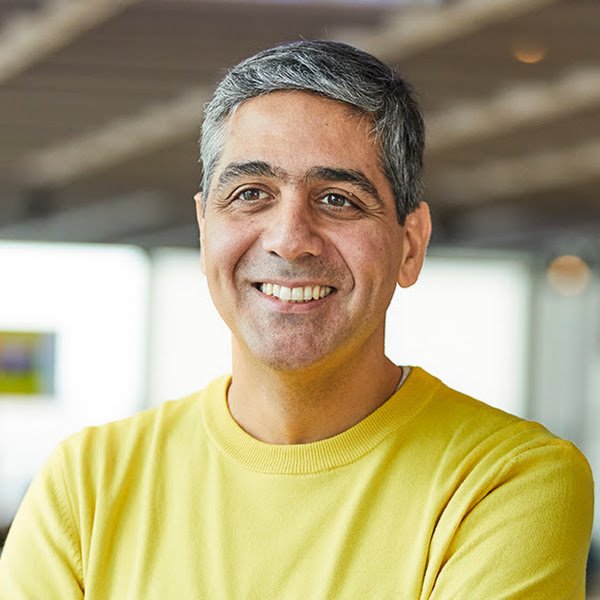
- ^Google. "Koray Kavukcuoglu (Google Image Library)". Google Image Library publication permission. Original official raster, unchanged.
Improve this article
Add missing citations, update stale details, or suggest a clearer explanation. Every suggestion is reviewed for sourcing before it goes live.
6 revisions · v6 · 2,614 words · full history
Fact-checks are independent of edits: a reviewer re-verifies the article against its sources and stamps the date. How we verify
Research and drafting on this wiki are AI-assisted, under named human editorial standards. How AI is used here
Reviewer note: SVP appointment verified against Google's August 5, 2026 announcement and The Verge; verification found Google silently updated its author page after August 5, so the former CTO title is co-cited to the announcement itself.
Cite this page: AI Wiki. "Koray Kavukcuoglu." aiwiki.ai, updated 5 Aug 2026, fact-checked 5 Aug 2026. CC BY 4.0. https://aiwiki.ai/wiki/koray_kavukcuoglu