

AlphaGo
AlphaGo is a computer program developed by DeepMind that plays the board game Go, and it was the first program to defeat a human professional Go player on a full 19x19 board without a handicap [1]. AlphaGo beat three-time European champion Fan Hui 5-0 in October 2015, then defeated South Korean 9-dan professional Lee Sedol 4-1 in Seoul in March 2016, and beat world number one Ke Jie 3-0 in May 2017, after which DeepMind retired it from competition [1][7][8][30]. It combines deep neural networks with Monte Carlo tree search (MCTS), blending supervised learning from human expert games with reinforcement learning from self-play [1]. In its original form the program won 494 of 495 games (99.8%) against other Go programs, and its 2016 Nature paper reported "the first time that a computer program has defeated a human professional player in the full-sized game of Go, a feat previously thought to be at least a decade away" [1].

AlphaGo is widely regarded as a turning point in artificial intelligence, demonstrating that machines could master a game long considered too complex and intuitive for computers to play at a professional level. Its successors, AlphaZero (which generalized the approach to chess and shogi) and MuZero, extended the same self-play methodology. DeepMind, the lab behind AlphaGo, went on to build AlphaFold, work that earned Demis Hassabis a share of the 2024 Nobel Prize in Chemistry [16]. In a retrospective marking the tenth anniversary of the Seoul match in March 2026, Hassabis described AlphaProof, DeepMind's formal mathematics system, as the most direct descendant of AlphaGo's architecture [35].
Go, which originated in China more than 2,500 years ago [12][43], presents a far greater search space than chess. A standard 19x19 Go board has about 2.08 x 10^170 legal positions [2], compared with an estimated 4.8 x 10^44 legal positions in chess [44]. The game's enormous branching factor (about 250 legal moves per position, versus roughly 35 in chess) and the difficulty of evaluating board positions made Go a grand challenge for AI researchers for decades [1]. Before AlphaGo, the strongest Go programs, which were based on Monte Carlo tree search, had reached the level of strong amateurs [1]. In 2013, Rémi Coulom's program Crazy Stone beat a Japanese professional only after receiving a four-stone head start [43].
What is AlphaGo? (background and development)
AlphaGo was created at DeepMind, a British AI research lab that started in 2010 [3] and was founded by Demis Hassabis, Shane Legg, and Mustafa Suleyman [47]. Google bought DeepMind in January 2014 for a reported 400 million British pounds, which the BBC described as Google's largest European acquisition so far [47]. Under Google's ownership, DeepMind continued operating as a distinct research lab.
The AlphaGo project grew out of DeepMind's broader interest in combining deep learning with reinforcement learning to solve complex sequential decision-making problems. David Silver, whom Wired described as the lead researcher on the project [20], and Aja Huang were the joint first authors of the 2016 paper, which listed 20 authors from DeepMind and Google [1]. Huang, an amateur 6-dan player, also placed AlphaGo's stones on the board during the Lee Sedol match [4]. Hassabis, a former teenage chess prodigy [47], saw Go as a useful testbed: it was well-defined enough to measure progress objectively, but complex enough to require new techniques.
The original AlphaGo paper, "Mastering the game of Go with deep neural networks and tree search," was published in Nature on January 27, 2016 (in the print issue dated January 28, 2016), by David Silver, Aja Huang, and colleagues [1]. The paper described how AlphaGo combined two kinds of deep convolutional neural networks (policy networks and a value network) with Monte Carlo tree search, and reported that, during the Fan Hui match, AlphaGo evaluated thousands of times fewer positions than Deep Blue did in its chess match against Garry Kasparov, compensating by selecting and evaluating positions more intelligently [1].
How does AlphaGo work?
AlphaGo's architecture integrates several components that work together during gameplay. At a high level, deep neural networks handle pattern recognition and position evaluation, while Monte Carlo tree search orchestrates the actual move selection during a game. The interplay between these components is what gave AlphaGo its strength.
Board representation
The Go board is represented as a 19x19 grid. AlphaGo encodes the board state as a set of 48 feature planes, each of size 19x19. These feature planes capture various aspects of the position, including stone colour, liberties (open adjacent points for groups of stones), how many stones a move would capture or put at risk, legality of moves (including the ko rule), how many turns ago each stone was played, and whether ladder captures would succeed. The value network adds a 49th plane indicating which colour is to play. This multi-channel representation allows the neural networks to process the board in a way analogous to how a convolutional neural network processes the color channels of an image [1].
Policy network
The policy network takes the current board state as input and outputs a probability distribution over all legal moves. In essence, it answers the question: "Given this position, which moves are most likely to be good?" The network is a 13-layer convolutional neural network. In the version used in matches, the first layer zero-pads the input to 23x23 and applies 192 filters of size 5x5; layers 2 to 12 each apply 192 filters of size 3x3; and a final 1x1 convolution followed by a softmax produces the move probabilities [1].
Training the policy network happened in two stages:
-
Supervised learning (SL) policy network. The network was first trained on about 30 million board positions from the KGS Go Server, drawn from 160,000 games played by KGS players ranked 6 to 9 dan. The objective was to predict the move that the human player actually made. This SL policy network achieved a prediction accuracy of 57.0% on a held-out test set (55.7% using only the raw board position and move history), compared with 44.4% for the previous state of the art. Training took around three weeks on 50 GPUs [1].
-
Reinforcement learning (RL) policy network. The SL policy network was then improved through self-play. The RL policy network was initialized with the weights of the SL network and then played games against randomly selected previous iterations of itself. It was updated with a policy gradient method (the REINFORCE algorithm), receiving a reward of +1 for winning and -1 for losing. This stage took one day on 50 GPUs. Afterwards, the RL policy network won more than 80% of games against the SL policy network, and, using no search at all, won 85% of games against Pachi, the strongest open-source Go program at the time; the previous best network-only program had won 11% against Pachi [1].
Fast rollout policy
In addition to the full policy network, AlphaGo used a much simpler and faster "rollout policy" based on a linear softmax model with hand-crafted pattern features. This lightweight policy was far less accurate (24.2% move-prediction accuracy) but could select a move in about 2 microseconds, compared with 3 milliseconds for the policy network, roughly 1,500 times faster. It was used during the simulation phase of Monte Carlo tree search to quickly play out games to completion and estimate outcomes [1].
Value network
The value network takes a board position as input and outputs a single number estimating the probability that the current player will win from that position. Its architecture is similar to the policy network, with 13 convolutional layers, but it ends with a fully connected layer of 256 units and a single tanh output rather than a probability distribution over moves [1].
The value network was trained on 30 million positions, each sampled from a separate game of self-play by the RL policy network. Using positions from separate games was important to avoid overfitting: when the authors trained on complete games, the strongly correlated successive positions led the network to memorize game outcomes rather than generalize to new positions. Training took one week on 50 GPUs. A single evaluation by the value network approached the accuracy of Monte Carlo rollouts using the RL policy network, but used 15,000 times less computation [1].
Monte Carlo tree search integration
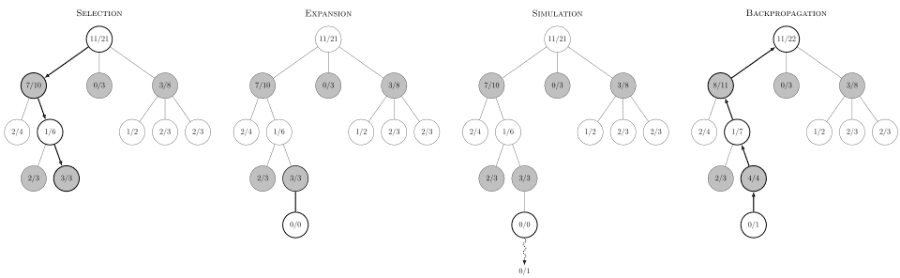
During actual gameplay, AlphaGo combined all these components through a modified version of Monte Carlo tree search. The search proceeds in four steps, repeated thousands of times for each move:
| Step | Name | Description |
|---|---|---|
| 1 | Selection | Starting from the root (current board position), traverse the tree by selecting child nodes using the PUCT algorithm, which balances exploitation (choosing moves with high estimated value) and exploration (trying moves the policy network considers promising but that have been less explored) |
| 2 | Expansion | When a leaf node is reached, expand it by adding a new child node to the tree |
| 3 | Evaluation | Evaluate the new position using both the value network (producing value estimate v) and a fast rollout to the end of the game (producing outcome z) |
| 4 | Backup | Propagate the evaluation back up the tree, updating the statistics (visit count and mean value) of all nodes along the path |
The final evaluation of each position combined the value network's estimate and the rollout outcome using a mixing parameter lambda. In the paper's tests, an equal mixture (lambda = 0.5) performed best, winning at least 95% of games against other variants [1].
The PUCT (Predictor + Upper Confidence bounds applied to Trees) algorithm used in the selection phase incorporated the prior probabilities from the SL policy network. This meant that the search focused its effort on moves that the policy network considered most promising, while still exploring alternatives. The formula for selecting moves balanced the mean action value of a move, a prior probability term from the policy network, and an exploration bonus that decreased as a move was visited more often. The authors found that the SL policy network worked better for this purpose than the stronger RL policy network, "presumably because humans select a diverse beam of promising moves" [1].
The search ran in parallel across CPUs and GPUs. The single-machine version described in the 2016 paper used 40 search threads, 48 CPUs, and 8 GPUs, while the distributed version used 40 search threads, 1,202 CPUs, and 176 GPUs [1].
What hardware did AlphaGo run on?
AlphaGo's hardware requirements varied across its different versions:
| Version | Hardware | Notes |
|---|---|---|
| AlphaGo Fan (2015) | 176 GPUs, distributed across multiple machines | Used in the match against Fan Hui [1][9] |
| AlphaGo Lee (2016) | 48 TPUs, distributed across multiple machines | Used in the match against Lee Sedol; ran through Google Cloud Platform with its server in the United States [4][9][24] |
| AlphaGo Master (2017) | Single machine with 4 TPUs (in DeepMind's internal evaluation) | The version behind the 60-0 online streak and the Ke Jie match; the AlphaGo Zero paper gives its 4-TPU setup only for DeepMind's internal evaluation games [9] |
| AlphaGo Zero (2017) | Single machine with 4 TPUs | No human data; trained entirely through self-play [9] |
Match history
AlphaGo's development can be traced through a series of increasingly high-profile matches, each representing a significant step forward in capability. AlphaGo never lost a formal match series, and Game 4 against Lee Sedol was the only game it lost in a formal match. Fan Hui did win two of five informal, faster games played alongside the formal match in October 2015 [1].
AlphaGo Fan vs. Fan Hui (October 2015)
From October 5 to 9, 2015, AlphaGo played a formal five-game match against Fan Hui, a 2-dan professional and winner of the 2013, 2014, and 2015 European Go championships [1]. The closed-door match took place at DeepMind's headquarters in London [19]. Games were played under Chinese rules with 7.5 komi and no handicap on a full-sized 19x19 board, overseen by an impartial referee, with one hour of main time per player plus three 30-second byo-yomi periods. AlphaGo won all five formal games. Fan Hui also played five informal games under faster time controls (three 30-second byo-yomi periods only), which AlphaGo won 3-2; the two sides had agreed in advance that only the formal games would decide the match [1].
This was the first time any computer program had defeated a professional Go player under these conditions. The result was kept secret until the publication of the Nature paper in January 2016. When the news broke, it sent shockwaves through both the AI and Go communities. Many experts had expected that it would take another decade or more before a computer could beat a professional Go player without a handicap [1][43].
When did AlphaGo beat Lee Sedol? (March 2016)
The match that brought AlphaGo to worldwide attention was a five-game series against Lee Sedol, a South Korean 9-dan professional widely regarded as one of the greatest Go players of the modern era. Lee had won 18 international titles [12], and DeepMind describes him as "widely considered the greatest player of that decade" [7].
The match took place at the Four Seasons Hotel in Seoul, South Korea, from March 9 to March 15, 2016, under Chinese rules with 7.5 komi. Each player had two hours of main time plus three 60-second byo-yomi periods [4][29]. Google put up a prize of one million US dollars; after AlphaGo won, DeepMind said it would give the money to organizations that support science, technology, engineering and math (STEM) education and Go, as well as UNICEF [22]. The games were streamed live, with English commentary by Michael Redmond and Chris Garlock, and DeepMind says over 200 million people watched [4][7][35].
| Game | Date | Result | Notable events |
|---|---|---|---|
| Game 1 | March 9, 2016 | AlphaGo wins (Lee resigns) | Lee: "I didn't think that AlphaGo would play the game in such a perfect manner" [19] |
| Game 2 | March 10, 2016 | AlphaGo wins (Lee resigns) | AlphaGo plays Move 37; Lee said AlphaGo "played a near-perfect game" [50] |
| Game 3 | March 12, 2016 | AlphaGo wins (Lee resigns) | Lee apologized after the loss [20] |
| Game 4 | March 13, 2016 | Lee Sedol wins (AlphaGo resigns) | Lee plays Move 78, the "Hand of God"; AlphaGo resigns after 180 moves [6][37] |
| Game 5 | March 15, 2016 | AlphaGo wins (Lee resigns) | Lee asked to play Black, which he considered the more valuable win [4] |
AlphaGo won the match 4-1. After the final game, Korea Baduk Association chairman Hong Seok-hyun presented Hassabis with a certificate making AlphaGo an honorary ninth dan, the highest rank in Go [23]. DeepMind describes it as the first time a computer Go player had received the highest possible certification [7].
Move 37: a moment of machine creativity
The most discussed moment from the entire match occurred in Game 2, in which AlphaGo played Black. With the 37th move of the game (its 19th stone), the program played a shoulder hit on the fifth line, on top of a White stone on the fourth line, in a mostly empty area on the right side of the board [5][19][21]. Conventional Go wisdom holds that fifth-line plays at that stage are too high and inefficient. "Normally, you don't make a shoulder hit on the fifth line," Fan Hui, who was watching in Seoul, explained in the documentary AlphaGo [5]. On the English broadcast, Chris Garlock said "I thought it was a mistake," and Redmond, a 9-dan professional, said he did not know whether it was a good or bad move [5][21]. Redmond also called it "a creative move," adding: "It's something that I don't think I've seen in a top player's game" [19].
Accounts differ on exactly when Lee Sedol first saw the move. In the documentary's footage of the live broadcast, Garlock remarks that Lee "is taking a little bit of a break" before the stone is placed, and Fan Hui recalls: "Lee Sedol go to smoke, and AlphaGo just plays" [5]. Wired's reports tell it the other way round: its live report said Lee "seemed just as surprised as anyone else" and "promptly left the match table, taking an (allowed) break as his game clock continued to run" [19], and Cade Metz's later feature describes Lee looking at the 37 stones on the board, then standing up and leaving [21]. The sources agree that once back at the board Lee took far longer than usual over his reply, though they give different figures. In the documentary, Fan Hui says that "Normally, he has to think about one or two minutes, no more" but that this time he thought for "more than 12 minutes" [5]. Wired reported that Lee "took nearly fifteen minutes to formulate a response" [20], its later feature counted 15 minutes [21], and its live report noted that his clock fell to an hour and 19 minutes, twenty minutes less than AlphaGo's [19]. Lee later said: "I thought AlphaGo was based on probability calculation and that it was merely a machine. But when I saw this move, I changed my mind. Surely, AlphaGo is creative" [5][7].
When David Silver checked the program's internal statistics, he found that AlphaGo itself had rated the move unlikely for a person: "AlphaGo said there was a 1-in-10,000 probability that move 37 would have been played by a human player" [5]. The search nonetheless chose it. Fan Hui, initially shocked, soon came round to the move: "So beautiful," he kept saying [20][21]. DeepMind later wrote that "One hundred or so moves later, the stone was in exactly the right position for AlphaGo to win the game" [35]. The move became a symbol of AI's potential for creative problem-solving, a play its own human-trained policy network had considered improbable but that its search found to be strong.
Game 4: Lee Sedol's "Hand of God"
Game 4 provided the only human victory in the match and produced its own legendary moment. With White's 78th move, Lee Sedol played a wedge between two Black groups in the center of the board, cutting AlphaGo's defenses in half [12][21]. Wired reported that he had considered the move for a good 30 minutes [20]. Gu Li, a top Chinese 9-dan professional commentating on the game in China, called White 78 the "hand of god" and said he had not seen the move coming [6]. Wired reported that among Go players the move was dubbed "God's Touch" [21], and Korean media still describe it as a "divine" move [12][37].
Hassabis said that, like AlphaGo's Move 37, Lee's Move 78 was one AlphaGo had estimated a human would play with a probability of about 1 in 10,000 [20][22]. AlphaGo responded poorly on move 79 [12]. Before Move 78 it had put its chances of winning at 70 percent; "Eight moves later, the odds drop off the table," Wired reported [21]. David Ormerod of Go Game Guru wrote that "From 87 to 101 AlphaGo made a series of very bad moves," and called the game "a masterpiece for Lee Sedol" [6]. AlphaGo resigned after 180 moves [37].
Ormerod suggested that the collapse reflected a known weakness of Monte Carlo tree search: the search prunes lines it judges irrelevant, so a significant move can end up "off the search radar" [4]. Lee himself later attributed his win to a "bug" in AlphaGo's response to his "tricky" moves [12]. Game 4 remains the only game AlphaGo lost in a formal match.
AlphaGo Master: 60-0 online (January 2017)
Between December 29, 2016 and January 4, 2017, an updated version of AlphaGo played on the Tygem and FoxGo online Go servers under the account names "Magister" and then "Master." It played 60 fast games, mostly with byo-yomi periods of 20 or 30 seconds, against many of the world's top professionals, including Ke Jie (world number one, who lost three games), Park Junghwan, and Iyama Yuta, and won all 60 [29][33]. At the time, Nature's news report said that, according to some reports, one game against Chen Yaoye had been deemed a tie [32], but the final record counts all 60 games, including all three against Chen, as wins for Master [33].
On January 4, 2017, Hassabis confirmed that Master was a new prototype version of AlphaGo [32][33]. The streak showed that the version used against Lee Sedol had been far from AlphaGo's ceiling; DeepMind's later Elo estimates put AlphaGo Master at 4,858, against 3,739 for AlphaGo Lee [9]. The online games, played at a faster time control than the Lee Sedol match, demonstrated that AlphaGo's superiority was not dependent on long thinking times.
AlphaGo vs. Ke Jie (May 2017)
The final public competition for AlphaGo took place at the Future of Go Summit in Wuzhen, China, from May 23 to 27, 2017, organized by DeepMind with the China Go Association and the Chinese government [31]. The centerpiece was a three-game match between AlphaGo Master and Ke Jie, then the world's top-ranked Go player at age 19 [26]. The summit also featured "Pair Go," in which two Chinese professionals each played alongside their own AlphaGo teammate, and "Team Go," in which five Chinese professionals worked together against AlphaGo [31].
| Game | Date | Result |
|---|---|---|
| Game 1 | May 23, 2017 | AlphaGo wins by half a point |
| Game 2 | May 25, 2017 | AlphaGo wins (Ke resigns) |
| Game 3 | May 27, 2017 | AlphaGo wins (Ke resigns) |
AlphaGo won all three games against Ke Jie [8]. The first game was particularly close, decided by just half a point (the smallest possible margin in Go) [28]. Ke Jie, who had boasted on social media that "It may defeat Lee Sedol, but not me" [28], said after losing the first game: "Last year, it was still quite humanlike when it played. But this year, it became like a god of Go" [26]. After the third game he wiped away tears, and told the press conference: "It's perfect, it's just flawless, merciless" [27].
The match carried a 1.5 million US dollar winner's prize, with 300,000 US dollars for the losing side [29]; because AlphaGo won 3-0, Ke Jie's side received the 300,000 dollars [18]. In the Team Go game, Chen Yaoye, Zhou Ruiyang, Mi Yuting, Shi Yue, and Tang Weixing played together against AlphaGo, and AlphaGo still won [18]. On the last day of the summit, DeepMind announced that the event was its "final match event with AlphaGo" [30], and the Chinese Weiqi Association awarded AlphaGo a professional 9-dan title [8][18].
Technical architecture in detail
The following section describes the key technical differences across AlphaGo's versions.
AlphaGo (original, 2015-2016)
The original system described in the 2016 Nature paper relied on a pipeline of four components:
| Component | Architecture | Purpose | Speed |
|---|---|---|---|
| SL policy network | 13-layer CNN (192 filters, 5x5 first layer, 3x3 rest) | Predict human expert moves | ~3 ms per position |
| RL policy network | Same architecture as SL policy, fine-tuned via self-play | Improved move prediction | ~3 ms per position |
| Fast rollout policy | Linear softmax with pattern features | Quick game simulations | ~2 microseconds per move |
| Value network | 13 convolutional layers plus fully connected layers, scalar output | Evaluate board positions | 15,000 times less computation than an RL-policy rollout evaluation |
The training pipeline proceeded as follows: the SL policy network was trained on human games, the RL policy network was improved through self-play against earlier versions of itself, and the value network was trained to predict the winner of RL policy self-play games. At game time, MCTS combined the SL policy network (for move priors), the value network, and the fast rollout policy. The single-machine version won 494 of 495 games (99.8%) against other Go programs, including Crazy Stone, Zen, Pachi, Fuego, and GnuGo, and won 77%, 86%, and 99% of games against Crazy Stone, Zen, and Pachi even when giving them a four-stone handicap. The distributed version won 77% of its games against single-machine AlphaGo and all of its games against other programs [1].
According to the AlphaGo Zero paper, the AlphaGo Lee version that played in Seoul used a similar design, but with larger networks (12 convolutional layers of 256 planes), more training iterations, and a value network trained on games of fast self-play by AlphaGo itself [9].
AlphaGo Master (2017)
AlphaGo Master, the version that achieved the 60-0 online streak and defeated Ke Jie, was not described in a paper of its own. The AlphaGo Zero paper reports that it used the same neural network architecture, reinforcement learning algorithm, and MCTS algorithm as AlphaGo Zero, but kept the handcrafted features and rollouts of AlphaGo Lee and was initialized by supervised learning from human data. It ran on a single machine with 4 TPUs, compared with the 48 TPUs distributed over many machines used against Lee Sedol [9].
AlphaGo Zero
On October 18, 2017, DeepMind announced a paper, published in Nature on October 19, 2017, titled "Mastering the game of Go without human knowledge," authored by David Silver, Julian Schrittwieser, Karen Simonyan, and colleagues [9][45]. This paper introduced AlphaGo Zero, a fundamentally redesigned version that learned to play Go entirely from scratch, with no human game data at all.
How is AlphaGo Zero different from the original AlphaGo?
AlphaGo Zero differed from the original AlphaGo in several important ways:
| Feature | Original AlphaGo | AlphaGo Zero |
|---|---|---|
| Training data | About 30 million positions from 160,000 human expert games, then self-play | None (self-play only) |
| Neural networks | Separate policy and value networks | Single dual-headed network |
| Network architecture | 13-layer CNN | 20-block or 40-block residual neural network (19 or 39 residual blocks after an initial convolutional block) |
| Input features | 48 hand-crafted feature planes | 17 raw feature planes (stone positions + move history) |
| Rollout policy | Used a fast rollout policy for simulations | No rollouts; relied entirely on the value head |
| MCTS evaluation | Combined value network and rollout results | Used only the value network output |
| Training method | Supervised learning then reinforcement learning | Pure reinforcement learning from self-play |
Architecture
AlphaGo Zero used a single neural network with two output heads: a policy head (producing move probabilities) and a value head (producing a win probability estimate). The body of the network was a deep residual network consisting of a convolutional block followed by either 19 or 39 residual blocks (20 or 40 blocks in total). Each residual block contained two convolutional layers of 256 filters with batch normalization and ReLU activations. The use of residual connections (skip connections) allowed the network to be trained to much greater depth than the original 13-layer CNN [9].
The input to the network was dramatically simplified compared to the original AlphaGo. Instead of 48 hand-crafted feature planes, AlphaGo Zero used only 17 binary feature planes: 8 planes encoding the positions of the current player's stones over the last 8 time steps, 8 planes encoding the opponent's stones over the same period, and 1 plane indicating the colour to play [9].
Training process
AlphaGo Zero's training was remarkably simple in concept:
- The neural network is initialized with random weights.
- The system plays games against itself, using MCTS guided by the current neural network to select moves.
- After each game, the neural network is updated to better predict the moves selected by MCTS (policy target) and the eventual game winner (value target).
- Steps 2 and 3 repeat continuously.
The neural network and the tree search improve each other in a virtuous cycle: as the network becomes more accurate, the tree search becomes more effective, and the stronger tree search generates better training data for the network. In the first 3-day run, each move in self-play used 1,600 MCTS simulations, about 0.4 seconds of thinking time [9].
Performance milestones
AlphaGo Zero's learning curve was extraordinary:
| Training time | Network | Milestone |
|---|---|---|
| 0 hours | 20-block | Random play |
| 36 hours | 20-block | Outperformed AlphaGo Lee, which had been trained over several months |
| 72 hours (4.9 million self-play games) | 20-block | Defeated AlphaGo Lee 100-0 under the 2-hour time controls of the Seoul match |
| About 40 days (29 million self-play games) | 40-block | Elo rating of 5,185; defeated AlphaGo Master 89-11 |
In the paper's final Elo evaluation, AlphaGo Zero reached a rating of 5,185, compared with 4,858 for AlphaGo Master, 3,739 for AlphaGo Lee, and 3,144 for AlphaGo Fan; the raw network alone, without any search, rated 3,055 [9]. It was the 3-day, 20-block version that beat the exact program that had defeated Lee Sedol by 100 games to 0, running on a single machine with 4 TPUs against AlphaGo Lee's 48 TPUs. The larger 40-day version then beat AlphaGo Master by 89 games to 11 in a 100-game match with 2-hour time controls [9][45].
One of the most striking findings from the AlphaGo Zero paper was that the system independently rediscovered known Go knowledge during training. Starting from random moves, it learned concepts including fuseki (opening), tesuji (tactics), life-and-death, ko, yose (endgame), capturing races, sente, shape, influence, and territory. Ladders (shicho), one of the first things human beginners learn, were understood only much later in training. The program discovered standard corner sequences (joseki): at 47 hours the 3-3 invasion, a joseki also common in professional play, was its most frequently played corner sequence, before it later discovered and preferred a new variation. The authors concluded that AlphaGo Zero was able to "rediscover much of this Go knowledge, as well as novel strategies that provide new insights into the oldest of games" [9].
AlphaZero
On December 5, 2017, less than two months after the AlphaGo Zero paper, DeepMind released a preprint describing AlphaZero, a generalized version of the AlphaGo Zero algorithm that could master not just Go but also chess and shogi (Japanese chess) [10]. The paper, "Mastering Chess and Shogi by Self-Play with a General Reinforcement Learning Algorithm," was authored by David Silver, Thomas Hubert, Julian Schrittwieser, and colleagues. A more detailed, peer-reviewed version was published in Science in December 2018 [11].
AlphaZero used the same general architecture and training approach as AlphaGo Zero. The key innovation was generality: the same algorithm, with minimal modification, could potentially learn any two-player perfect-information game given only the rules. No game-specific knowledge beyond the rules was provided.
Results across games
| Game | Opponent | Training time to outperform | Result (Science, 2018) |
|---|---|---|---|
| Chess | Stockfish (2016 TCEC world champion) | ~4 hours (300,000 steps) to outperform Stockfish | Won 155, lost 6, drew 839 out of 1,000 games |
| Shogi | Elmo (2017 CSA world champion) | ~2 hours (110,000 steps) to outperform Elmo | Won 91.2% of games (98.2% as Black) |
| Go | AlphaGo Zero (3-day version) | ~30 hours (74,000 steps) to outperform AlphaGo Lee | Won 61% of games |
These figures come from the Science paper, in which training ran for about 9 hours in chess, 12 hours in shogi, and 13 days in Go, and matches used 3 hours per game plus 15 seconds per move [11]. The 2017 preprint had reported shorter runs, including about 8 hours to surpass AlphaGo Lee and a 60-40 result against AlphaGo Zero at one minute per move [10].
AlphaZero's chess play attracted particular attention from the chess community. The Science paper noted that in several games AlphaZero sacrificed pieces for long-term strategic advantage [11]. In an editorial published alongside it, former world chess champion Garry Kasparov wrote: "I admit that I was pleased to see that AlphaZero had a dynamic, open style like my own." He added that "AlphaZero prioritizes piece activity over material, preferring positions that to my eye looked risky and aggressive" [25].
The preprint reported that AlphaZero used 5,000 first-generation TPUs to generate self-play games and 64 second-generation TPUs to train the neural networks [10]; the Science paper gives the training hardware as 16 second-generation TPUs, alongside the same 5,000 first-generation TPUs for self-play [11].
Cultural impact
Impact on the Go community
AlphaGo's victories had a profound and lasting effect on the global Go community. The game of Go, with its 2,500-year history, occupies a position of cultural significance in East Asia comparable to chess in the West, but with even deeper roots in philosophy, art, and intellectual tradition. In China, Japan, and Korea, Go is not merely a game but a cultural institution, and its top players are celebrities.
AlphaGo's defeat of Lee Sedol was front-page news across East Asia and received extensive coverage worldwide. In Korea, private Go academies reported a wave of enrollment inquiries during the match, and the Korea Baduk Association said its honorary 9-dan for AlphaGo was also a token of appreciation for raising awareness of the game [23]. Google reported that sales of Go boards surged in Korea [22]. The losses weighed on the players involved: after Game 3, Lee told reporters, "I don't know what to say today, but I think I will have to express my apologies first" [20].
Lee Sedol retired from professional Go in November 2019, submitting his retirement letter to the Korea Baduk Association on November 19 [12]. In an interview with Yonhap News Agency, he said: "With the debut of AI in Go games, I've realized that I'm not at the top even if I become the number one through frantic efforts." He added: "Even if I become the number one, there is an entity that cannot be defeated" [12]. He also acknowledged that a dispute with the association over membership fees had played a part in his decision [12].
However, many Go professionals found AlphaGo's influence to be ultimately positive. Wired reported that after five months of playing AlphaGo following his defeat, Fan Hui saw the game completely differently [20]. The program introduced new opening strategies and middle-game ideas that human players studied and built upon. Professional Go players began using AI tools for training, analyzing positions, and preparing for matches. Some of AlphaGo's choices challenged long-standing conventions: in its 23rd online game, Master invaded the 3-3 point at a very early stage [33]. A 2023 study in the Proceedings of the National Academy of Sciences, analyzing more than 5.8 million moves by professional players from 1950 to 2021, found that human decisions became significantly better after the arrival of superhuman Go AI, and that novel, previously unobserved moves became more frequent and more closely associated with high-quality play [13].
Move 37 as a cultural touchstone
Move 37 from Game 2 against Lee Sedol transcended Go to become a broader cultural symbol. It was referenced in discussions about AI creativity, the nature of intuition, and the relationship between human and machine intelligence. A documentary film, AlphaGo (2017), directed by Greg Kohs, told the story of the Lee Sedol match and featured Move 37 prominently [5]. The film had its world premiere at the 2017 Tribeca Film Festival [14], and DeepMind later made it available to watch on YouTube [35]. Ten years after the match, during an April 2026 visit to Seoul in which he was reunited with Lee Sedol, Hassabis called Move 37 the "most incredible moment" of the series [36].
The move challenged the common assumption that AI systems can only optimize within known patterns and cannot produce genuinely novel ideas. While the question of whether AlphaGo is truly "creative" remains a subject of philosophical debate, the practical impact was undeniable: the program produced a move that Redmond said he did not think he had seen in a top player's game, and it turned out to be strong [19].
Broader public awareness of AI
The AlphaGo matches, particularly the Lee Sedol series, brought AI into mainstream public consciousness in a way that few previous developments had. The match was covered by major media outlets worldwide. According to Google, tens of millions of people in China watched the live streams, the "Man vs. Machine Go Showdown" hashtag drew 200 million page views on Sina Weibo, and searches for Go rules and Go boards spiked in the United States [22].
The event also prompted public discussion about the pace of AI progress, the future of human work, and the societal implications of increasingly capable AI systems. For many people, the AlphaGo match was the moment they first took seriously the possibility that AI could perform tasks requiring what appeared to be intuition and creativity. Hassabis's 2026 retrospective calls the achievement the beginning of "what is now recognized as the modern era in artificial intelligence" [35].
Legacy and influence on AI research
Advancing reinforcement learning
AlphaGo, and especially AlphaGo Zero, demonstrated the power of reinforcement learning combined with deep neural networks at a scale and level of performance that had not been achieved before. The progression from AlphaGo (trained partly on human data) to AlphaGo Zero (trained entirely from scratch) showed that self-play reinforcement learning could not only match but surpass approaches that relied on human expertise. This finding influenced the broader AI research community's approach to training agents for complex tasks.
The idea that an AI system could start from zero knowledge and achieve superhuman performance purely through self-play was a powerful proof of concept. It suggested that human knowledge, while useful as a starting point, might actually constrain an AI system by anchoring it to human strategies and biases.
Inspiring successor systems
AlphaGo's architecture and training approach inspired a succession of systems at DeepMind and beyond:
| System | Year | Domain | Key advance |
|---|---|---|---|
| AlphaGo Zero | 2017 | Go | Self-play without human data |
| AlphaZero | 2017 | Chess, shogi, Go | Generalized single algorithm for multiple games |
| MuZero | 2019 | Atari, chess, shogi, Go | Learned its own model of game dynamics without being given the rules |
| AlphaStar | 2019 | StarCraft II | Applied similar principles to a real-time strategy game with imperfect information |
| AlphaFold | 2018-2020 | Protein structure prediction | Applied deep learning to the protein folding problem, winning CASP13 and CASP14 |
| AlphaCode | 2022 | Competitive programming | Applied deep learning and search to code generation |
| AlphaTensor | 2022 | Matrix multiplication algorithms | Based on AlphaZero; turned algorithm discovery into a single-player game [40] |
| AlphaDev | 2023 | Sorting algorithms | Based on AlphaZero; found faster sorting routines in assembly code [41][49] |
| AlphaProof | 2024 | Formal mathematics | Combined language models with AlphaZero's reinforcement learning and search [35][42] |
MuZero, published in Nature in 2020, extended the AlphaZero approach further by eliminating the need to provide the system with game rules. MuZero learned its own internal model of how the environment worked, matching AlphaZero's superhuman performance in Go, chess, and shogi without being told the rules, and setting a new state of the art on 57 Atari games [15].
AlphaFold, while architecturally quite different from AlphaGo, came out of the same lab. Hassabis has written that by navigating the huge search space of a Go board, AlphaGo showed the potential for AI to tackle problems in the physical world, and that DeepMind then turned to protein folding [35]. AlphaFold's solution to the protein structure prediction problem, one of biology's grand challenges, earned Demis Hassabis and John Jumper half of the Nobel Prize in Chemistry in 2024 [16].
In the same 2026 retrospective, Hassabis listed further work that draws on AlphaGo's methods. AlphaProof learned to prove formal mathematical statements using language models together with AlphaZero's reinforcement learning and search, and, alongside AlphaGeometry 2, reached silver-medal standard at the International Mathematical Olympiad. An advanced version of Gemini Deep Think later reached gold-medal level at the 2025 IMO "using an approach inspired by AlphaGo." He also cited the coding agent AlphaEvolve, which found a new way to multiply matrices that he called "its own Move 37 moment," and the AI co-scientist system [35]. The AlphaProof work was published in Nature in November 2025 [42].
Methodological contributions
Several technical ideas from AlphaGo have found broader application in AI research:
-
Neural network-guided tree search. The idea of using a learned policy to guide tree search, combined with a learned value function for evaluation, has been adopted in diverse areas including theorem proving (as in AlphaProof), program synthesis, and planning. The PUCT algorithm used in AlphaGo's MCTS has become a standard approach in neural MCTS implementations.
-
Self-play as a training paradigm. AlphaGo Zero's demonstration that self-play could produce superhuman performance from scratch influenced research in multi-agent systems, curriculum learning, and emergent complexity.
-
Combining supervised and reinforcement learning. The original AlphaGo's two-phase training (supervised learning on human data followed by reinforcement learning) resembles the pretrain-then-fine-tune recipe that later became standard in natural language processing with models like BERT and GPT.
-
Dual-headed network architecture. AlphaGo Zero's single network with both policy and value heads was carried over into AlphaZero and MuZero. Open-source replications such as ELF OpenGo and Leela Zero, and later KataGo, likewise learn only from neural-network-guided Monte Carlo tree search self-play [39].
Superhuman Go engines and their blind spots
AlphaGo's methods were quickly reproduced outside DeepMind. KataGo, an open-source engine described by David Wu in 2019, introduced improvements to the AlphaZero process and architecture that cut the computation needed by a factor of about 50 compared with similar methods; it surpassed the final model of Facebook's ELF OpenGo after 19 days on fewer than 30 GPUs, whereas ELF had required thousands of GPUs over two weeks [39].
Superhuman strength did not mean the absence of exploitable weaknesses, echoing the blind spot Lee Sedol found in Game 4. In 2022, a team including Tony Wang and Adam Gleave trained adversarial policies that won more than 97% of games against KataGo running at superhuman settings. The adversaries did not win by playing Go well but by tricking KataGo into serious blunders; the attack transferred to other superhuman Go programs and was simple enough that human experts could carry it out without computer help. The paper was accepted at ICML 2023 [38].
Shifting perceptions of AI capability
Before AlphaGo, a common view among AI researchers was that mastering Go was at least a decade away [1]. In 2014, after Crazy Stone beat a professional with a four-stone handicap, Coulom told Wired that a machine might win without a handicap in "maybe ten years," adding, "But I do not like to make predictions" [43]. AlphaGo's victory over Lee Sedol arrived far earlier than most predictions. In a survey of researchers who had published at the NIPS and ICML conferences in 2015, conducted in May and June 2016 (after the Lee Sedol match), the median forecast for a related but harder milestone, beating the best Go players while training on only as many games as they have played in their lives, was 17.6 years [17]. The episode contributed to a broader recalibration of expectations about AI capabilities and to public discussion of AI safety, ethics, and regulation.
Connection to DeepMind and Google
AlphaGo was central to DeepMind's identity and public profile. Before AlphaGo, DeepMind was known primarily within the AI research community for its work on deep reinforcement learning, notably the deep Q-network (DQN) that learned to play Atari games, published in Nature in 2015 [48]. The AlphaGo matches made DeepMind far more widely known, at least in technology circles.
The AlphaGo project also showcased Google's hardware infrastructure, particularly its Tensor Processing Units (TPUs). When Google unveiled the TPU in May 2016, it said that "AlphaGo was powered by TPUs in the matches against Go world champion, Lee Sedol" [24]. The hardware footprint then shrank across versions, from 176 GPUs for AlphaGo Fan and 48 TPUs for AlphaGo Lee to a single machine with 4 TPUs for AlphaGo Master and AlphaGo Zero [9].
For Google, AlphaGo served as a showcase of the company's AI capabilities during a period of intense competition with other technology companies. The matches generated enormous media coverage and helped establish Google (and DeepMind) as leaders in AI research. In April 2023, DeepMind merged with the Google Brain team from Google Research (Google's other major AI research division) to form Google DeepMind, with Demis Hassabis as CEO [3][46].
Is AlphaGo still active?
AlphaGo is no longer an active competitive program. On May 27, 2017, the last day of the Future of Go Summit, DeepMind announced that the summit was its final match event with AlphaGo and that the research team would turn to new challenges [30]. AlphaGo's public career thus ended without a series loss. The same announcement released a set of 50 AlphaGo-versus-AlphaGo games played at full-length time controls and promised a teaching tool [30]. That tool, AlphaGo Teach, launched in December 2017 and offered AlphaGo's analysis of about 6,000 of the most popular opening sequences, drawn from 231,000 human games, as well as the 75 games AlphaGo had played against people [34].
The lab redirected the lineage into general-purpose research systems: AlphaZero (2017) generalized the self-play method to chess and shogi, and MuZero (2019-2020) removed the need to even supply the rules of a game [15]. The same approach of combining learned models with planning and self-play continues to underpin DeepMind research, including AlphaProof and AlphaEvolve [35].
The match's tenth anniversary in 2026 brought renewed attention. DeepMind published Hassabis's retrospective on March 10, 2026 [35]. On March 9, Lee Sedol staged a performance at the Four Seasons Hotel in Seoul, the match venue, in which he built a Go game program together with an AI agent [37]. On April 29, 2026, Hassabis and Lee met again at a Google event in Seoul, where Hassabis said the match "signaled the beginning of these incredible advances that happened in the last decade" [36].
Timeline
| Date | Event |
|---|---|
| 2010 | DeepMind founded by Demis Hassabis, Shane Legg, and Mustafa Suleyman |
| January 2014 | Google acquires DeepMind for a reported 400 million GBP |
| October 5-9, 2015 | AlphaGo defeats Fan Hui 5-0 in formal games (kept secret until January 2016) |
| January 27, 2016 | Original AlphaGo paper published in Nature (print issue dated January 28, 2016) |
| March 9-15, 2016 | AlphaGo defeats Lee Sedol 4-1 in Seoul; Korea Baduk Association awards it an honorary 9-dan |
| December 29, 2016 to January 4, 2017 | AlphaGo Master wins 60 consecutive online games against top professionals |
| May 23-27, 2017 | AlphaGo defeats Ke Jie 3-0 at the Future of Go Summit; AlphaGo retires from competition |
| October 19, 2017 | AlphaGo Zero paper published in Nature (announced by DeepMind on October 18) |
| December 5, 2017 | AlphaZero preprint released, generalizing the approach to chess and shogi |
| December 2017 | AlphaGo Teach opening-analysis tool released |
| December 2018 | AlphaZero paper published in Science |
| November 2019 | Lee Sedol retires from professional Go |
| March 10, 2026 | DeepMind marks ten years since the Lee Sedol match |
| April 29, 2026 | Hassabis and Lee Sedol reunite at a Google event in Seoul |
Continue reading
- AlphaGo ZeroAlphaGo Zero is a Go-playing computer program developed by DeepMind that reached a superhuman level entirely through self-play reinforcement learning, starting from random play with no human game data.Mentioned 29 times above
- AlphaZeroAlphaZero is a general-purpose reinforcement learning algorithm developed by DeepMind that taught itself to play chess, shogi (Japanese chess), and Go at a superhuman level from scratch, using only the rules…Mentioned 21 times above
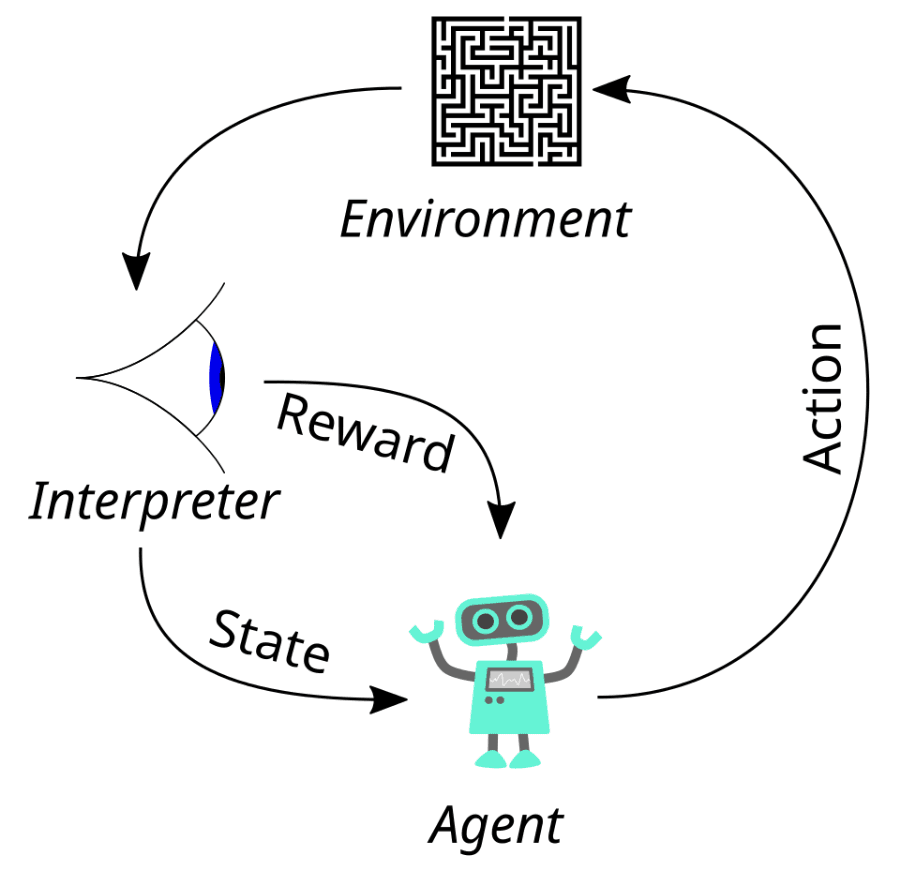
- Reinforcement learningReinforcement learning (RL) is a branch of machine learning in which an agent learns to make decisions by taking actions in an environment to maximize a cumulative reward signal, discovering good behavior…Mentioned 15 times above
- Monte Carlo Tree SearchMonte Carlo Tree Search (MCTS) is a heuristic search algorithm for sequential decision-making that finds strong actions by running many simulated playthroughs of a problem and aggregating their outcomes into a…Mentioned 9 times above
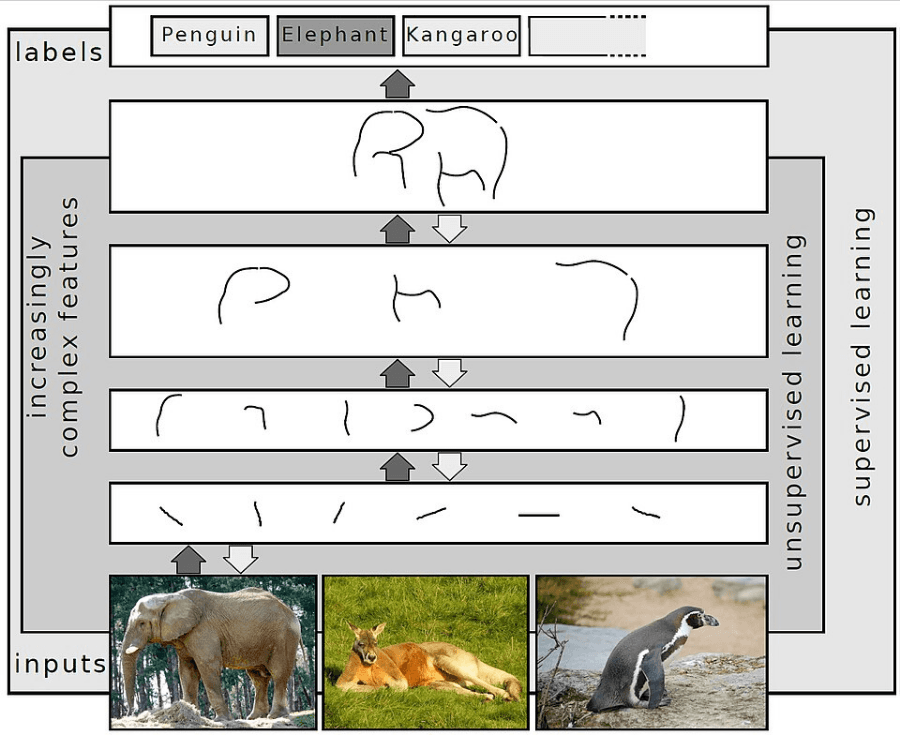
- Deep LearningDeep learning is a subset of machine learning that uses artificial neural networks with multiple layers to automatically learn representations of data at multiple levels of abstractionMentioned 7 times above
- MuZeroMuZero is a model-based reinforcement learning algorithm developed by DeepMind that reached superhuman play in Go, chess, and shogi and set a new state of the art on the 57-game Atari benchmark without being…Mentioned 6 times above

More from See also
More to read
References
- ^1 ^2 ^3 ^4 ^5 ^6 ^7 ^8 ^9 ^10 ^11 ^12 ^13 ^14 ^15 ^16 ^17 ^18 ^19 ^20 ^21 ^22 ^23 ^24 ^25 ^26Silver, D., Huang, A., Maddison, C. J., et al. (2016). "Mastering the game of Go with deep neural networks and tree search." *Nature*, 529(7587), 484-489. nature.com/...nature16961
- ^Tromp, J. "Number of legal Go positions." Exact count for the 19x19 board completed January 2016; extends Tromp, J., & Farneback, G. (2006), "Combinatorics of Go," *Proceedings of the 5th International Conference on Computers and Games*. tromp.github.io/...legal
- ^1 ^2Google DeepMind. "About Google DeepMind." deepmind.google/about
- ^1 ^2 ^3 ^4 ^5 ^6Wikipedia. "AlphaGo versus Lee Sedol." en.wikipedia.org/...AlphaGo_versus_Lee_Sedol
- ^1 ^2 ^3 ^4 ^5 ^6 ^7 ^8Kohs, G. (Director). (2017). *AlphaGo* [Documentary film]. Moxie Pictures / Reel As Dirt. Full film published by Google DeepMind on YouTube: youtube.com/watch
- ^1 ^2 ^3Ormerod, D. (2016, March 13). "Lee Sedol defeats AlphaGo in masterful comeback - Game 4." *Go Game Guru*. Archived: web.archive.org/...phago-masterful-comeback-game-4
- ^1 ^2 ^3 ^4 ^5Google DeepMind. "AlphaGo." deepmind.google/...alphago
- ^1 ^2 ^3Wikipedia. "AlphaGo versus Ke Jie." en.wikipedia.org/...AlphaGo_versus_Ke_Jie
- ^1 ^2 ^3 ^4 ^5 ^6 ^7 ^8 ^9 ^10 ^11 ^12 ^13 ^14 ^15Silver, D., Schrittwieser, J., Simonyan, K., et al. (2017). "Mastering the game of Go without human knowledge." *Nature*, 550(7676), 354-359. nature.com/...nature24270
- ^1 ^2 ^3Silver, D., Hubert, T., Schrittwieser, J., et al. (2017). "Mastering Chess and Shogi by Self-Play with a General Reinforcement Learning Algorithm." arXiv:1712.01815. arxiv.org/...1712.01815
- ^1 ^2 ^3 ^4Silver, D., Hubert, T., Schrittwieser, J., et al. (2018). "A general reinforcement learning algorithm that masters chess, shogi, and Go through self-play." *Science*, 362(6419), 1140-1144. science.org/...science.aar6404
- ^1 ^2 ^3 ^4 ^5 ^6 ^7 ^8 ^9Yonhap News Agency. (2019, November 27). "(Yonhap Interview) Go master Lee says he quits unable to win over AI Go players." en.yna.co.kr/...AEN20191127004800315
- ^Shin, M., Kim, J., van Opheusden, B., & Griffiths, T. L. (2023). "Superhuman artificial intelligence can improve human decision-making by increasing novelty." *Proceedings of the National Academy of Sciences*, 120(12), e2214840120. doi.org/...pnas.2214840120
- ^Tribeca Festival. "AlphaGo" (2017 festival archive, world premiere). tribecafilm.com/...alphago-2017
- ^1 ^2Schrittwieser, J., Antonoglou, I., Hubert, T., et al. (2020). "Mastering Atari, Go, Chess and Shogi by Planning with a Learned Model." *Nature*, 588(7839), 604-609. nature.com/...s41586-020-03051-4
- ^1 ^2The Nobel Foundation. (2024). "The Nobel Prize in Chemistry 2024." nobelprize.org/...summary
- ^Grace, K., Salvatier, J., Dafoe, A., Zhang, B., & Evans, O. (2018). "When Will AI Exceed Human Performance? Evidence from AI Experts." *Journal of Artificial Intelligence Research*, 62, 729-754. arxiv.org/...1705.08807
- ^1 ^2 ^3Wikipedia. "Future of Go Summit." en.wikipedia.org/...Future_of_Go_Summit
- ^1 ^2 ^3 ^4 ^5 ^6 ^7Metz, C. (2016, March 10). "Google's AI Wins Pivotal Second Game in Match With Go Grandmaster." *Wired*. wired.com/...pivotal-game-two-match-go-grandmaster
- ^1 ^2 ^3 ^4 ^5 ^6 ^7 ^8Metz, C. (2016, March 16). "In Two Moves, AlphaGo and Lee Sedol Redefined the Future." *Wired*. wired.com/...es-alphago-lee-sedol-redefined-future
- ^1 ^2 ^3 ^4 ^5 ^6 ^7 ^8Metz, C. (2016, May 17). "Inside the Epic Go Tournament Where Google's AI Came to Life." *Wired*. wired.com/...google-alpha-go-ai
- ^1 ^2 ^3 ^4Hassabis, D. (2016, March 16). "What we learned in Seoul with AlphaGo." Google blog. blog.google/...what-we-learned-in-seoul-with-alphago
- ^1 ^2Kim, S. (2016, March 15). "AlphaGo recognized as honorary top ranker." *The Korea Times*. koreatimes.co.kr/...ognized-as-honorary-top-ranker
- ^1 ^2Jouppi, N. (2016, May 18). "Google supercharges machine learning tasks with TPU custom chip." Google Cloud blog. cloud.google.com/...earning-tasks-with-custom-chip
- ^Kasparov, G. (2018). "Chess, a Drosophila of reasoning." *Science*, 362(6419), 1087. science.org/...science.aaw2221
- ^1 ^2Dwyer, C. (2017, May 23). "'Like a God,' Google A.I. Beats Human Champ of Notoriously Complex 'Go' Game." NPR, via KQED. kqed.org/...n-champ-of-notoriously-complex-go-game
- ^CGTN. (2017, May 27). "Glorious still is Ke Jie despite 0-3 loss to AlphaGo." news.cgtn.com/...share_p
- ^1 ^2Sixth Tone. (2017, May 23). "Ke Jie, Humanity's Last Hope, Loses to AlphaGo by Half a Point." sixthtone.com/...1000242
- ^1 ^2 ^3Xinhua. (2017, April 10). "World No.1 Go player Ke Jie takes on upgraded AlphaGo in May." news.xinhuanet.com/...c_136197270
- ^1 ^2 ^3 ^4Google DeepMind. (2017, May 27). "AlphaGo's next move." deepmind.google/...alphagos-next-move
- ^1 ^2Google DeepMind. (2017, April 10). "Exploring the mysteries of Go with AlphaGo and China's top players." deepmind.google/...-alphago-and-chinas-top-players
- ^1 ^2Gibney, E. (2017, January). "Secret Test of Google AI Bot Stops Top Go Players." *Scientific American* (reproduced from *Nature*). scientificamerican.com/...bot-stops-top-go-players
- ^1 ^2 ^3 ^4Wikipedia. "Master (software)." en.wikipedia.org/...Master_(software)
- ^SiliconANGLE. (2017, December 11). "Learn Go tips from Google DeepMind's champion AI, AlphaGo." siliconangle.com/...-deepminds-champion-ai-alphago
- ^1 ^2 ^3 ^4 ^5 ^6 ^7 ^8 ^9 ^10Hassabis, D. (2026, March 10). "From games to biology and beyond: 10 years of AlphaGo's impact." Google DeepMind blog. deepmind.google/...10-years-of-alphago
- ^1 ^2Korea JoongAng Daily. (2026, April 29). "DeepMind chief reunites with baduk champion 10 years after historic match." koreajoongangdaily.com/...12604115
- ^1 ^2 ^3 ^4Choi, M. (2026, March 11). "'The father of AlphaGo' picks the legendary 'Move 37'..." *The Kyunghyang Shinmun* (English edition). khan.co.kr/...202603111535007
- ^Wang, T. T., Gleave, A., Tseng, T., et al. (2023). "Adversarial Policies Beat Superhuman Go AIs." *Proceedings of the 40th International Conference on Machine Learning (ICML 2023)*. arXiv:2211.00241. arxiv.org/...2211.00241
- ^1 ^2Wu, D. J. (2019). "Accelerating Self-Play Learning in Go." arXiv:1902.10565. arxiv.org/...1902.10565
- ^Fawzi, A., Balog, M., Huang, A., et al. (2022). "Discovering faster matrix multiplication algorithms with reinforcement learning." *Nature*, 610(7930), 47-53. nature.com/...s41586-022-05172-4
- ^Mankowitz, D. J., Michi, A., Zhernov, A., et al. (2023). "Faster sorting algorithms discovered using deep reinforcement learning." *Nature*, 618(7964), 257-263. nature.com/...s41586-023-06004-9
- ^1 ^2Hubert, T., Mehta, R., Sartran, L., et al. (2025). "Olympiad-level formal mathematical reasoning with reinforcement learning." *Nature*, 651(8106), 607-613. Published online November 12, 2025. doi.org/...s41586-025-09833-y
- ^1 ^2 ^3 ^4Levinovitz, A. (2014, May 12). "The Mystery of Go, the Ancient Game That Computers Still Can't Win." *Wired*. wired.com/...the-world-of-computer-go
- ^Tromp, J. "ChessPositionRanking." GitHub (estimate of the number of legal chess positions). github.com/...ChessPositionRanking
- ^1 ^2Google DeepMind. (2017, October 18). "AlphaGo Zero: Starting from scratch." deepmind.google/...hago-zero-starting-from-scratch
- ^Pichai, S. (2023, April 20). "Google DeepMind: Bringing together two world-class AI teams." Google blog. blog.google/...april-ai-update
- ^1 ^2 ^3BBC News. (2014, January 27). "Google buys UK artificial intelligence start-up DeepMind." bbc.com/...technology-25908379
- ^Mnih, V., Kavukcuoglu, K., Silver, D., et al. (2015). "Human-level control through deep reinforcement learning." *Nature*, 518(7540), 529-533. nature.com/...nature14236
- ^Google DeepMind. (2023, June 7). "AlphaDev discovers faster sorting algorithms." deepmind.google/...overs-faster-sorting-algorithms
- ^British Go Association. "Google DeepMind Challenge Match - Lee Sedol v AlphaGo - match report." britgo.org/...5458
Improve this article
Add missing citations, update stale details, or write a clearer explanation. Anyone can edit: changes go live when you publish, and every edit is checked by an editor.
13 revisions · v13 · 8,970 words · full history
Fact-checks are independent of edits: a reviewer re-verifies the article against its sources and stamps the date. How we verify
Research and drafting on this wiki are AI-assisted, under named human editorial standards. How AI is used here
Reviewer note: Fact-checked on 2026-10-30 against the 2016 and 2017 Nature papers, the 2018 Science paper, the AlphaGo documentary, and contemporaneous match reporting, with an independent second review; corrections from both passes and from related-page reviews applied.
Cite this page: AI Wiki. "AlphaGo." aiwiki.ai, updated 30 Oct 2026, fact-checked 30 Oct 2026. CC BY 4.0. https://aiwiki.ai/wiki/alphago