

AI wearables
AI wearables are body-worn devices built around an artificial intelligence assistant rather than around a screen, fitness sensors or notifications. Most of them capture speech, and sometimes images, with microphones and cameras, then send that input to a large language model on a paired phone or in the cloud, which answers questions, transcribes and summarizes conversations, writes to-do lists or plays the part of a companion. The category includes AI glasses, clip-on pins such as the Humane AI Pin, pendants such as Friend and the Limitless Pendant, wristbands and clip-on recorders such as Bee and the Plaud NotePin, voice-note rings, and since 2026 conversation features on a mainstream smartwatch [1][3][4][6][8][10][17].
The modern wave began with the Humane AI Pin, announced in November 2023 at $699 plus a $24 monthly fee [2]. At one point returns outpaced sales, and in February 2025 HP bought most of Humane's assets for $116 million and the Pin stopped working [1]. The years that followed brought consolidation rather than collapse: Amazon agreed to buy Bee in July 2025, Meta bought Limitless in December 2025, and OpenAI agreed to buy Jony Ive's device startup io in an all-stock deal that valued it at $6.5 billion [3][4][12]. By unit volume the largest products were glasses: EssilorLuxottica reported selling more than 7 million AI glasses in 2025, while Plaud reported more than one million recorders shipped in total by August 2025 [9][15]. Devices that listen to everyone near the wearer have raised recurring questions about bystander consent and recording law [19][20].
Scope and terminology
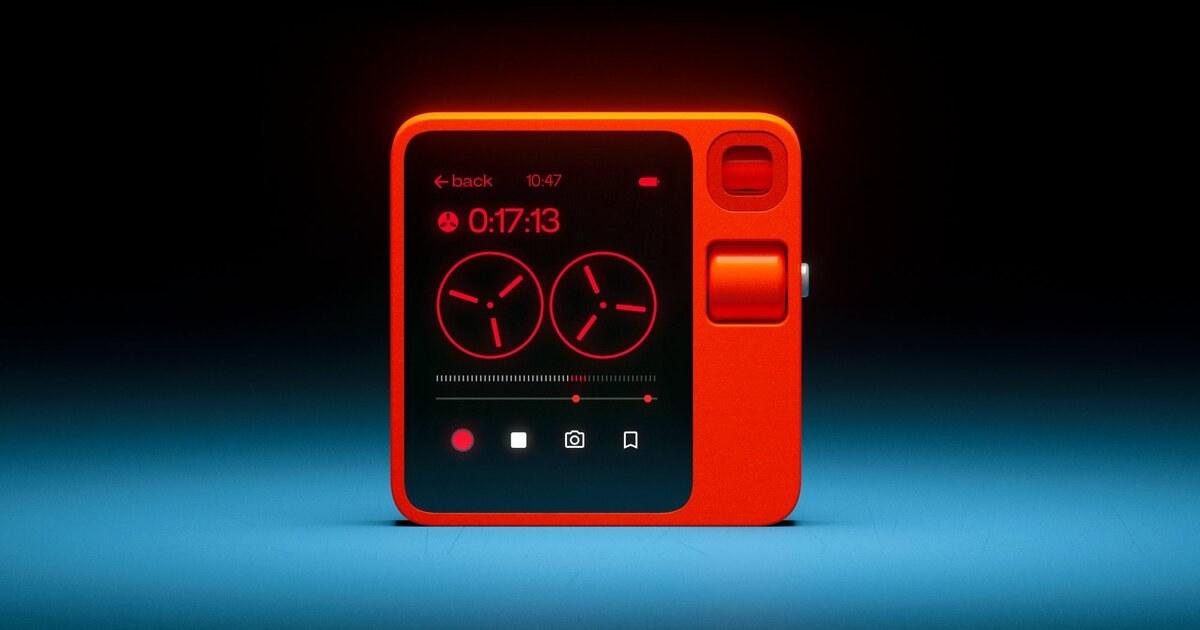
The broader term wearable technology also covers smartwatches, fitness trackers and medical sensors such as continuous glucose monitors (see Internet of Things). This article covers the narrower set of devices whose main purpose is access to an AI assistant or AI processing of what the wearer says, hears or sees. The boundary is not sharp. Some products in the category are carried rather than worn, such as the Plaud Note and the card-sized Bee Eclipse, which attach to the back of a phone, and the handheld Rabbit R1 [8][22][24].
| Form factor | How it is worn | Main inputs | Examples |
|---|---|---|---|
| Glasses | On the face | Camera, microphones; some have a display | Ray-Ban Meta, Meta Ray-Ban Display, Android XR eyewear [14][16] |
| Pin | Clipped to clothing | Camera, microphone, depth and motion sensors | Humane AI Pin [2] |
| Pendant | On a cord or clipped to a shirt | Microphones | Friend, Limitless Pendant, Nirva, Omi [5][6][23][24] |
| Wristband or clip | On the wrist or clipped on | Microphones | Bee and Bee Frontier, Plaud NotePin [3][22][24] |
| Ring | On the index finger | Microphone, button or touch sensor | Sandbar Stream, Pebble Index 01 [10][11] |
| Smartwatch | On the wrist | Microphones | Apple Watch Series 12 (Live Rewind, Siri Recap) [17] |
How they work
Capture and triggering
The products differ most in when they listen. Bee "records everything it hears" unless the user mutes it, and Friend was marketed as "always listening", with a button for speaking to it directly [3][6]. Ring makers took the opposite approach. The Pebble Index 01 records only while a button on its side is held down, and Sandbar's Stream ring activates its microphone only while the wearer holds a touch sensor, which Engadget summarized as a ring that "isn't always listening" [10][11]. Apple's Siri Recap sits between the two: it is opt-in, can be limited to set times or places, and can be switched off from Control Center [17][18].
Two products try to limit whose speech is captured. Limitless said in 2024 that its pendant had a "consent mode" that would not record the other person in a conversation unless they agreed to it, though TechCrunch noted it was not clear whether the mode would be on by default [5]. Nirva, a pendant maker that described its device to TechCrunch in October 2026, has users record voice samples during setup so that the device can filter out other people's speech [23].
Processing
Most devices pair with a phone app, often over Bluetooth, and the app or a cloud service uses speech recognition and a language model to turn the audio into transcripts, summaries and reminders [3][6][8][11]. TechCrunch described Plaud's original Note recorder as powered by GPT-4o [8]. Several makers say they discard the raw audio after processing: TechCrunch reported in 2025 that Bee's privacy policy said audio recordings were not saved, stored or used for AI training, Amazon's 2026 Bee announcement said "No audio is ever stored", and Apple says its watch features "do not create or store audio recordings" [3][17][22]. Pebble's Index 01 runs speech-to-text and AI models locally in the Pebble phone app and stores notes on the phone rather than in the cloud [10]. The Humane AI Pin was unusual in working without a phone, using a Humane-branded cellular service built on T-Mobile [2].
Output
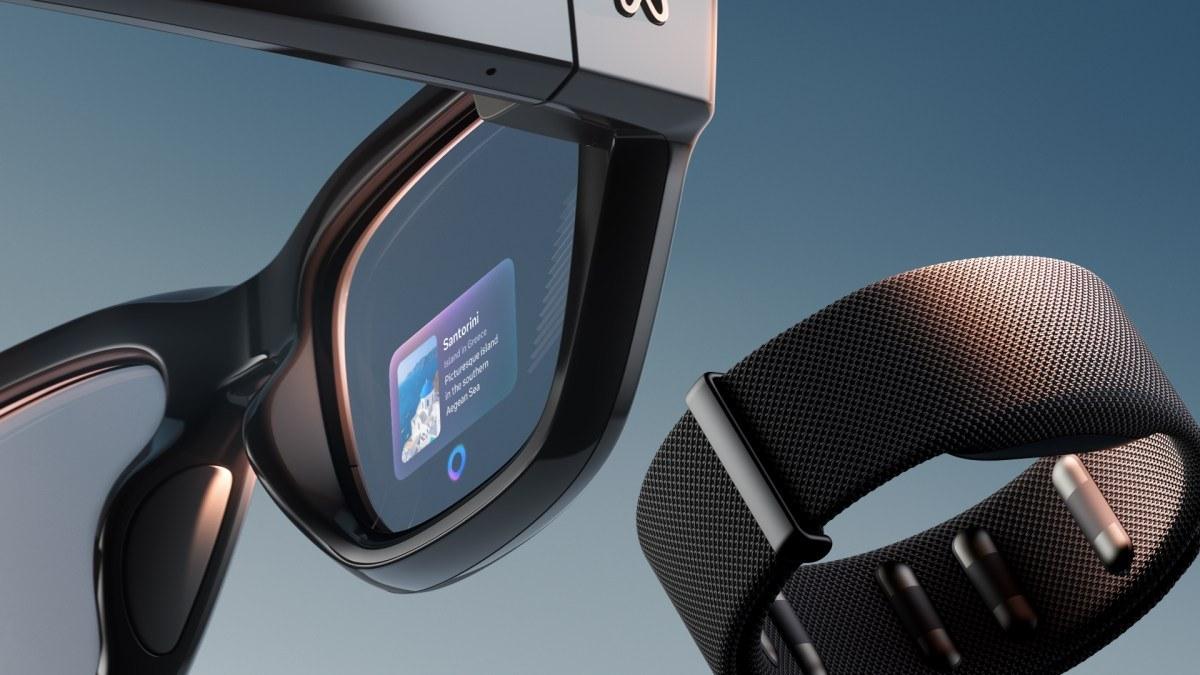
Screenless devices answer through other channels. The Humane AI Pin had a touchpad and responded to gestures, and its "Laser Ink" projector showed content such as incoming calls on the wearer's palm [2]. Recorder-style devices put their output in a phone app: transcripts with speaker labels, summaries, to-do lists and searchable memories [3][8][22]. Friend replies in its phone app with text messages and can also send messages unprompted [6]. The Apple Watch shows a text snippet of the last 15 seconds of conversation on its display, and Siri Recap writes summaries to the Siri app [17]. Glasses with a display, such as the Meta Ray-Ban Display, show short items like messages, translations and navigation on a full-color display placed off to the side of the wearer's view, and are controlled with the Meta Neural Band, a wristband that reads muscle signals [14].
Research background
Wearable memory aids predate language models. Microsoft Research began its SenseCam project in 2004 with "a wearable camera that takes photos automatically", originally conceived as a personal "black box" accident recorder; the group reported that looking back through the recorded images tends to bring back vivid memories of the original event, and the Vicon Revue and OMG Autographer were later produced under license [25]. The device was presented at UbiComp 2006 as "a retrospective memory aid" [26]. A 2024 CHI paper, Memoro, built a wearable audio-based assistant that uses a language model to work out what memory support a user needs during a conversation, with one mode that answers spoken queries and another that offers suggestions without being asked; in a study of 20 participants it reduced the time spent interacting with the device and increased confidence in recall without hurting conversation quality [27].
History
2023 and 2024: the first LLM devices
Humane, a startup that raised more than $230 million, announced the AI Pin on 2023-11-09 [1][2]. It had a camera, a microphone, depth and motion sensors and a Qualcomm Snapdragon processor, reached AI models through partnerships with Microsoft and OpenAI, and opened for orders in the US on 2023-11-16 [2]. TechCrunch framed Humane's pitch as "ambient computing" set against the "spatial computing" of augmented reality headsets [2].
In April 2024 Rewind, a startup backed by Andreessen Horowitz, pivoted to hardware as Limitless and announced a $99 pendant that clipped to a shirt or hung as a necklace, with a claimed 100 hours of battery life, for recording and transcribing meetings [5]. In July 2024 Avi Schiffmann announced Friend, a $99 necklace that listens constantly and messages the wearer through a phone app; the company said it had raised $2.5 million at a $50 million valuation and planned to ship in January 2025 [6]. In August 2024 Plaud, which said it had sold 200,000 of its $159 Note phone-mounted recorders, announced the $169 NotePin [8].
2025: failures and acquisitions
Humane cut the AI Pin's price from $699 to $499 in October 2024, and The Verge reported that during the summer of 2024 returns had at one point outpaced sales [1]. On 2025-02-18 Humane said HP would buy most of its assets, including the CosmOS software and the engineers who would form a new HP group called HP IQ, for $116 million. AI Pins stopped connecting to Humane's servers at noon Pacific time on 2025-02-28, which ended calling, messaging, AI queries and cloud access [1].
Larger companies bought several of the surviving startups during 2025, while new form factors appeared:
| Date | Event |
|---|---|
| 2025-05-21 | OpenAI agrees to acquire io, the device startup of former Apple designer Jony Ive, in an all-equity deal valuing io at $6.5 billion; about 55 staff join OpenAI [12] |
| 2025-07-22 | Amazon agrees to acquire Bee, maker of a $49.99 wristband with a $19 monthly subscription; Amazon said the deal had not yet closed [3] |
| 2025-08-27 | Plaud says it has shipped more than one million AI notetaker units and launches the $179 Note Pro [9] |
| 2025-09-17 | Meta announces the Meta Ray-Ban Display glasses with the Meta Neural Band, $799, on sale in the US from 2025-09-30 [14] |
| 2025-11-06 | Sandbar, founded by two former Meta employees, announces the Stream ring at $249, with US shipping expected in summer 2026 [11] |
| 2025-12-05 | Meta acquires Limitless, which stops selling its pendant; existing customers get one year of support [4] |
| 2025-12-09 | Core Devices, the company of Pebble founder Eric Migicovsky, announces the Index 01 ring at $75 for preorders, rising to $99 [10] |
Meta said Limitless would join its Reality Labs wearables organization to "accelerate our work to build AI-enabled wearables" [4]. In September 2025 Friend, which later released an updated "Friend 2.0" device with a built-in speaker [24], spent more than $1 million on New York City subway advertising, including more than 11,000 cards in subway cars; some of the ads were defaced with messages such as "surveillance capitalism" and "get real friends", and the device then cost $129 [7].
2026
In February 2026 EssilorLuxottica reported "AI-glasses selling more than 7 million units" in its 2025 financial year [15]. In May 2026 Google announced Android XR "intelligent eyewear" made with Samsung, Gentle Monster and Warby Parker, saying audio glasses with Gemini would launch first, in the fall, with display glasses to follow [16]. The first Warby Parker and Gentle Monster audio glasses opened for preorder on 2026-11-12, with shipping in select markets from 2026-12-10 and US prices starting at $395 and $449 respectively [28].
On 2026-09-09 Apple announced the Apple Watch Series 12, starting at $399, with "Audio Intelligence" features that require the Series 12 or Apple Watch Ultra 4 [17]. Live Rewind shows the previous 15 seconds of a conversation as text after a double press of the Digital Crown and plays a chime even when the watch is silenced; Siri Recap produces short summaries of conversations, which Apple says are not transcripts and are designed to exclude sensitive information [17][18]. Apple said both features would arrive in beta in late 2026, in English first, not initially in the EU, and that they need an Apple Intelligence-capable iPhone 16 or later [17]. Its support page adds that they are unavailable in China and to users under 18, and that recaps can be set to delete automatically after up to seven days [18]. TechCrunch wrote that Apple was trying to get consumers to accept "a new reality: Your tech is always listening" [19].
Later in 2026:
- At Meta Connect in September, Meta showed Muse Charm, a device about the size of an Apple Watch that fits on a keychain and is used to talk to its Muse agent; Meta said it aimed to have it on sale for the holidays and did not announce a price [21].
- On 2026-10-15 Amazon introduced the Bee Frontier, a $74.99 wrist or clip-on wearable with dual microphones and up to seven days of battery life, and the Bee Eclipse, a card-sized recorder that attaches to a phone, from $99.99 [22]. A $11.99 monthly Bee Pro subscription adds links to Amazon.com and the Alexa+ assistant [22].
- On 2026-10-22 Nirva, founded in 2025 by former Meta Reality Labs employees, said it had raised $33 million in total for a $249 pendant that can also be worn as a bracelet [23].
OpenAI's own first device may not be a wearable at all: Bloomberg reported in July 2026, as summarized by TechCrunch, that the device, still in development, is a screen-free mobile smart speaker for the home with parts that can move on their own [13].
Notable devices
| Device | Maker | Form factor | First reported | Price when first reported (USD) | Last reported status |
|---|---|---|---|---|---|
| AI Pin | Humane | Clip-on pin | 2023-11 | 699 plus 24 a month | Servers shut down 2025-02-28 [1][2] |
| Limitless Pendant | Limitless | Pendant | 2024-04 | 99 | Sales ended after Meta deal, 2025-12 [4][5] |
| Friend | Friend | Pendant | 2024-07 | 99 | 129 in 2025-09; listed by TechCrunch 2026-10 [6][7][24] |
| Plaud NotePin | Plaud | Clip or wrist | 2024-08 | 169 | Listed at 159 by TechCrunch 2026-10 [8][24] |
| Bee | Bee (Amazon) | Wristband or clip | Before 2025-07 | 49.99 | Amazon agreed to buy the company 2025-07; followed by Bee Frontier 2026-10 [3][22][24] |
| Meta Ray-Ban Display | Meta | Display glasses with EMG band | 2025-09 | 799 | US sales from 2025-09-30 [14] |
| Stream | Sandbar | Ring | 2025-11 | 249 | US shipping expected summer 2026 (as reported 2025-11) [11] |
| Index 01 | Core Devices (Pebble) | Ring | 2025-12 | 75 preorder, then 99 | Preorder offer scheduled to end 2026-03 (as reported 2025-12) [10] |
| Apple Watch Series 12 | Apple | Smartwatch | 2026-09 | 399 | Available 2026-09-18; AI features in beta late 2026 [17] |
| Bee Frontier | Amazon | Wristband or clip | 2026-10 | 74.99 | Available 2026-10-15 [22] |
| Nirva | Nirva | Pendant or bracelet | 2026-10 | 249 | Orders from 2026-11, shipping targeted for end of 2026 [23] |
Privacy, consent and law
The people most affected by an always-listening wearable are often not its owner but the people talking near it. Makers have answered this in different ways: by not keeping audio (Bee, Apple), by recording only on a button press (the Index 01 and Stream rings), by asking for consent (the Limitless consent mode, and Bee devices, which Amazon says prompt users to get permission from call participants each time a recording starts), or by filtering out other voices (Nirva) [3][5][10][11][17][22][23]. TechCrunch noted in September 2026 that Plaud advises customers to obtain legally required consent before recording, and that Bee's terms make users responsible for complying with privacy laws covering minors [19].
Recording law varies by place, and several US states require the consent of everyone in a conversation [20]. After Apple's announcement, Bloomberg asked lawyers in California, Massachusetts, Pennsylvania and Washington, and they said the features may test laws that require everyone's consent, with none convinced that Apple's protections would shield a wearer; The Next Web, summarizing that reporting, noted that Live Rewind plays a chime and shows an on-screen indicator while Siri Recap gives no comparable signal [20]. Apple's position is that the features keep no audio recording [17][20].
Camera glasses raise a related problem, because a camera worn on the face is less visible than a raised phone. That debate, including indicator lights, lawsuits and courthouse bans, is covered in smart glasses and privacy.
Reception and business
Reviews and sales have been mixed. The Humane AI Pin is the best-known failure: its price was cut, returns at one point outpaced sales, and the shutdown of its servers made the hardware useless about 15 months after it was announced [1][2]. Friend drew public criticism; one Wired piece about it was headlined "I Hate My Friend", and its subway ads were vandalized [7]. Plaud reported stronger sales, having shipped more than one million recorders by August 2025, with the company saying nearly half of its users had upgraded to its paid plan [9].
The service model has become a recurring issue. Most of these devices depend on a subscription or on the maker's servers: Humane's Pins stopped working when its servers closed, and Limitless customers were moved to one year of continued support after the Meta acquisition [1][4]. After the 2025 acquisitions, several of the startups' products and teams sit inside large companies: Amazon has tied Bee to Alexa+ and Amazon.com, Meta placed the Limitless team in the Reality Labs wearables organization, and Humane's engineers became a new HP group called HP IQ [1][4][22].
Continue reading
- AI GlassesAI glasses are eyeglasses that carry a camera, microphones, open-ear speakers and an AI assistant, and in most cases no display at all.Mentioned twice above
- Meta Neural BandThe Meta Neural Band is a wrist-worn input device that reads surface electromyography (sEMG) signals from the forearm and converts them into commands for Meta Ray-Ban Display glasses.Mentioned twice above
- Smart Glasses and PrivacyCamera-equipped smart glasses pose a privacy problem that phones do not, because the person being recorded usually cannot tell.Listed in See also
- Rabbit R1The Rabbit R1 is a $199 standalone artificial intelligence hardware device that was unveiled by Rabbit Inc. founder Jesse Lyu at CES on January 9, 2024, and pitched as a pocket-sized AI companion that could…Listed in See also
- AI Glasses MarketThe AI glasses market is the set of published estimates for shipments, revenue and vendor share in eyewear that runs an AI assistant, whether or not it has a display.Listed in See also
- AI CompanionsAI companions are conversational AI systems built primarily for ongoing emotional, social, or romantic interaction with a single user, rather than for completing discrete tasks.Listed in See also
More from See also
More to read
References
- ^1 ^2 ^3 ^4 ^5 ^6 ^7 ^8 ^9Zeff, Maxwell. "Humane's AI Pin is dead, as HP buys startup's assets for $116M". TechCrunch, 2025-02-18. techcrunch.com/...hp-buys-startups-assets-for-116m
- ^1 ^2 ^3 ^4 ^5 ^6 ^7 ^8 ^9Heater, Brian. "Humane's Ai Pin promises an 'ambient computing' future for $699 (plus $24 a month)". TechCrunch, 2023-11-09. techcrunch.com/...humanes-ai-pin
- ^1 ^2 ^3 ^4 ^5 ^6 ^7 ^8 ^9 ^10Silberling, Amanda. "Amazon acquires Bee, the AI wearable that records everything you say". TechCrunch, 2025-07-22. techcrunch.com/...-that-records-everything-you-say
- ^1 ^2 ^3 ^4 ^5 ^6 ^7Perez, Sarah. "Meta acquires AI device startup Limitless". TechCrunch, 2025-12-05. techcrunch.com/...ires-ai-device-startup-limitless
- ^1 ^2 ^3 ^4 ^5Mehta, Ivan. "a16z-backed Rewind pivots to build AI-powered pendant to record your conversations". TechCrunch, 2024-04-17. techcrunch.com/...ant-to-record-your-conversations
- ^1 ^2 ^3 ^4 ^5 ^6 ^7Mehta, Ivan. "Friend's $99 necklace uses AI to help combat loneliness". TechCrunch, 2024-07-30. techcrunch.com/...f-solana-perplexity-and-zfellows
- ^1 ^2 ^3Ha, Anthony. "AI startup Friend spent more than $1M on all those subway ads". TechCrunch, 2025-09-27. techcrunch.com/...-than-1m-on-all-those-subway-ads
- ^1 ^2 ^3 ^4 ^5 ^6 ^7Heater, Brian. "Plaud takes a crack at a simpler AI pin". TechCrunch, 2024-08-28. techcrunch.com/...akes-a-crack-at-a-simpler-ai-pin
- ^1 ^2 ^3Mehta, Ivan. "Plaud launches a new AI hardware notetaker, the $179 Note Pro". TechCrunch, 2025-08-27. techcrunch.com/...dware-notetaker-the-179-note-pro
- ^1 ^2 ^3 ^4 ^5 ^6 ^7Perez, Sarah. "Pebble's founder introduces a $75 AI smart ring for recording brief notes with a press of a button". TechCrunch, 2025-12-09. techcrunch.com/...f-notes-with-a-press-of-a-button
- ^1 ^2 ^3 ^4 ^5 ^6Tate, Matt. "The AI-powered Stream Ring is designed for on-the-fly voice notes". Engadget, 2025-11-06. engadget.com/...r-on-the-fly-voice-notes-143530840
- ^1 ^2Wiggers, Kyle; Zeff, Maxwell. "Jony Ive to lead OpenAI's design work following $6.5B acquisition of his company". TechCrunch, 2025-05-21. techcrunch.com/...-6-5b-acquisition-of-his-company
- ^Ropek, Lucas. "OpenAI's first hardware device is reportedly a screenless speaker that can move". TechCrunch, 2026-07-14. techcrunch.com/...screenless-speaker-that-can-move
- ^1 ^2 ^3 ^4Meta. "Meta Ray-Ban Display: AI Glasses With an EMG Wristband". Meta Newsroom, 2025-09-17 (updated 2025-09-30). about.fb.com/...n-display-ai-glasses-emg-wristband
- ^1 ^2EssilorLuxottica. "Q4/Full Year 2025 Results". EssilorLuxottica press release, 2026-02-11. essilorluxottica.com/...q4-full-year-2025-results
- ^1 ^2Izadi, Shahram. "Intelligent eyewear is coming this fall". Google (The Keyword), 2026-05-19. blog.google/...android-xr-io-2026
- ^1 ^2 ^3 ^4 ^5 ^6 ^7 ^8 ^9 ^10 ^11Apple. "Introducing Apple Watch Series 12, with the all-new Health Sensing System". Apple Newsroom, 2026-09-09. apple.com/...ith-the-all-new-health-sensing-system
- ^1 ^2 ^3Apple. "About Audio Intelligence features on Apple Watch Series 12 and Apple Watch Ultra 4". Apple Support, accessed 2026-11-18. support.apple.com/...148354
- ^1 ^2 ^3Perez, Sarah. "Apple Watch's new AI features are normalizing the idea that technology is always listening". TechCrunch, 2026-09-09. techcrunch.com/...t-technology-is-always-listening
- ^1 ^2 ^3 ^4Constantin, Ana Maria. "Lawyers in 4 states say the new Apple Watch may break eavesdropping law". The Next Web, 2026-09-14. thenextweb.com/...p-live-rewind-eavesdropping-laws
- ^Hardwick, Tim. "Meta Did a 'One More Thing' and It's an AI Tamagotchi". MacRumors, 2026-09-24. macrumors.com/...re-thing-and-its-an-ai-tamagotchi
- ^1 ^2 ^3 ^4 ^5 ^6 ^7 ^8 ^9 ^10Amazon Staff. "Amazon introduces 2 new AI products from Bee: Bee Frontier and Bee Eclipse". About Amazon, 2026-10-15. aboutamazon.com/...nal-ai-bee-frontier-bee-eclipse
- ^1 ^2 ^3 ^4 ^5Mehta, Ivan. "Nirva raises $33M for a pendant that only listens to you". TechCrunch, 2026-10-22. techcrunch.com/...pendant-that-only-listens-to-you
- ^1 ^2 ^3 ^4 ^5 ^6 ^7Forristal, Lauren. "The hottest AI wearables and gadgets you should know about". TechCrunch, 2026-10-25. techcrunch.com/...nd-gadgets-you-should-know-about
- ^Microsoft Research. "SenseCam". Microsoft Research project page, accessed 2026-11-18. microsoft.com/...sensecam
- ^Hodges, Steve; Williams, Lyndsay; Berry, Emma; Izadi, Shahram; Srinivasan, James; Butler, Alex; Smyth, Gavin; Kapur, Narinder; Wood, Ken. "SenseCam: A Retrospective Memory Aid". UbiComp 2006: Ubiquitous Computing, Lecture Notes in Computer Science, pp. 177-193, 2006. doi.org/...11853565_11
- ^Zulfikar, Wazeer; Chan, Samantha; Maes, Pattie. "Memoro: Using Large Language Models to Realize a Concise Interface for Real-Time Memory Augmentation". Proceedings of the CHI Conference on Human Factors in Computing Systems (CHI '24), 2024. arxiv.org/...2403.02135
- ^Giret, Laurent. "First Android XR Smart Glasses From Warby Parker Gentle Monster Are Launching in December". Thurrott.com, 2026-11-12. thurrott.com/...-monster-are-launching-in-december
Improve this article
Add missing citations, update stale details, or write a clearer explanation. Anyone can edit: changes go live when you publish, and every edit is checked by an editor.
1 revision · v1 · 3,372 words · full history
Fact-checks are independent of edits: a reviewer re-verifies the article against its sources and stamps the date. How we verify
Research and drafting on this wiki are AI-assisted, under named human editorial standards. How AI is used here
Cite this page: AI Wiki. "AI wearables." aiwiki.ai, updated 18 Nov 2026. CC BY 4.0. https://aiwiki.ai/wiki/ai_wearables