

Freebase
Freebase was a large, collaboratively edited knowledge base of structured facts about real-world entities, such as people, places, films, books and companies. It was built by the San Francisco startup Metaweb Technologies and announced in March 2007 [3]. Google acquired Metaweb, and with it Freebase, in July 2010 [5]. Freebase stored its data as a graph of typed topics and properties that anyone could edit through a web interface or a JSON-based query API, and it released that data under a Creative Commons Attribution license [1][2]. Google used Freebase as the open core of its Knowledge Graph, then announced in December 2014 that it would close Freebase and help move its content to Wikidata; the site became read-only on March 31, 2015, and freebase.com and its APIs were shut down on May 2, 2016 [8][9][10]. Its final data dump held about 3 billion triples on 48 million topics [10].
In natural language processing research, Freebase supplied the labels for distant supervision of relation extraction [12], the target database for a generation of knowledge base question answering datasets such as WebQuestions, SimpleQuestions and GrailQA [13][15][18], and the FB15k and FB15k-237 benchmarks used to evaluate knowledge graph embedding models [19][20].
History
Metaweb and the 2007 launch
Metaweb Technologies was founded in 2005 with venture capital backing as a spinoff of Applied Minds, a research and consulting firm of which computer scientist Danny Hillis was a founder [3]. Hillis, who earlier founded the parallel computing company Thinking Machines, had described the idea of a knowledge web he called "Aristotle" in a paper in 2000, but did not start building it until he had recruited two technical co-founders: Robert Cook, Metaweb's executive vice president for product development, and John Giannandrea, formerly of Tellme Networks and Netscape, who became chief technology officer [3].
The New York Times described the company's plans on March 9, 2007, the day Metaweb was due to announce Freebase [3]. Hillis described the goal as creating "the world's database, with all of the world's information", and said all of the information in Freebase would be available under a license that made it freely shareable, while the company planned to build a business later by organizing proprietary information in a similar way [3]. The newspaper reported that the database had already been seeded with descriptive information about four million songs from MusicBrainz, details on 100,000 restaurants, extensive information from Wikipedia, and census and location data [3].
A 2007 workshop paper by Metaweb engineers described the system while it was still in an "alpha" testing phase, when prospective users had to request an account at freebase.com [2]. At that point the database held millions of topics and tens of millions of relationships between them, seeded with popular culture (films, music, books, sports, television), location data, scholarly information and general knowledge from Wikipedia [2].
Growth and funding (2008 to 2010)
In January 2008 Metaweb raised a funding round of about $42 million that included Benchmark Capital and Goldman Sachs, bringing its total funding to $57 million according to TechCrunch [4]. A short paper presented at the 2008 ACM SIGMOD conference by Kurt Bollacker, Colin Evans, Praveen Paritosh, Tim Sturge and Jamie Taylor described it as a scalable tuple database for structuring general human knowledge, with more than 125 million tuples, more than 4,000 types and more than 7,000 properties, all readable and writable through a public HTTP-based graph query API [1].
Metaweb also built tools around the database. Freebase Gridworks, an open-source data cleaning tool conceived by David Huynh to clean and transform data for import into Freebase, dates back to May 2010; after the Google acquisition it was renamed Google Refine, and in 2012 Google handed the project to the open-source community, where it continues as OpenRefine [23].
Google acquisition (2010)
Google announced on July 16, 2010 that it had acquired Metaweb, describing it as "a company that maintains an open database of things in the world" [5]. In the announcement, Google's director of product management Jack Menzel said Freebase held over 12 million things, including movies, books, TV shows, celebrities, locations and companies, and that "Google and Metaweb plan to maintain Freebase as a free and open database for the world" [5]. Google framed the purchase in terms of search: it wanted to answer queries such as "colleges on the west coast with tuition under $30,000" that depend on knowing facts about real-world entities and the relationships between them [5]. Google did not state a price in its announcement; VentureBeat reported that Metaweb had raised close to $57 million in two rounds [6].
Core of the Google Knowledge Graph (2012)
When Google launched its Knowledge Graph on May 16, 2012, senior vice president Amit Singhal wrote that it was rooted in public sources "such as Freebase, Wikipedia and the CIA World Factbook", and that it then held more than 500 million objects and more than 3.5 billion facts [7]. The 2016 paper by Google and Wikimedia researchers on the Freebase migration described Freebase as having been "used as the open core of the Google Knowledge Graph" [10]. Google's Knowledge Vault project, published at KDD 2014, combined facts extracted from web content with prior knowledge derived from existing knowledge repositories, and used Freebase as its source of prior data [22].
Shutdown and move to Wikidata (2014 to 2016)
On December 16, 2014, Jason Douglas posted an announcement on behalf of the Knowledge Graph team at Google titled "From Freebase to Wikidata" [8]. The team wrote that when Freebase launched in 2007 it had been thought of as a "Wikipedia for structured data", that they had watched Wikidata since its launch about two years earlier, and that they now believed they could best support community-curated structured knowledge by helping Wikidata, which was "growing fast" and had an active community [8]. Google said it would help transfer Freebase data to Wikidata, wind down Freebase as a standalone project in mid-2015, and launch a new entity search API powered by the Knowledge Graph for developers [8]. Because many Freebase facts had been taken from Wikipedia and attributed to Wikipedia rather than to original sources, they could not be loaded into Wikidata as-is under its sourcing rules, so Google also promised a review tool that would pair Freebase facts with candidate citations [8].
The schedule changed during the wind-down. Freebase became read-only on March 31, 2015, when the website stopped accepting edits and the MQL write API was turned off [8][10]. The website and APIs had originally been due to be retired on June 30, 2015 [8]. Google's Knowledge Graph team shut down freebase.com and the Freebase APIs on May 2, 2016, later than first announced, noting that the launch of the replacement Knowledge Graph Search API had also taken longer than anticipated; the team said the data dumps would remain available indefinitely, including a final "graphd" dump with all of the underlying tuple metadata [9].
| Date | Event | Source |
|---|---|---|
| 2005 | Metaweb Technologies founded as a spinoff of Applied Minds | [3] |
| 2007-03 | Freebase announced; alpha testing at freebase.com | [2][3] |
| 2008-01 | Funding round of about $42 million (total $57 million) | [4] |
| 2008-06 | SIGMOD paper describes 125 million tuples, 4,000 types, 7,000 properties | [1] |
| 2010-07-16 | Google acquires Metaweb; Freebase has over 12 million topics | [5] |
| 2012-05-16 | Google Knowledge Graph launches, drawing on Freebase | [7] |
| 2014-12-16 | Google announces plan to close Freebase and help move data to Wikidata | [8] |
| 2015-03-31 | Freebase becomes read-only; MQL write API turned off | [8][10] |
| 2016-05-02 | freebase.com and Freebase APIs shut down; dumps stay online | [9] |
Data model
The 2007 Metaweb paper described a "lightweight typing system", a loose collection of structuring conventions rather than a rigid ontology, in which conflicting types and properties could exist side by side to reflect users' differing views. It was made of a few kinds of objects [2]:
- Topics represented a single entity or concept, concrete (a person or a city) or abstract (a religion or the number pi), each with exactly one globally unique identifier [2]. The 2016 migration paper describes each object's stable identifier as a "mid" (machine ID), such as
/m/02mjmrfor Barack Obama [10]. - Types grouped topics, for example Film Actor, Person, Airport or Programming Language. A topic could hold several types at once, and there was deliberately no type hierarchy: Film Actor did not inherit from Person, because the designers wanted to allow for actors that are not people [2].
- Properties were attributes of a topic, either literal values (a name or a length) or links to other topics (parent of, has sequel). Each property had an "expected type" for the topic at the other end of the link [2].
- Schemas were the set of properties attached to a type, and any user could create new types and properties [2].
Freebase represented relations with more than two participants, such as a political office held between a start date and an end date, or an actor playing a character in a film, with Compound Value Types (CVTs), intermediate objects that had their own mid [10]. Many properties also had a reverse property, so that /people/person/place_of_birth was mirrored by /location/location/people_born_here, which made the graph easy to traverse in both directions but inflated the triple count [10].
The underlying store was a graph-shaped tuple database with query planning, built-in versioning that allowed any edit to be reverted, and fine-grained attribution of every piece of data [2]. Duplicate entities were handled through a "mark and sweep" process: users marked two topics as candidates for merging or a topic for deletion, and people or programs later "swept" through the marks and carried out the changes [2].
Machines accessed Freebase through the Metaweb Query Language (MQL), a "query by template" language written in JSON in which the result has the same shape as the query, and in which writes as well as reads were expressed [2]. The designers chose JSON over RDF because it was easier for building web applications [2]; Freebase data was later published as an N-Triples RDF dump [10][11].
Content came both from direct editing by users and from bulk imports. A 2009 Stanford paper listed Wikipedia infoboxes and tables, NNDB (biographical data), MusicBrainz (music), the SEC (financial and corporate data) and wiki-style user editing among its sources [12]. Contributors agreed by default to a Creative Commons Attribution (CC BY) license for their data [2]; the migration paper specifies CC BY 2.5, and notes that Google did not hold the copyright to some content, such as images and long entity descriptions taken from Wikipedia [10].
Size
Published figures for Freebase vary with the snapshot and with what is counted (topics, entities, tuples, triples or facts).
| Snapshot | Reported size | Source |
|---|---|---|
| 2007 (alpha) | Millions of topics, tens of millions of relationships | [2] |
| 2008 (SIGMOD paper) | Over 125 million tuples, 4,000 types, 7,000 properties | [1] |
| July 2008 dump | 116 million instances of 7,300 relations between 9 million entities | [12] |
| July 2010 | Over 12 million things | [5] |
| 2013 (TransE paper) | About 1.2 billion triplets, over 80 million entities | [19] |
| March 2015 (last dump) | 48 million topics, 2,997 million triples, about 37,700 properties | [10] |
The migration paper counted 442 million "useful" facts in the last dump once labels, identifiers, types, descriptions and license-restricted triples were removed [10]. Google's developer page for the dumps describes the triples dataset as 1.9 billion triples, 22 GB compressed and 250 GB uncompressed, under CC BY [11].
Use in AI and NLP research
Freebase was large, freely licensed and downloadable as a dump, and the 2016 migration paper noted that it "has found many use cases outside of Google" [10]. In research, it served as a source of training labels, as the target database for question answering benchmarks, and as raw material for link prediction datasets.
Distant supervision for relation extraction
Mike Mintz, Steven Bills, Rion Snow and Dan Jurafsky at Stanford University introduced distant supervision for relation extraction in a 2009 ACL-IJCNLP paper that used Freebase as the source of labels [12]. For every pair of entities appearing in some Freebase relation, they collected all sentences in a large unlabeled corpus that mention both entities and used them as noisy training examples for a relation classifier [12]. Working from the July 2008 Freebase dump, filtered to 1.8 million instances of 102 relations, the system extracted 10,000 instances of 102 relations at a precision of 67.6% [12]. The method is a form of weak supervision, since the labels come from an existing database rather than from human annotation of the sentences [12].
Question answering over knowledge bases
Freebase was the target knowledge base for the main early benchmarks in knowledge base question answering, where a system maps a natural language question to a query whose execution returns the answer.
| Dataset | Year | Construction | Size | Source |
|---|---|---|---|---|
| Free917 | 2013 | Questions with logical forms over 81 Freebase domains | 917 questions | [14] |
| WebQuestions | 2013 | Google Suggest questions answered by Mechanical Turk workers from Freebase pages | 5,810 questions | [13] |
| SimpleQuestions | 2015 | Questions written by annotators, each paired with one Freebase fact | 108,442 questions | [15] |
| WebQuestionsSP | 2016 | SPARQL semantic parses for answerable WebQuestions questions | 4,737 questions | [16] |
| ComplexWebQuestions | 2018 | Complex questions built from WebQuestionsSP SPARQL queries | 34,689 examples | [17] |
| GrailQA | 2021 | Questions over the 86 domains of Freebase Commons, testing generalization | 64,331 questions | [18] |
Jonathan Berant, Andrew Chou, Roy Frostig and Percy Liang at Stanford built WebQuestions for their EMNLP 2013 paper "Semantic Parsing on Freebase from Question-Answer Pairs" [13]. Starting from the question "Where was Barack Obama born?", they crawled the Google Suggest API to collect a million questions, sent a random 100,000 to Amazon Mechanical Turk workers, and asked them to answer each using only the Freebase page of the question's entity [13]. Antoine Bordes, Nicolas Usunier, Sumit Chopra and Jason Weston at Facebook AI Research introduced SimpleQuestions in 2015 to provide a much larger dataset of single-fact questions, using the FB2M and FB5M subsets of Freebase (about 2 million and 5 million entities) [15]. Microsoft Research's WebQuestionsSP added SPARQL queries with standard Freebase identifiers, executable against the knowledge base, for the questions judged answerable [16]. GrailQA, from Yu Gu, Yu Su and colleagues at Ohio State University, the U.S. Army Research Laboratory, Stanford and UC Santa Barbara, was designed to test generalization to unseen compositions and domains; its authors based it on the latest version of Freebase, which they described as covering over 100 domains, 45 million entities and 3 billion facts [18].
Knowledge graph embeddings and link prediction
Bordes and colleagues introduced the FB15k benchmark alongside the TransE embedding model at NIPS 2013 [19]. They selected Freebase entities that also appeared in the Wikilinks database and had at least 100 mentions in Freebase, and removed reverse relations such as !/people/person/nationality, giving 592,213 triplets over 14,951 entities and 1,345 relationships; they also built a larger FB1M set from the million most frequent entities [19].
In 2015 Kristina Toutanova and Danqi Chen showed that a very simple model using observed features outperformed latent embedding models on FB15k, possibly because of redundancy in the graph, and built a harder dataset from FB15k with 237 relations by removing near-duplicate and inverse-duplicate relations [20]. A follow-up EMNLP 2015 paper by Toutanova and colleagues called this dataset FB15k-237, describing it as a subset of FB15k that excludes redundant relations and direct training links for held-out triples [21]. FB15k-237 paired Freebase triples with textual relations taken from ClueWeb12 sentences annotated with Freebase entity mentions [21].
Migration to Wikidata
Google and Wikimedia researchers Thomas Pellissier Tanon, Denny Vrandečić, Sebastian Schaffert, Thomas Steiner and Lydia Pintscher described the migration in "From Freebase to Wikidata: The Great Migration" at the WWW 2016 conference [10]. They reported that the move ran into technical and cultural problems:
- Licensing. Wikidata is published under CC0, while Freebase used CC BY. Removing content Google could not relicense, such as images and Wikipedia-derived descriptions, cut about 42 million facts, roughly 1.4% of the 3 billion [10].
- References. Wikidata's community expects statements to carry sources, which Freebase mostly did not store. Google tried supplying references from Knowledge Vault extractions, but many of the source pages (social networks, shopping reviews, file-sharing sites) did not meet Wikidata's standards, so a domain blacklist was added [10].
- Data quality. The Wikidata community judged Freebase's quality insufficient for a direct import, citing examples such as Boston being typed as
/people/person[10]. - Notability and redundancy. Freebase held millions of topics that did not meet Wikidata's notability criteria, including 11.3 million musical recordings and 2.6 million ISBNs, and its reverse properties and CVTs encoded the same information with many more triples [10].
Instead of a bulk upload, Google built the Primary Sources Tool, an open-source Wikidata gadget that showed candidate Freebase statements on Wikidata item pages for contributors to approve or reject one at a time [10]. By January 2016, more than a hundred users had made about 90,000 approval or rejection decisions, and more than 14 million statements had been uploaded to the tool [10]. Topic mappings from Google, Samsung, shared external identifiers and the Knowledge Graph linked 4.56 million Freebase topics to Wikidata items, only 9.5% of Freebase's topics but including the majority of topics with more than 47 facts; about 360 of Freebase's roughly 37,700 properties were mapped, when Wikidata had about 1,800 properties [10]. From the dump the team produced about 14 million new statements, which would have increased Wikidata's statement count by 21% had all been added [10]. The authors concluded that raw triple counts are a poor measure of a knowledge base's quality [10].
Legacy
Freebase's machine identifiers have outlived the database. Wikidata records them in property P646 ("Freebase ID"), whose description notes that new mids are no longer issued but existing /m/ identifiers remain in use, including by the Google Knowledge Graph [24]. Google's developer site still hosts the last Freebase triples dump, a dump of deleted triples, and a Freebase-to-Wikidata mapping released under CC0, while stating that the datasets are not maintained [11]. The Knowledge Graph Search API that replaced Freebase's developer access returns individual entities using schema.org types in JSON-LD; Google says it is not suitable as a production-critical service and directs new users to Cloud Enterprise Knowledge Graph [25].
Continue reading
- Knowledge graphA knowledge graph is a structured representation of real-world entities and the relationships between them, organized as a network of interconnected nodes and edges.Mentioned 15 times above
- Question answeringQuestion answering (QA) is the task of producing an answer to a question, usually expressed in natural language.Mentioned 4 times above
- Weak supervisionWeak supervision is a machine learning paradigm in which models are trained from noisy, limited, imprecise, or programmatically generated labels rather than from large, expensively hand annotated datasets.Listed in See also
- Knowledge representation and reasoningKnowledge representation and reasoning (often abbreviated KR&R, or just KR) is the branch of artificial intelligence concerned with encoding facts about the world in a form a machine can manipulate, and with…Listed in See also
- CycCyc (pronounced "psyche", from "encyclopedia") is a long-running symbolic AI project that aims to assemble a comprehensive ontology and knowledge base of common-sense facts and reasoning rules, encoded by hand…Listed in See also
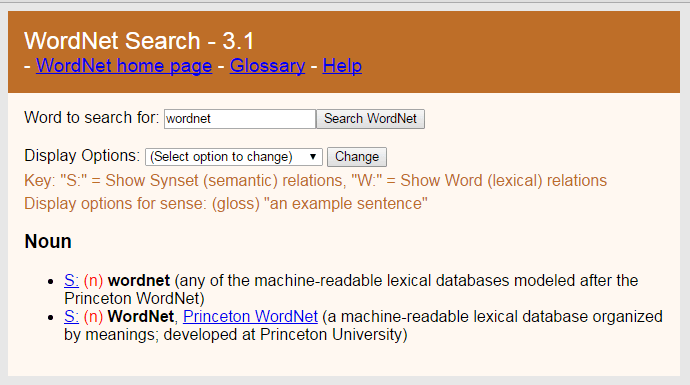
- WordNetWordNet is a large lexical database of English developed at Princeton University beginning in 1985.Listed in See also
More to read
Topics:AI HistoryData & DatasetsGoogleNatural Language Processing
References
- ^1 ^2 ^3 ^4Kurt Bollacker, Colin Evans, Praveen Paritosh, Tim Sturge, Jamie Taylor. "Freebase: a collaboratively created graph database for structuring human knowledge". Proceedings of the 2008 ACM SIGMOD International Conference on Management of Data, pp. 1247-1250, June 2008. research.google/...for-structuring-human-knowledge
- ^1 ^2 ^3 ^4 ^5 ^6 ^7 ^8 ^9 ^10 ^11 ^12 ^13 ^14 ^15Kurt Bollacker, Patrick Tufts, Tomi Pierce, Robert Cook. "A Platform for Scalable, Collaborative, Structured Information Integration". AAAI 2007 workshop proceedings (WS-07-14), AAAI, 2007. cdn.aaai.org/...WS07-14-004.pdf
- ^1 ^2 ^3 ^4 ^5 ^6 ^7 ^8John Markoff. "Start-Up Aims for Database to Automate Web Searching". The New York Times, March 9, 2007. nytimes.com/...09data
- ^1 ^2TechCrunch. "Freebase Takes $42 Million". TechCrunch, January 16, 2008. techcrunch.com/...freebase-takes-42-million
- ^1 ^2 ^3 ^4 ^5 ^6Jack Menzel. "Deeper understanding with Metaweb". Official Google Blog, July 16, 2010. googleblog.blogspot.com/...erstanding-with-metaweb
- ^Kim-Mai Cutler. "Google acquires MetaWeb, says Freebase will become 'more open'". VentureBeat, July 16, 2010. venturebeat.com/...-freebase-will-become-more-open
- ^1 ^2Amit Singhal. "Introducing the Knowledge Graph: things, not strings". Google, May 16, 2012. blog.google/...roducing-knowledge-graph-things-not
- ^1 ^2 ^3 ^4 ^5 ^6 ^7 ^8 ^9Jason Douglas (Knowledge Graph team at Google). "Announcement: From Freebase to Wikidata". Freebase Discuss (Google Groups), December 16, 2014. groups.google.com/...s_BPoL92edc
- ^1 ^2 ^3Jason Douglas (Google Knowledge Graph Team). "So long and thanks for all the data!". Freebase Discuss (Google Groups), May 2, 2016. groups.google.com/...WEnyO8f7xOQ
- ^1 ^2 ^3 ^4 ^5 ^6 ^7 ^8 ^9 ^10 ^11 ^12 ^13 ^14 ^15 ^16 ^17 ^18 ^19 ^20 ^21 ^22 ^23Thomas Pellissier Tanon, Denny Vrandečić, Sebastian Schaffert, Thomas Steiner, Lydia Pintscher. "From Freebase to Wikidata: The Great Migration". Proceedings of the 25th International Conference on World Wide Web (WWW 2016), pp. 1419-1428, April 2016. doi.org/...2872427.2874809
- ^1 ^2 ^3Google for Developers. "Freebase Data Dumps". Google for Developers, accessed November 2026. developers.google.com/freebase
- ^1 ^2 ^3 ^4 ^5 ^6 ^7Mike Mintz, Steven Bills, Rion Snow, Dan Jurafsky. "Distant supervision for relation extraction without labeled data". Proceedings of the Joint Conference of the 47th Annual Meeting of the ACL and the 4th International Joint Conference on Natural Language Processing of the AFNLP, pp. 1003-1011, August 2009. aclanthology.org/P09-1113
- ^1 ^2 ^3 ^4Jonathan Berant, Andrew Chou, Roy Frostig, Percy Liang. "Semantic Parsing on Freebase from Question-Answer Pairs". Proceedings of the 2013 Conference on Empirical Methods in Natural Language Processing, pp. 1533-1544, October 2013. aclanthology.org/D13-1160
- ^Qingqing Cai, Alexander Yates. "Large-scale Semantic Parsing via Schema Matching and Lexicon Extension". Proceedings of the 51st Annual Meeting of the Association for Computational Linguistics (Volume 1: Long Papers), pp. 423-433, August 2013. aclanthology.org/P13-1042
- ^1 ^2 ^3Antoine Bordes, Nicolas Usunier, Sumit Chopra, Jason Weston. "Large-scale Simple Question Answering with Memory Networks". arXiv:1506.02075, June 2015. arxiv.org/...1506.02075
- ^1 ^2Wen-tau Yih, Matthew Richardson, Christopher Meek, Ming-Wei Chang, Jina Suh. "The Value of Semantic Parse Labeling for Knowledge Base Question Answering". Proceedings of the 54th Annual Meeting of the Association for Computational Linguistics (Volume 2: Short Papers), pp. 201-206, August 2016. aclanthology.org/P16-2033
- ^Alon Talmor, Jonathan Berant. "The Web as a Knowledge-Base for Answering Complex Questions". Proceedings of the 2018 Conference of the North American Chapter of the Association for Computational Linguistics: Human Language Technologies, Volume 1 (Long Papers), pp. 641-651, June 2018. aclanthology.org/N18-1059
- ^1 ^2 ^3Yu Gu, Sue Kase, Michelle Vanni, Brian Sadler, Percy Liang, Xifeng Yan, Yu Su. "Beyond I.I.D.: Three Levels of Generalization for Question Answering on Knowledge Bases". The Web Conference 2021 (arXiv:2011.07743), November 2020. arxiv.org/...2011.07743
- ^1 ^2 ^3 ^4Antoine Bordes, Nicolas Usunier, Alberto Garcia-Duran, Jason Weston, Oksana Yakhnenko. "Translating Embeddings for Modeling Multi-relational Data". Advances in Neural Information Processing Systems 26 (NIPS 2013), 2013. papers.nips.cc/...928ca8133fa24680a88d2f9-Abstract
- ^1 ^2Kristina Toutanova, Danqi Chen. "Observed versus latent features for knowledge base and text inference". Proceedings of the 3rd Workshop on Continuous Vector Space Models and their Compositionality, pp. 57-66, July 2015. aclanthology.org/W15-4007
- ^1 ^2Kristina Toutanova, Danqi Chen, Patrick Pantel, Hoifung Poon, Pallavi Choudhury, Michael Gamon. "Representing Text for Joint Embedding of Text and Knowledge Bases". Proceedings of the 2015 Conference on Empirical Methods in Natural Language Processing, pp. 1499-1509, September 2015. aclanthology.org/D15-1174
- ^Xin Luna Dong, Evgeniy Gabrilovich, Geremy Heitz, Wilko Horn, Ni Lao, Kevin Murphy, Thomas Strohmann, Shaohua Sun, Wei Zhang. "Knowledge Vault: A Web-Scale Approach to Probabilistic Knowledge Fusion". Proceedings of the 20th ACM SIGKDD International Conference on Knowledge Discovery and Data Mining (KDD '14), pp. 601-610, 2014. research.google/...-probabilistic-knowledge-fusion
- ^OpenRefine. "Project history". OpenRefine, accessed November 2026. openrefine.org/openrefine_history
- ^Wikidata. "Property:P646 (Freebase ID)". Wikidata, accessed November 2026. wikidata.org/...Property:P646
- ^Google for Developers. "Knowledge Graph Search API". Google for Developers, accessed November 2026. developers.google.com/knowledge-graph
Improve this article
Add missing citations, update stale details, or write a clearer explanation. Anyone can edit: changes go live when you publish, and every edit is checked by an editor.
1 revision · v1 · 3,842 words · full history
Fact-checks are independent of edits: a reviewer re-verifies the article against its sources and stamps the date. How we verify
Research and drafting on this wiki are AI-assisted, under named human editorial standards. How AI is used here
Cite this page: AI Wiki. "Freebase." aiwiki.ai, updated 18 Nov 2026. CC BY 4.0. https://aiwiki.ai/wiki/freebase