

International Mathematical Olympiad
The International Mathematical Olympiad (IMO) is an annual mathematics competition for secondary-school students, held in a different country each year, which its organisers describe as the world championship mathematics competition for high school students.[1] It was first held in Romania in 1959 with seven participating countries and has grown to national teams from more than 100 countries, each sending up to six contestants.[1][2] Contestants sit two papers on consecutive days, each with three problems and a time limit of four and a half hours, and every problem is worth 7 points, for a maximum score of 42.[1] The 67th IMO, held in Shanghai in July 2026, had 666 contestants from 117 countries, the largest field in the competition's history.[3][5]
Because IMO problems are new each year, demand complete written proofs and are not available online before the contest, the competition became a widely used yardstick for mathematical reasoning in artificial intelligence.[4][26] Google DeepMind's AlphaProof and AlphaGeometry 2 reached the silver-medal standard on the 2024 problems, an advanced version of Gemini Deep Think received an officially graded gold-medal score in 2025 alongside a separately graded gold-level result from OpenAI, and in 2026 two Chinese companies, Huawei and Xiaohongshu, said their systems had scored a perfect 42.[15][17][18][24][25] The 2025 results are covered in detail in AI gold medals at the 2025 IMO.
History
The first IMO took place in Brașov, Romania, in July 1959, with teams from Bulgaria, Czechoslovakia, the German Democratic Republic, Hungary, Poland, Romania and the Soviet Union.[2][3] The competition has been held every year since then except 1980.[3] The IMO's own history page records the following milestones.[2]
| Year | Milestone |
|---|---|
| 1959 | First IMO, in Brașov, Romania, with seven countries |
| 1964 | Mongolia becomes the first participating country from outside Europe |
| 1981 | First IMO in the Americas, hosted by the United States |
| 1988 | First IMO in Oceania, held in Canberra, Australia |
| 1990 | First IMO in Asia, held in Beijing, China |
| 2009 | Participation passes 100 countries for the first time (104) |
| 2014 | First IMO in Africa, held in Cape Town, South Africa |
| 2020 | Held virtually for the first time because of the global pandemic |
The 2020 and 2021 editions were run as distributed competitions administered from St Petersburg, Russia.[3] Participation has continued to rise: the 2024 IMO in Bath, United Kingdom, had 609 contestants from 108 countries, the 2025 IMO on Australia's Sunshine Coast had 630 from 110, and the 2026 IMO in Shanghai had 666 from 117.[3] Before the 2026 contest the IMO announced that 685 contestants from 119 countries were expected, and it welcomed observers from Bermuda, Ethiopia, Kuwait and Lebanon, countries considering sending teams.[10] Future hosts listed by the IMO are Budapest, Hungary (2027), the King Abdullah University of Science and Technology in Thuwal, Saudi Arabia (2028), Ulaanbaatar, Mongolia (2029) and Lausanne, Switzerland (2030).[3]
Format and rules
Participation
Participation is by invitation. Each invited country may send a team of up to six contestants with a Leader and a Deputy Leader.[4] Contestants must be under 20 and must not be enrolled at a post-secondary institution.[1] The Leader sits on the IMO Jury, the body that chooses the contest problems and approves the number of medals.[1][4] The official languages are English, French, German, Russian and Spanish, and each contestant may receive the problems in up to three languages approved by the Jury.[4]
The contest
The contest runs on two consecutive days. Each morning's paper has three problems and lasts four and a half hours.[4] Only writing and drawing instruments such as rulers and compasses are allowed; books, calculators, protractors, computers and communication devices are barred from the examination room.[4] The problems come from secondary-school mathematics, mainly algebra, combinatorics, geometry and number theory, and full credit requires a complete proof.[1] The IMO notes that each year only a few contestants, sometimes one or none, out of more than 600 score all 42 points.[1]
Problem selection
Participating countries other than the host submit up to six proposed problems with solutions, which must be new and not used in any other competition.[4] A Problem Selection Committee appointed by the host reviews the proposals and prepares a shortlist, and the Jury of team leaders picks the six contest problems.[1] The IMO describes the intended order of difficulty as 1, 4, 2, 5, 3, 6, so that problems 1 and 4 are the most accessible and problems 3 and 6 the hardest.[1]
Marking and coordination
Each solution is marked from 0 to 7, with partial credit for partial progress.[1] Scripts are assessed through coordination: coordinators provided by the host and the team's leader and deputy leader agree each contestant's score, and unresolved disagreements go to the problem captain, the chief coordinator and finally the Jury.[1]
Awards
Medals go to roughly half of the contestants, with gold, silver and bronze in a ratio of about 1:2:3.[1][4] Raising the number of medals above half of the field requires approval from two thirds of the Jury.[4] A contestant without a medal who scores full marks on at least one problem receives an honourable mention, and the Jury may award special prizes for outstanding solutions.[4] The Mirzakhani Prize is given each year to the best female contestant in each of five regions.[1]
Recent editions
| Edition | Host | Contestants | Countries | Gold cutoff | Silver cutoff | Bronze cutoff | Perfect scores |
|---|---|---|---|---|---|---|---|
| 65th (2024) | Bath, United Kingdom | 609 | 108 | 29 | 22 | 16 | 1 |
| 66th (2025) | Sunshine Coast, Australia | 630 | 110 | 35 | 28 | 19 | 5 |
| 67th (2026) | Shanghai, China | 666 | 117 | 29 | 23 | 16 | 7 |
Sources: IMO edition pages.[5][6][7] In 2026, 55 contestants won gold, 105 silver and 189 bronze, and 141 received honourable mentions.[5] The 2026 closing ceremony was held at Shanghai High School on July 20, 2026.[8]
Notable participants
Several leading mathematicians competed at the IMO as students. The IMO's history page shows Terence Tao receiving his gold medal at the 1988 IMO in Canberra.[2] Two of the four 2026 Fields Medalists are former IMO gold medallists: Yu Deng (gold in 2006) and Jacob Tsimerman (gold in 2003 and 2004, with a perfect score in 2004).[9]
The IMO as an AI benchmark
The IMO Grand Challenge
A committee of researchers including Daniel Selsam, Leonardo de Moura, Kevin Buzzard and Percy Liang proposed the IMO Grand Challenge: to build an AI that can win a gold medal at the IMO.[11] To avoid disputes about grading, their proposal used a "formal-to-formal" variant in which the AI receives each problem stated in the Lean theorem prover and must output a machine-checkable proof. The draft rules gave the AI the same time as a human contestant, required each proof to check in Lean within ten minutes, allowed no partial credit or internet access, and required the system to be open source and released before the competition.[11] The page describes these rules as a preliminary proposal and notes that the challenge is not affiliated with the IMO Foundation.[11]
AlphaGeometry (2024)
In January 2024 Google DeepMind published AlphaGeometry in Nature, a neuro-symbolic system that pairs a neural language model with a symbolic deduction engine and was trained without human demonstrations, on 100 million synthetic examples.[12][13] On a benchmark of 30 IMO geometry problems it solved 25 within the standard time limit, compared with 10 for the previous best method (Wu's method) and an average of 25.9 for human gold medallists.[13] Its successor, AlphaGeometry2, raised the solve rate on IMO geometry problems from the past 25 years to 84 percent, from 54 percent for the original system, and its authors reported that it had surpassed an average gold medallist on olympiad geometry.[14]
Silver-medal standard (2024)
On July 25, 2024, Google DeepMind reported that AlphaProof, an AlphaZero-inspired agent that learns through reinforcement learning to find formal proofs in Lean, combined with AlphaGeometry 2 had solved four of the six problems of the 2024 IMO for 28 points, the top of the silver range and one point below that year's gold cutoff of 29.[15][16] AlphaProof solved two algebra problems and one number theory problem, including the hardest problem of the contest, and AlphaGeometry 2 solved the geometry problem; the two combinatorics problems were not solved.[15] The problems were first translated by hand into formal mathematical language, and while one problem was solved within minutes, others took up to three days, compared with the human limit of two 4.5-hour sessions.[15] The solutions were scored by Timothy Gowers, an IMO gold medallist and Fields Medal winner, and Joseph Myers, a two-time IMO gold medallist who chaired the 2024 Problem Selection Committee.[15] The AlphaProof method was later published in Nature in November 2025.[16]
Gold-medal level (2025)
At the 2025 IMO, systems from Google DeepMind and OpenAI each solved the first five problems and failed Problem 6, scoring 35 points, exactly the gold cutoff.[17][18] Both worked from the natural-language problems and wrote natural-language proofs.[17][18]
- Google DeepMind used an advanced version of Gemini Deep Think, which explores several lines of reasoning in parallel, and said it had trained this version with new reinforcement learning techniques, given it a curated corpus of high-quality solutions, and added general advice on approaching IMO problems to its instructions.[17] Its proofs were produced within the 4.5-hour time limit and were officially graded and certified by IMO coordinators using the same criteria as student solutions; DeepMind described itself as part of an inaugural cohort to have model results graded this way.[17] IMO President Gregor Dolinar confirmed the 35-point score, while the IMO said its review covered the submitted answers and did not validate the system, process or underlying model.[17] DeepMind announced the result on July 21, 2025.[17]
- OpenAI reported the same 35 points with an unreleased experimental reasoning model that worked for two 4.5-hour sessions without tools or internet access.[18] Its proofs were graded by three former IMO medallists rather than by the IMO, and the proofs were posted online; the team behind the model was Alexander Wei, Sheryl Hsu and Noam Brown.[18][19] OpenAI announced the result on July 19, 2025.[23]
Formal, Lean-based systems also reported results. ByteDance's Seed-Prover team wrote that it fully proved five of the six problems, while a contemporary round-up noted that its initial announcement gave scores of 2+7+7+7+7+0 (a silver-range total) after three days of work on the problems, upgraded to 7+7+7+7+7+0 only when the system was given additional attempts.[20][21] Harmonic reported gold-medal-equivalent performance with its Aristotle system, whose proofs are checked in Lean.[20][22] By contrast, when the MathArena team evaluated publicly available models on the 2025 problems with human graders, none reached the bronze cutoff; the best, Gemini 2.5 Pro, scored about 31 percent (13 points).[23]
The IMO did not publish formal rules for AI entries in 2025. The author of a round-up on the Xena blog wrote that he had heard of an informal embargo on announcements until a week after the competition ended (July 28), which was not consistently followed, and Dolinar said the IMO could not validate the methods used, including the amount of compute.[20] The timing of OpenAI's announcement drew particular criticism; that dispute is described in AI gold medals at the 2025 IMO.
Perfect scores (2026)
For the 2026 IMO, AI companies received the problems only after the human contestants had sat the papers and had to submit their solutions within a time limit.[24] In late July 2026, Huawei and Xiaohongshu (RedNote) each said their models had scored 100 percent on that year's problems, and AFP reported that they were the first AI labs to announce scores.[24][25] Huawei said its system, Celia, showed problem-solving ability across several areas of mathematics.[24] Xiaohongshu said human intervention was prohibited during testing and that its solutions for dots-note 3.0 were submitted to the IMO organisers for grading.[24]
According to China Daily, Xiaohongshu described dots-note 3.0 as the first AI system in IMO history to achieve both a full score and a gold-medal-level result; the newspaper called it only the second AI model, after Gemini Deep Think, to receive an officially graded gold-level result.[25][26] The company said the model received the original LaTeX problem statements and solved them with an agent-based system that combined natural-language reasoning with Python code execution, and that IMO graders awarded seven points on every problem.[26] The prohibited forms of human intervention included adjusting the model's reasoning, adding hints, correcting answers and choosing among outputs.[25] The evaluated model was an internal version, and the company said it expected to release it as open source.[25][26] Human contestants are not allowed computers in the examination room, so the AI conditions differed from theirs.[4]
Other 2026 claims were self-assessed or reported by the developers. In September 2026 a team at NVIDIA reported that a natural-language pipeline built on three Nemotron 3 Ultra checkpoints, with no formal prover, external tools or internet access, scored 30 of 42 points at IMO 2026, reaching the gold-medal threshold, and released the two post-trained checkpoints, training data, code and submitted solutions.[36] Axiom Math published Lean statements and proofs for all six problems, produced by its AxiomProver system, and called the result "a perfect score of 42/42"; it reported generation times from 24 to 869 minutes per problem.[27] Axiom's own fidelity notes state that for three problems that ask for an answer, the answer is built into the formal statement, so the statement "presupposes the solution".[28] Separately, Deedy Das of Menlo Ventures gave the 2026 problems to four models, from OpenAI, Anthropic, Axiom Math and Moonshot AI (Kimi K3), and reported that each scored 42 in his own test.[24] Seven of the 666 human contestants also scored 42.[5][24]
The AIMO Prize
The AI Mathematical Olympiad (AIMO) Prize was a $10 million fund launched in November 2023 and supported by the trading firm XTX Markets to encourage open AI models that reason mathematically, with a grand prize for the first publicly shared model to reach IMO gold-medal standard in an approved competition.[29][30] It ran three progress prizes on Kaggle. Team Numina won the first in July 2024 and received its prize at the IMO in Bath from Terence Tao; NemoSkills topped the second, which closed in April 2025 with a score of 34 out of 50; and the third, centred on IMO-level problems, was won by a participant named Exalted Joseph, with results announced in June 2026.[30][31][32] The organisers observed that many third-prize entries were built on the same shared notebooks and on the open-weight gpt-oss-120b model.[32] A follow-up AIMO Proof Pilot asked teams to write full olympiad-style proofs using only fully open-source models such as OLMo; the winner scored 29 of 42 on six problems ranging from national-olympiad to medium IMO difficulty.[33]
On September 16, 2026, XTX Markets closed the AIMO Prize without awarding the grand prize. It said open-weight models were already claiming perfect scores on IMO problem sets, that the frontier of AI for mathematics had moved to research mathematics, and that any remaining version of the contest would be either a lottery or too restrictive. The unspent money was moved to other AI-for-mathematics projects. More than 8,000 participants had entered AIMO competitions and more than $1.6 million had been awarded.[34]
Timeline of AI results on IMO problems
| Year | System | Developer | Reported score | Grading | Conditions |
|---|---|---|---|---|---|
| 2024 | AlphaGeometry | Google DeepMind | 25 of 30 past geometry problems | Benchmark | Geometry only, standard time limit[13] |
| 2024 | AlphaProof + AlphaGeometry 2 | Google DeepMind | 28/42 (silver) | Gowers and Myers | Hand formalization; up to three days[15] |
| 2025 | Gemini Deep Think (advanced version) | Google DeepMind | 35/42 (gold) | IMO coordinators | Natural language, 4.5-hour limit[17] |
| 2025 | Experimental reasoning model | OpenAI | 35/42 (gold level) | Three former IMO medallists | Natural language, two 4.5-hour sessions[18] |
| 2025 | Aristotle | Harmonic | Gold-medal equivalent | Lean verification | Formal[22] |
| 2025 | Seed-Prover | ByteDance | 5 of 6 fully proved | Lean verification | Formal[21] |
| 2025 | Gemini 2.5 Pro (best public model) | 13/42 | MathArena human judges | Best of 32 samples[23] | |
| 2026 | Celia | Huawei | 42/42 (company claim) | Company announcement | Problems released after the human exam[24] |
| 2026 | dots-note 3.0 | Xiaohongshu | 42/42 (company claim) | Submitted to IMO organisers | Agent system with Python execution[24][26] |
| 2026 | Nemotron 3 Ultra pipeline | NVIDIA | 30/42 (gold level, developer report) | Developer report | Natural language, open checkpoints, no tools[36] |
| 2026 | AxiomProver | Axiom Math | 42/42 (self-assessed) | Lean verification | Formal; three answers in statements[27][28] |
Debate and limitations
Comparisons between AI systems and human contestants depend on the conditions, which have varied from year to year and company to company. In 2025 the IMO said it could confirm submitted answers but not the methods behind them, such as compute or human involvement.[17][20] Formal results carry a machine-checked guarantee only for the formal statement that was proved, and Axiom's 2026 notes show that the statement can contain part of the answer.[28] Informal natural-language results depend on human graders, and the 2025 OpenAI and 2026 Das results were not graded by the IMO.[18][24]
Some sponsors of AI-for-mathematics work have concluded that olympiad scores have stopped being a useful target. When it closed the AIMO Prize, XTX Markets said the contest as originally conceived was unlikely to encourage valuable work now that frontier and open-weight models were reporting perfect IMO scores, and that the frontier of AI for mathematics had moved to research mathematics.[34]
AI companies have also become sponsors of the competition. In July 2026 the IMO announced that OpenAI, which it described as a Diamond sponsor of the IMO Association, would give a 12-month ChatGPT Pro subscription to every gold medallist and every Mirzakhani award winner at IMO 2026.[35]
Continue reading
- AI gold medals at the 2025 IMOIn July 2025, two leading artificial intelligence laboratories, OpenAI and Google DeepMindMentioned twice above
- MathArenaMathArena is a public, continuously updated leaderboard and evaluation platform that measures the performance of large language models on mathematics competition problems released after each model's training…Mentioned twice above
- AI gold-medal result at the 2026 IOIIn September 2026, researchers at NVIDIA reported that a fine-tuned version of Nemotron 3 Ultra had scored 535.4 out of 600 points on the problem set of the 2026 International Olympiad in Informatics (IOI)Listed in See also
- Automated Theorem ProvingAutomated theorem proving (ATP) is the use of computer programs to find or check mathematical proofs, expressing both the statement and the proof in a formal_logic so that correctness can be decided…Listed in See also
- OlympiadBenchOlympiadBench is an AI benchmark of 8,476 Olympiad-level mathematics and physics problems, designed to test the advanced scientific reasoning of large language models and large multimodal models.Listed in See also
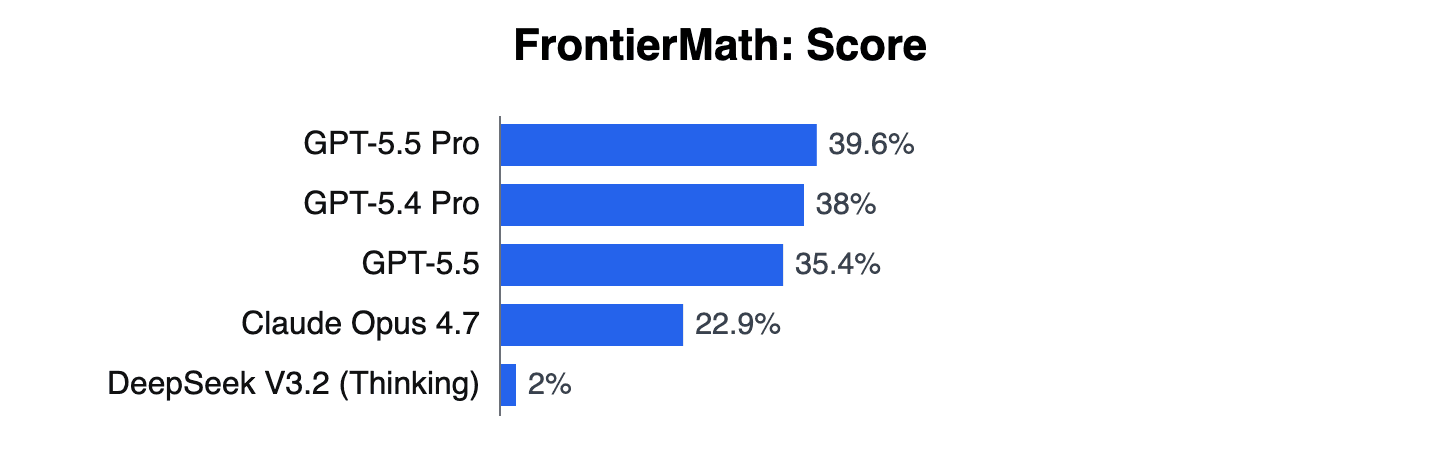
- FrontierMathFrontierMath is an advanced mathematical reasoning benchmark created by Epoch AI in collaboration with over 60 expert mathematicians, including Fields Medalists Terence Tao, Timothy Gowers, and Richard…Listed in See also
More from See also
More to read
References
- ^1 ^2 ^3 ^4 ^5 ^6 ^7 ^8 ^9 ^10 ^11 ^12 ^13International Mathematical Olympiad. "What is IMO?". imo-official.org, accessed November 2026. imo-official.org/about
- ^1 ^2 ^3 ^4International Mathematical Olympiad. "History". imo-official.org, accessed November 2026. imo-official.org/history
- ^1 ^2 ^3 ^4 ^5 ^6International Mathematical Olympiad. "Editions". imo-official.org, accessed November 2026. imo-official.org/editions
- ^1 ^2 ^3 ^4 ^5 ^6 ^7 ^8 ^9 ^10 ^11International Mathematical Olympiad. "General Regulations" (last updated July 16, 2025). imo-official.org. imo-official.org/regulations
- ^1 ^2 ^3 ^4International Mathematical Olympiad. "67th IMO 2026". imo-official.org, accessed November 2026. imo-official.org/...2026
- ^International Mathematical Olympiad. "66th IMO 2025". imo-official.org, accessed November 2026. imo-official.org/...2025
- ^International Mathematical Olympiad. "65th IMO 2024". imo-official.org, accessed November 2026. imo-official.org/...2024
- ^International Mathematical Olympiad. "IMO 2026 Concludes in Shanghai". imo-official.org, July 20, 2026. imo-official.org/...imo-2026-concludes-in-shanghai
- ^International Mathematical Olympiad. "Former IMO Contestants Among the 2026 Fields Medalists". imo-official.org, July 24, 2026. imo-official.org/...ts-among-2026-fields-medalists
- ^International Mathematical Olympiad. "IMO 2026 to Welcome Record Participation". imo-official.org, June 25, 2026. imo-official.org/...record-participation-imo-2026
- ^1 ^2 ^3IMO Grand Challenge committee. "IMO Grand Challenge for Artificial Intelligence". imo-grand-challenge.github.io. imo-grand-challenge.github.io
- ^Trinh, T. H., Wu, Y., Le, Q. V., He, H., Luong, T. "Solving olympiad geometry without human demonstrations". Nature 625, 476-482, January 17, 2024. nature.com/...s41586-023-06747-5
- ^1 ^2 ^3Trinh, T., Luong, T. "AlphaGeometry: An Olympiad-level AI system for geometry". Google DeepMind blog, January 17, 2024. deepmind.google/...ad-level-ai-system-for-geometry
- ^Chervonyi, Y., Trinh, T. H., Olšák, M., et al. "Gold-medalist Performance in Solving Olympiad Geometry with AlphaGeometry2". arXiv:2502.03544, February 5, 2025. arxiv.org/...2502.03544
- ^1 ^2 ^3 ^4 ^5 ^6AlphaProof and AlphaGeometry teams. "AI achieves silver-medal standard solving International Mathematical Olympiad problems". Google DeepMind blog, July 25, 2024. deepmind.google/...-problems-at-silver-medal-level
- ^1 ^2Hubert, T., Mehta, R., Sartran, L., et al. "Olympiad-level formal mathematical reasoning with reinforcement learning". Nature 651, 607-613 (published online November 12, 2025). nature.com/...s41586-025-09833-y
- ^1 ^2 ^3 ^4 ^5 ^6 ^7 ^8 ^9Luong, T., Lockhart, E. "Advanced version of Gemini with Deep Think officially achieves gold-medal standard at the International Mathematical Olympiad". Google DeepMind blog, July 21, 2025. deepmind.google/...rnational-mathematical-olympiad
- ^1 ^2 ^3 ^4 ^5 ^6 ^7Béchard, D. E. "OpenAI Model Earns Gold-Medal Score at International Math Olympiad and Advances Path to Artificial General Intelligence". Scientific American, August 21, 2025. scientificamerican.com/...tional-math-olympiad-and
- ^aw31. "OpenAI IMO 2025 Proofs". GitHub repository aw31/openai-imo-2025-proofs, July 2025. github.com/...openai-imo-2025-proofs
- ^1 ^2 ^3 ^4Xena. "AI at IMO 2025: a round-up". xenaproject.wordpress.com, August 3, 2025. xenaproject.wordpress.com/...t-imo-2025-a-round-up
- ^1 ^2Chen, L., Gu, J., Huang, L., et al. "Seed-Prover: Deep and Broad Reasoning for Automated Theorem Proving". arXiv:2507.23726, July 31, 2025. arxiv.org/...2507.23726
- ^1 ^2Achim, T., Best, A., Bietti, A., et al. "Aristotle: IMO-level Automated Theorem Proving". arXiv:2510.01346, October 1, 2025. arxiv.org/...2510.01346
- ^1 ^2 ^3Petrov, I., Dekoninck, J., Balunović, M., et al. "Not Even Bronze: Evaluating LLMs on 2025 International Math Olympiad". MathArena, July 17, 2025 (updated July 2025). matharena.ai/imo
- ^1 ^2 ^3 ^4 ^5 ^6 ^7 ^8 ^9 ^10AFP. "AI catches up with humans to score 100% at top math contest". Tech Xplore, July 23, 2026. techxplore.com/...-07-ai-humans-score-math-contest
- ^1 ^2 ^3 ^4 ^5Li Jiaying. "Chinese AI model sets record with perfect score". China Daily, July 22, 2026. global.chinadaily.com.cn/...6085aaa310986e2b466b54
- ^1 ^2 ^3 ^4 ^5Li Jiaying. "Xiaohongshu achieves significant AI milestone". China Daily, July 24, 2026. global.chinadaily.com.cn/...62b7eda310986e2b4670a1
- ^1 ^2Axiom Math. "AxiomProver at IMO 2026". GitHub repository AxiomMath/IMO2026, July 2026. github.com/...IMO2026
- ^1 ^2 ^3Axiom Math. "formalization.yaml" (AxiomProver at IMO 2026). GitHub, July 2026. github.com/...formalization.yaml
- ^AIMO Prize. "About". aimoprize.com, accessed November 2026. aimoprize.com/about
- ^1 ^2AIMO Prize. "AIMO Progress Prize: July 2024 Results". aimoprize.com, July 20, 2024. aimoprize.com/...2024-07-20-progress-prize-results
- ^AIMO Prize. "Second Progress Prize closed". aimoprize.com, April 15, 2025. aimoprize.com/...4-15-second-progress-prize-closed
- ^1 ^2AIMO Prize. "AIMO 3 Winners Announced; AIMO Proof Pilot Launched". aimoprize.com, June 24, 2026. aimoprize.com/...2026-06-24-aimo-3-winners-announced
- ^AIMO Prize. "AIMO Proof Pilot Winners Announced". aimoprize.com, July 7, 2026. aimoprize.com/...imo-proof-pilot-winners-announced
- ^1 ^2XTX Markets. "Update on XTX Markets' AI for Maths Philanthropy". aimoprize.com, September 16, 2026. aimoprize.com/...te-on-xtx-markets-ai-philanthropy
- ^International Mathematical Olympiad. "OpenAI to offer ChatGPT Pro for Gold medal and Mirzakhani award winners at IMO2026". imo-official.org, July 4, 2026. imo-official.org/...openai-chatgpt-pro
- ^1 ^2Moshkov, I., Ge, S., Armstrong, G., et al. "An Open Recipe for IMO Gold: Training Nemotron for Olympiad Mathematics". arXiv:2609.10712, September 2026. arxiv.org/...2609.10712
Improve this article
Add missing citations, update stale details, or write a clearer explanation. Anyone can edit: changes go live when you publish, and every edit is checked by an editor.
1 revision · v1 · 3,683 words · full history
Fact-checks are independent of edits: a reviewer re-verifies the article against its sources and stamps the date. How we verify
Research and drafting on this wiki are AI-assisted, under named human editorial standards. How AI is used here
Cite this page: AI Wiki. "International Mathematical Olympiad." aiwiki.ai, updated 18 Nov 2026. CC BY 4.0. https://aiwiki.ai/wiki/international_mathematical_olympiad