

Richard Socher
Richard Socher (born 1983) is a German-born computer scientist, entrepreneur, and investor best known for pioneering the application of deep learning to natural language processing, for co-authoring the GloVe word vectors, and for founding the AI search engine You.com. He completed his PhD at Stanford University in 2014 under Christopher Manning and Andrew Ng, where his thesis on recursive neural networks helped move NLP toward neural methods [1][2]. He founded the startup MetaMind, which Salesforce acquired in 2016, then served as Salesforce's chief scientist before leaving to start You.com in 2020 [3][4]. In May 2026 he came out of stealth as the founder and CEO of Recursive Superintelligence, a startup pursuing self-improving AI that raised $650 million [5][6].
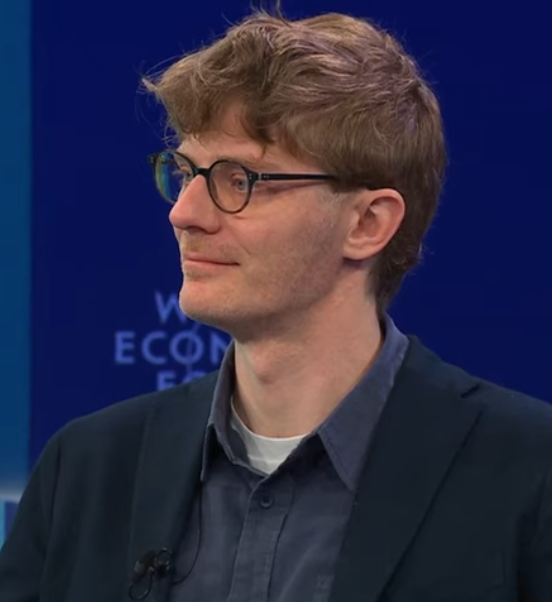
| Born | 1983, Dresden, Germany [2] |
| Fields | Natural language processing, deep learning, machine learning |
| Education | University of Leipzig; Saarland University; PhD, Stanford University (2014) [2] |
| Known for | Recursive neural networks, the Stanford Sentiment Treebank, GloVe word vectors, founding MetaMind and You.com [1][7][8] |
| Current role | Co-founder and CEO, Recursive Superintelligence (2026); founder and CEO, You.com; founder and managing partner, AIX Ventures [5][9] |
Who is Richard Socher?
Richard Socher is an AI researcher turned entrepreneur whose career spans foundational NLP research and the building of multiple AI companies. As a Stanford PhD student he helped demonstrate that neural networks could outperform earlier statistical methods on language tasks, contributing the Stanford Sentiment Treebank and co-authoring GloVe, two of the most widely cited resources in the field [7][8][10]. He then carried that research into industry, founding MetaMind (acquired by Salesforce in 2016), running Salesforce Research as chief scientist, launching You.com in 2020, and co-founding the AI-focused venture firm AIX Ventures [3][4][9][15]. As of November 2026 his Google Scholar profile counted more than 260,000 citations, placing him among the most-cited researchers in NLP [7].
Early life and education
Socher was born in Dresden in the former East Germany and attended secondary school in the city's Dresden-Plauen district [2]. He studied computational linguistics at the University of Leipzig, where he finished a degree in 2006, and then at Saarland University in Saarbrücken, completing further study in 2008 [2]. He moved to the United States for graduate school and enrolled at Stanford, where he earned a PhD in computer science in 2014 [1][2].
His doctoral committee was led by two researchers who would become central figures in modern machine learning. Christopher Manning, a computational linguist, was his primary advisor, and Andrew Ng, a machine learning researcher, and Percy Liang were also listed as thesis advisors [1]. TU Dresden describes him as one of the first to conduct research into language processing using neural networks and deep learning [2]. His dissertation, titled "Recursive Deep Learning for Natural Language Processing and Computer Vision," received Stanford's award for the best computer science PhD thesis [1][2].
What research is he known for?
Socher's academic work centers on a family of models he called recursive deep learning, in which neural networks operate over tree structures rather than flat sequences.
Sentiment analysis and the Stanford Sentiment Treebank
His most recognized paper is "Recursive Deep Models for Semantic Compositionality Over a Sentiment Treebank," presented at EMNLP in 2013 with co-authors including Manning, Ng, and the linguist Christopher Potts [10]. The paper introduced the Stanford Sentiment Treebank, a dataset of 215,154 phrases drawn from 11,855 movie-review sentences and annotated for sentiment at every node of their parse trees, and a model called the Recursive Neural Tensor Network (RNTN) that learned how sentiment composes as phrases combine [10]. The RNTN pushed the state of the art on single-sentence positive versus negative classification from about 80% up to 85.4%, and reached 80.7% accuracy on fine-grained sentiment labels for all phrases [10]. The work won the Association for Computational Linguistics Test-of-Time Award in 2023, a decade after publication [10].
Word vectors and GloVe
In 2014 Socher co-authored "GloVe: Global Vectors for Word Representation" with Jeffrey Pennington, who was the lead author, and Manning, published at EMNLP 2014 [8][17]. GloVe is an unsupervised method that produces vector representations of words by factoring a matrix of word co-occurrence statistics drawn from a large corpus. It became one of the standard sets of pretrained word embeddings used across NLP research and was also recognized with an ACL Test-of-Time Award [8]. Socher's personal site credits him with "inventing the most widely used word vectors," though GloVe was a collaborative effort with Pennington as lead author and the credit belongs to the three authors together [9].
Question answering and multitask learning
After leaving academia for industry, Socher continued to publish. In 2015 his MetaMind group released "Ask Me Anything: Dynamic Memory Networks for Natural Language Processing," which framed many language tasks as a question-answering problem handled by a network with an episodic memory component, along with a companion paper extending the idea to visual question answering [12]. In 2018 he and colleagues including Bryan McCann and Caiming Xiong published "The Natural Language Decathlon: Multitask Learning as Question Answering," known as decaNLP, which proposed casting ten different NLP tasks as question answering so that a single model could learn all of them [13]. The decaNLP work anticipated later interest in general-purpose models that handle many tasks through a common text interface.
Computer vision
Earlier in his career Socher was one of the authors of "ImageNet: A Large-Scale Hierarchical Image Database," the 2009 CVPR paper that introduced the ImageNet dataset under the direction of Fei-Fei Li [11]. ImageNet became the benchmark that drove the deep learning breakthroughs in computer vision later in the decade. Socher was a contributor among several authors rather than the project lead, and the dataset is most closely associated with Li's group at Princeton and Stanford [11].
What was MetaMind?
Socher founded MetaMind in July 2014 [3]. The startup built a general-purpose platform for predicting outcomes on language, vision, and database tasks, and offered image recognition and text classification through the cloud [3]. It raised about $8 million from investors including the venture firm Khosla Ventures and Salesforce chief executive Marc Benioff, and Socher served as its chief executive and chief technology officer [3][9]. Salesforce acquired MetaMind in April 2016 without disclosing the price; a later Salesforce regulatory filing put it at about $32.8 million [3][20]. The company folded MetaMind's technology and team into its AI efforts [3].
What did he do at Salesforce?
Following the acquisition, Socher became chief scientist and an executive vice president at Salesforce, the enterprise software company best known for customer relationship management products [4][9]. He led the research organization that became Salesforce Research, overseeing teams working on fundamental and applied research, search, customer service automation, and a cross-product AI platform that handled both structured and unstructured data [9]. During this period his group produced work on multitask learning, question answering, and protein and code generation models. He left Salesforce in 2020 to start his own company [4].
What is You.com?
In December 2020 Socher announced You.com, a search engine he co-founded with Bryan McCann, a former Salesforce NLP researcher [4][14]. The site opened a public beta in November 2021 and positioned itself as a more private, customizable alternative to Google, with results grouped into app-like sections that users could rearrange [14]. In December 2022, shortly after the release of ChatGPT, You.com added a chatbot called YouChat that returned conversational answers alongside live web results, an early example of combining a large language model with web search [14].
You.com raised money in several rounds. An initial investment was led by Benioff, followed by a $25 million Series A in 2022 led by Radical Ventures, a $50 million Series B in 2024 led by Georgian, and a $100 million Series C in 2025 led by Cox Enterprises that valued the company at about $1.5 billion [14]. Over time the company shifted its emphasis from consumer search toward AI tools and APIs aimed at businesses and at developers building their own AI products [14]. As of November 2026 Socher remained chief executive of You.com while also leading Recursive [9].
What companies and funds did he found?
Beyond MetaMind and You.com, Socher is a founder and managing partner of AIX Ventures, a venture capital fund focused exclusively on AI startups [9][15]. The fund describes itself as run by practitioners and its founding group includes Socher, his former PhD advisor Christopher Manning, and Kaggle founder Anthony Goldbloom [15]. AIX has invested early in a number of well-known AI companies, including Hugging Face, Perplexity, and Weights & Biases [15].
What is Recursive Superintelligence?
In May 2026 Socher launched Recursive Superintelligence, sometimes referred to simply as Recursive, a company that emerged from stealth with $650 million in funding and a reported valuation of about $4.65 billion [5][6]. The round was co-led by Alphabet's GV and Greycroft, with participation from Nvidia and AMD Ventures, the venture arm of AMD [6][18]. According to TechCrunch, Socher was joined by a cohort of prominent AI researchers, including Peter Norvig and Cresta co-founder Tim Shi [5]; The Next Web listed Shi among the co-founders and described Norvig as an adviser [19]. In the TechCrunch interview Socher named Tim Rocktaschel, who had led the open-endedness and self-improvement teams at Google DeepMind, as one of the company's co-founders [5].
The company's stated goal is to build recursively self-improving AI: systems that can identify their own weaknesses and rewrite their own code to address them, with the longer-term aim of automating scientific research [5][6]. Socher described the plan as making the full research cycle automatic: "Our main focus is to build truly recursive, self-improving superintelligence at scale, which means that the entire process of ideation, implementation, and validation of research ideas would be automatic" [5]. He added that the approach starts from open-endedness: "Our unique approach is to use open-endedness to get to recursive self-improvement, which no one has yet achieved" [5]. On timing, Socher told TechCrunch that the team's progress meant products would arrive in "quarters, not years" [5]. The idea connects to ongoing debates about recursive self-improvement and the risks and possibilities of highly capable AI systems.
What awards has he received?
Socher has received several honors over his career. His Stanford dissertation won the university's best computer science PhD thesis award, and two of his papers later received ACL Test-of-Time awards [1][8][10]. He was named a World Economic Forum Young Global Leader in 2016 and a WEF Technology Pioneer, and he appeared on TIME magazine's inaugural list of the 100 most influential people in AI in 2023 [9][16]. In April 2024 the Technische Universität Dresden, in his home city, awarded him an honorary doctorate for his contributions to deep learning and natural language processing and for supporting AI education in Dresden, where he helped set up a student innovation center at his former school [2].
Continue reading
- SalesforceSalesforce, Inc. is an American cloud software company headquartered in Salesforce Tower, San Francisco, best known for its customer relationship management (CRM) platform and, since 2024Mentioned 12 times above
- You.comYou.com is an artificial intelligence company that builds AI-powered web search infrastructure and enterprise research agents, founded in 2020 by Richard Socher and Bryan McCannMentioned 11 times above
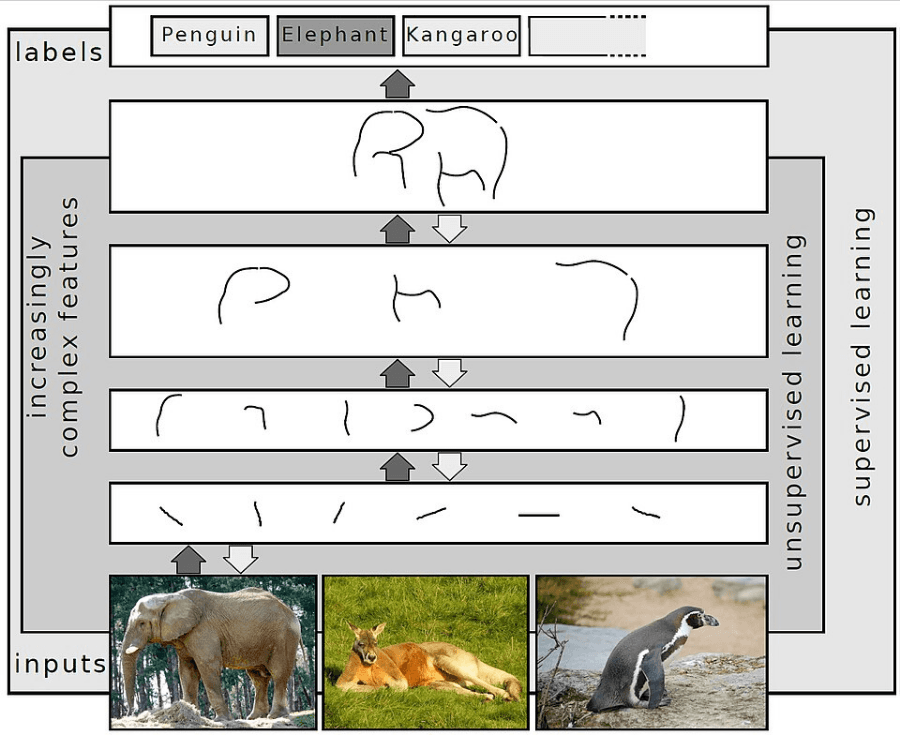
- Deep LearningDeep learning is a subset of machine learning that uses artificial neural networks with multiple layers to automatically learn representations of data at multiple levels of abstractionMentioned 7 times above
- GloVe (Global Vectors for Word Representation)GloVe (Global Vectors for Word Representation) is an unsupervised learning algorithm that turns words into dense numeric vectors by factorizing a word-word co-occurrence matrix built from a large text corpus.Mentioned 7 times above
- Natural Language ProcessingNatural language processing (NLP) is the study and development of computational methods for analyzing, representing, retrieving, transforming, and generating human language.Mentioned 5 times above
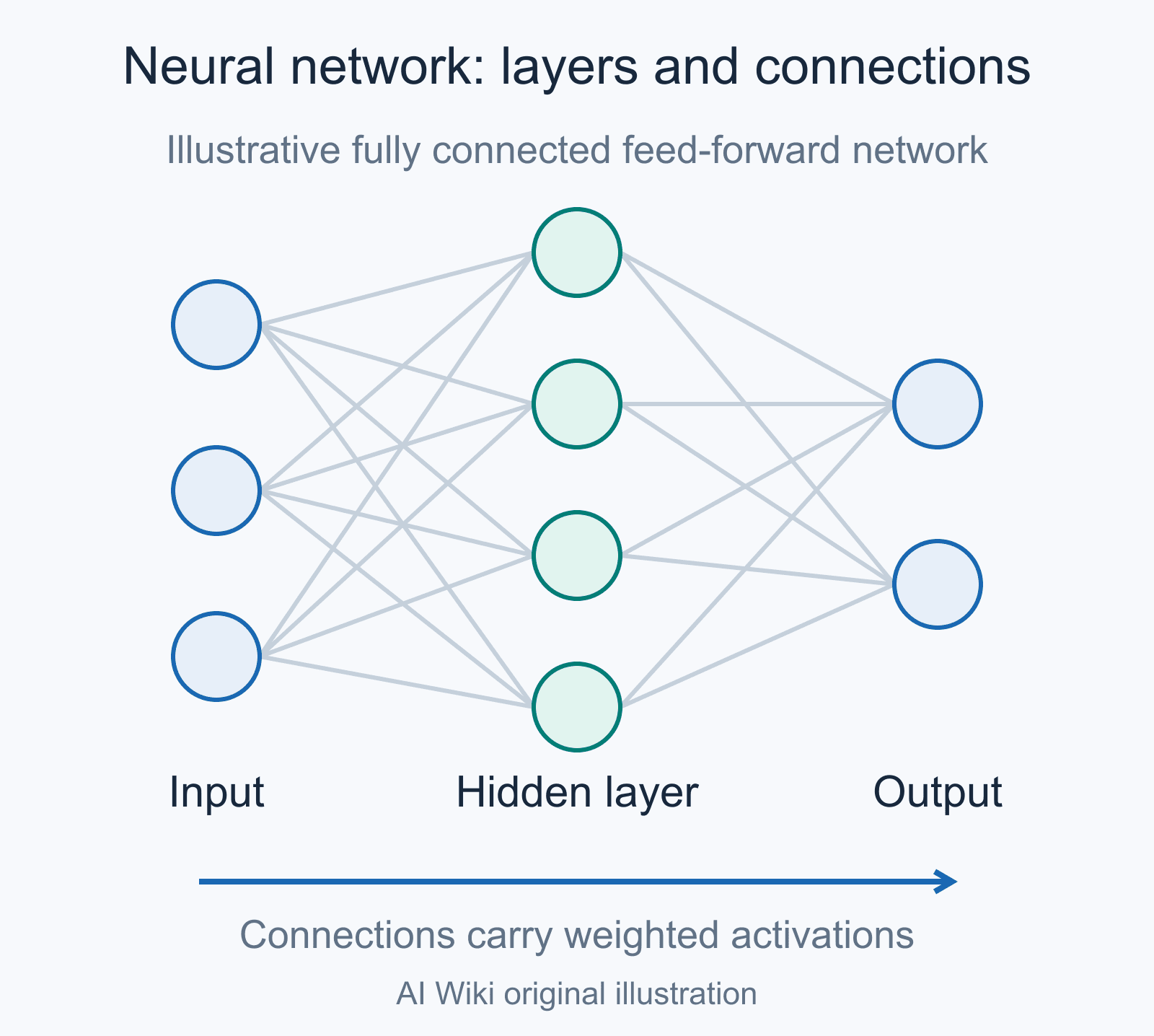
- Neural NetworkA neural network (also called an artificial neural network or ANN) is a computational model, loosely inspired by the networks of biological neurons in animal brainsMentioned 5 times above


More to read
Topics:AI ResearchPeople
References
- ^1 ^2 ^3 ^4 ^5 ^6Recursive Deep Learning for Natural Language Processing and Computer Vision (PhD thesis), Stanford Digital Repository
- ^1 ^2 ^3 ^4 ^5 ^6 ^7 ^8 ^9Dresden AI Pioneer Richard Socher Awarded Honorary Doctorate, TU Dresden
- ^1 ^2 ^3 ^4 ^5 ^6 ^7Salesforce acquires MetaMind, TechCrunch
- ^1 ^2 ^3 ^4 ^5Former Salesforce chief scientist announces new search engine to take on Google, TechCrunch
- ^1 ^2 ^3 ^4 ^5 ^6 ^7 ^8 ^9What happens when AI starts building itself?, TechCrunch
- ^1 ^2 ^3 ^4Recursive Superintelligence raises $650M to build self-improving AI models, SiliconANGLE
- ^1 ^2 ^3Richard Socher, Google Scholar
- ^1 ^2 ^3 ^4 ^5GloVe: Global Vectors for Word Representation, ACL Anthology
- ^1 ^2 ^3 ^4 ^5 ^6 ^7 ^8 ^9Richard Socher, personal site
- ^1 ^2 ^3 ^4 ^5 ^6Recursive Deep Models for Semantic Compositionality Over a Sentiment Treebank, ACL Anthology
- ^1 ^2Publications, Richard Socher
- ^Ask Me Anything: Dynamic Memory Networks for Natural Language Processing, arXiv
- ^The Natural Language Decathlon: Multitask Learning as Question Answering, arXiv
- ^1 ^2 ^3 ^4 ^5You.com, Wikipedia
- ^1 ^2 ^3 ^4Top AI execs, including Richard Socher, launch AIX Ventures, VentureBeat
- ^TIME100 AI 2023: Richard Socher, TIME
- ^GloVe: Global Vectors for Word Representation (PDF), Stanford NLP
- ^Recursive Signs $410 Million, Multi-Year Collaboration with AWS to Scale Self-Improving AI, Amazon press release, July 28, 2026
- ^Recursive Superintelligence raises $650m at $4.65bn valuation to build self-improving AI, The Next Web
- ^Salesforce discloses $75M investments on AI startups in Q1, SiliconANGLE
Improve this article
Add missing citations, update stale details, or write a clearer explanation. Anyone can edit: changes go live when you publish, and every edit is checked by an editor.
8 revisions · v8 · 2,094 words · full history
Fact-checks are independent of edits: a reviewer re-verifies the article against its sources and stamps the date. How we verify
Research and drafting on this wiki are AI-assisted, under named human editorial standards. How AI is used here
Reviewer note: Independent fact-check of the full article against its cited sources (72 claims, 21 sources fetched); 0 material + 13 minor fixed
Cite this page: AI Wiki. "Richard Socher." aiwiki.ai, updated 28 Oct 2026, fact-checked 5 Nov 2026. CC BY 4.0. https://aiwiki.ai/wiki/richard_socher