

Google Translate
Google Translate is a machine translation service run by Google, available on the web, in mobile apps for Android and iOS, and inside other Google products such as Search, Lens and Circle to Search. It launched in April 2006 as a statistical system that learned to translate from large collections of human-translated text [1], moved to neural machine translation in 2016 [2][3], and by 2026 ran on Gemini models [4][20]. As of April 2026, Google said Translate supported almost 250 languages and more than 60,000 potential language pairs, that more than one billion people used Google for translation help each month, and that about 1 trillion words were translated monthly across Translate, Search, Lens and Circle to Search [4].
Much of Google's published machine translation research has been tied to the product. The 2016 Google Neural Machine Translation (GNMT) paper described the system that replaced Translate's phrase-based models [2][5], and later work on multilingual models, zero-shot translation and translation for low-resource languages was announced alongside Translate launches [6][7][8].
History
Statistical machine translation (2006 to 2016)
Google Research announced the first version on April 28, 2006, in a post by research scientist Franz Och [1]. The post contrasted Google's approach with most commercial systems of the time, which were built with hand-written rules: linguists had to define vocabularies and grammars for each language [1]. Google's system was instead trained on billions of words of text, both monolingual text in the target language and aligned pairs of human translations, from which statistical learning built a translation model [1]. The online launch covered Arabic to English and English to Arabic [1]. Och wrote that the system did better on news than on novels and advised readers not to use it on poetry [1].
Over the following decade the service grew from a few languages to 103 [3][6]. When Google introduced its neural system in 2016, it contrasted it with this phrase-based approach, which broke a sentence into chunks that were translated largely independently, whereas the neural model considered the whole input sentence at once [2]. By 2015 Google said more than 500 million people used Google Translate every month and that it produced more than 1 billion translations a day [9].
In 2011 Google listed its Translate API among developer APIs that would be shut down; an update to the announcement said Google would instead offer a paid version of the API [10]. In a comment on the post, Google APIs product manager Adam Feldman said the Translate API had been subject to "extensive abuse" and that the vast majority of usage was in clear violation of Google's terms [10].
Mobile apps and camera translation
On May 16, 2014, Google acquired Quest Visual, the maker of the Word Lens translation app; the price was not disclosed, and the Quest Visual team joined Google to build the Word Lens engine into Google Translate [11]. In January 2015 the Translate app gained instant visual translation: users could point the camera at a sign and see the translation over the original text, without an internet connection, between English and French, German, Italian, Portuguese, Russian and Spanish [9]. The same update improved conversation mode, in which the app detects which of two selected languages is being spoken; the mode had been on Android since 2013 and the update brought it to iOS [9].
In July 2015 instant visual translation was extended to 20 more languages. Google engineer Otavio Good explained that, after the app finds text in the image, a small convolutional neural network recognises each character, and that the network runs entirely on the phone [12]. Because photos of real letters in many scripts were hard to collect, the team trained it on synthetic letter images with added smudges, reflections and other noise, and optimised the computation for low-end phones [12].
Google Neural Machine Translation (2016)
On September 26, 2016, Google researchers published "Google's Neural Machine Translation System: Bridging the Gap between Human and Machine Translation," with Yonghui Wu as first author among 31 [5]. GNMT was a deep LSTM network with 8 encoder and 8 decoder layers, attention and residual connections [5]. It split words into a limited vocabulary of sub-word units (WordPiece) on both the input and output side to handle rare words, and used low-precision arithmetic at inference time to speed up translation [5]. In human side-by-side evaluations on isolated simple sentences, it reduced translation errors by an average of 60% compared with Google's phrase-based production system [5].
The next day Google announced that GNMT was serving all Chinese to English translations in the Translate web and mobile apps, about 18 million translations per day [2]. The announcement said TensorFlow and Google's Tensor Processing Units made it possible to run the models within the product's latency limits, and reported that GNMT reduced errors "by more than 55%-85%" on several major language pairs in human ratings of sampled Wikipedia and news sentences [2]. It also listed weaknesses: the system could drop words, mistranslate proper names and rare terms, and translated each sentence without the context of the surrounding paragraph or page [2].
On November 15, 2016, product lead Barak Turovsky announced neural translation in the consumer product for eight language pairs: English to and from French, German, Spanish, Portuguese, Chinese, Japanese, Korean and Turkish [3]. Google said these languages were the native languages of about a third of the world's population and accounted for more than 35% of Translate queries, and that the change improved Translate "more in a single leap than we've seen in the last ten years combined" [3]. The same system was offered to businesses through the Google Cloud Translation API [3].
Multilingual models and zero-shot translation
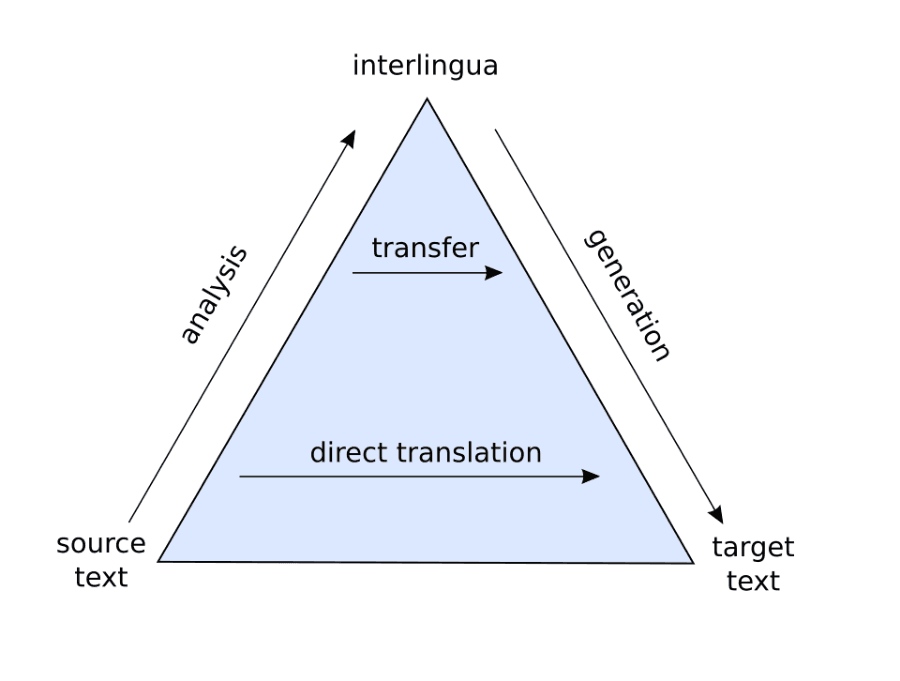
Also in November 2016, Melvin Johnson, Mike Schuster and colleagues showed that a single neural model could translate between many languages, with an artificial token at the start of the input telling the model which language to produce [13]. Such a model could translate between pairs it had never seen together in training, for example Korean and Japanese, which the authors called zero-shot translation [6][13]. Google's blog post on the work said the multilingual system was "running in production today for all Google Translate users," that multilingual models served 10 of 16 recently launched language pairs, and that Translate was handling over 140 billion words per day [6]. The authors also reported that sentences with the same meaning in different languages clustered together inside the network, which they interpreted as a sign of an interlingua [6].
Hybrid models and low-resource languages (2020)
In June 2020 Google Research engineers Isaac Caswell and Bowen Liang described a set of changes to the production system [7]. The original GNMT model had been replaced by a hybrid with a Transformer encoder and a recurrent neural network decoder, built in Google's Lingvo framework; the authors said a Transformer decoder had not been significantly better than the RNN decoder [7]. Other changes included a new web-mining pipeline for parallel sentences, a curriculum learning scheme that moved training from all data toward smaller, cleaner subsets, back-translation of monolingual text into synthetic training pairs, and a single massively multilingual model (M4) that let related languages share what they learned [7]. Google reported an average gain of 5 BLEU points over the previous GNMT models across more than 100 languages, and 7 BLEU for the 50 lowest-resource languages [7].
Expansion to new languages (2022 to 2024)
On May 11, 2022, Google added 24 languages, bringing the total to 133 [8]. They included Lingala, Twi and Mizo, and together had more than 300 million speakers [8]. It was the first time Google used zero-shot machine translation to add languages to Translate: for these languages the model learned to translate from monolingual text alone, without seeing translated examples [8]. The research behind the launch was described in "Building Machine Translation Systems for the Next Thousand Languages" by Ankur Bapna, Isaac Caswell and 22 co-authors, which reported work across more than one thousand languages using web-mined data [14].
On June 27, 2024, Google announced 110 new languages, which it called its largest expansion ever, built with the help of its PaLM 2 large language model [15]. Google said the new languages had more than 614 million speakers, about 8% of the world's population, and that about a quarter of them came from Africa [15]. They included Cantonese (one of the most requested languages, hard to model because its written form overlaps with Mandarin), Afar, Manx, Tok Pisin, Punjabi in Shahmukhi script, Fon, Kikongo, Luo, Ga, Swati, Venda, Wolof and Tamazight [15]. The post placed the launch alongside Google's 1,000 Languages Initiative, announced in 2022, a commitment to build AI models that support the 1,000 most spoken languages [15].
Gemini era (2025 to 2026)
On August 26, 2025, Google added two features it credited to the reasoning and multimodal abilities of Gemini models [16]. Live translate let two people hold a spoken conversation through the app in more than 70 languages, with audio and on-screen transcripts and automatic switching between the two languages; it launched in the United States, India and Mexico [16]. Practice, a beta, generated listening and speaking exercises for language learners, starting with English speakers learning Spanish and French and with Spanish, French and Portuguese speakers learning English [16].
On December 12, 2025, Google began using Gemini for text translation in Translate, saying it handled idioms, local expressions and slang better; the first rollout covered English and nearly 20 other languages in the United States and India, on Android, iOS and the web [17]. The same announcement introduced a beta of live speech-to-speech translation through any pair of headphones, on Android in the United States, Mexico and India, in more than 70 languages, and expanded Practice to nearly 20 more countries [17]. Headphone translation reached iOS on March 26, 2026, when Google also extended it to France, Germany, Italy, Japan, Spain, Thailand and the United Kingdom [18].
On June 9, 2026, Google released Gemini 3.5 Live Translate, an audio model for speech-to-speech translation that automatically detects more than 70 languages [20]. Google said that, unlike turn-by-turn systems that wait for the speaker to finish, the model generates translated speech continuously, stays a few seconds behind the speaker, preserves the speaker's intonation, pacing and pitch, and marks all of its generated audio with a SynthID watermark [20]. The model began rolling out the same day in the Translate app on Android and iOS for Live translate with headphones, and on Android Google also started rolling out a listening mode that plays the translation through the phone's earpiece [20]. Google DeepMind's model card for the Gemini 3.5 audio models, published in August 2026, describes Live Translate as built on Gemini 3 Pro, intended for low-latency, real-time translation of continuous audio streams, and distributed through the Gemini API, Google AI Studio and Google Translate [19]. On September 4, 2026, Google let Android users keep live translations running in the background or with the screen locked, citing the fact that more than a third of live translation sessions lasted longer than five minutes, and brought earpiece listening to iOS users worldwide [27].
Features
As of 2026, Google's own description of the service included the following [4][16][17][20]:
| Feature | Description |
|---|---|
| Text translation | Typed or pasted text, on the web and in the apps; Gemini-based for some languages since December 2025 |
| Camera translation | Translations overlaid on signs and menus through Google Lens, and on-screen translation with Circle to Search on Android |
| Conversation and Live translate | Two-way spoken conversation with automatic language switching |
| Live translate with headphones | Real-time speech-to-speech translation that keeps the speaker's tone and cadence; since 2026 also through the phone's earpiece without headphones [20][27] |
| Offline translation | Downloadable language packs on Android and iOS |
| Practice | Listening and speaking exercises with progress tracking |
| Pronunciation practice | Speech feedback on Android in the United States and India for English, Spanish and Hindi (launched April 2026) |
For its 20th anniversary on April 28, 2026, Google published usage statistics for the service [4]. The most common language pair was English to Spanish, and other common pairs included English to Indonesian, Portuguese, Arabic and Turkish; the most translated phrase was "Thank you"; and about a third of mobile users used the app for language learning [4]. Over a third of Live translate sessions lasted longer than five minutes [4]. Google also said Translate now relied on Gemini models and newer TPU hardware [4].
Timeline
| Date | Event |
|---|---|
| 2006-04-28 | Statistical machine translation launches online, starting with Arabic and English [1] |
| 2011 | Free Translate API deprecated; Google says a paid version will follow [10] |
| 2014-05-16 | Google acquires Quest Visual, maker of Word Lens [11] |
| 2015-01-14 | Instant camera translation and improved conversation mode in the app [9] |
| 2015-07-29 | Instant camera translation extended to 20 more languages, with an on-device neural network [12] |
| 2016-09-27 | GNMT serves all Chinese to English translations [2] |
| 2016-11-15 | Neural translation for eight language pairs; 103 languages supported [3] |
| 2016-11-22 | Multilingual zero-shot system described as running in production [6] |
| 2018-12-06 | Gender-specific translations for some gender-neutral queries [21] |
| 2020-06-08 | Transformer encoder with RNN decoder; average +5 BLEU [7] |
| 2022-05-11 | 24 languages added via zero-shot machine translation; 133 total [8] |
| 2022-10 | Service withdrawn from mainland China [22] |
| 2024-06-27 | 110 languages added with PaLM 2 [15] |
| 2025-08-26 | Live translate and Practice launch [16] |
| 2025-12-12 | Gemini text translation and headphone live translation beta [17] |
| 2026-03-26 | Headphone live translation on iOS [18] |
| 2026-04-28 | 20th anniversary; almost 250 languages [4] |
| 2026-06-09 | Gemini 3.5 Live Translate rolls out in the Translate app; earpiece listening mode on Android [20] |
| 2026-09-04 | Background live translation on Android; earpiece listening on iOS [27] |
Bias, accuracy and reception
Gender bias
Translating from a language whose pronouns or nouns do not mark gender into one that does forces the system to choose a gender, and Google acknowledged that by offering a single translation the model had inadvertently replicated gender biases that already existed, skewing masculine for words such as "doctor" and feminine for words such as "nurse" [21]. On December 6, 2018, the Translate website began showing both a feminine and a masculine translation for some gender-neutral queries: single words from English into French, Italian, Portuguese and Spanish, and phrases and sentences from Turkish into English, so that the Turkish "o bir doktor" produced both "she is a doctor" and "he is a doctor" [21]. In April 2020 Google Research described a more scalable method that generates an initial translation, detects when a gender-neutral source produced a gendered result, and rewrites the translation to produce the other gender [23]. Google reported that the system triggered gender-specific translations with an average precision of 97% [23]. The same post announced gender-specific translations for English to Spanish, and used the rewriting method to add Finnish, Hungarian and Persian to English and to replace the earlier Turkish to English system [23]. The wider issue is covered in AI bias.
Accuracy in high-stakes settings
Independent researchers have tested the service in medicine. A study by Elaine Khoong and colleagues, published in JAMA Internal Medicine in 2019, ran 647 sentences from 100 sets of emergency department discharge instructions through Google Translate [24]. Of the Spanish translations, 92% were accurate, and of the Chinese translations, 81%; 2% of the Spanish sentences and 8% of the Chinese sentences had the potential for clinically significant harm [24]. The authors concluded that Google Translate could supplement, but not replace, written English instructions, and recommended that machine-translated instructions carry a warning [24]. Google's own GNMT announcement had said that "Machine translation is by no means solved," pointing to dropped words, mistranslated names and the lack of document context [2].
Availability in China
Google withdrew Google Translate from mainland China over the weekend before October 3, 2022 [22]. The company told Fortune it had "discontinued Google Translate in mainland China due to low usage," and mainland visitors were shown a link to Google's Hong Kong search site, which is blocked on the mainland [22]. Fortune described Translate as one of Google's few remaining consumer services in China, noting that the company had launched a Chinese version of the Translate mobile app in 2017 as a return to the market [22].
Related Google translation work
Google's translation researchers have also released open models. In January 2026 Google released TranslateGemma, a set of open translation models in 4B, 12B and 27B sizes built on Gemma 3 and covering 55 languages, trained with supervised fine-tuning on human and Gemini-generated translations followed by reinforcement learning against translation-quality reward models [25][26].
Continue reading
- Machine TranslationMachine translation (MT) is the automatic translation of text or speech from one human language into another.Mentioned 13 times above
- Neural Machine TranslationNeural machine translation (NMT) is an approach to machine translation in which a single artificial neural network, trained end to end on bilingual textMentioned 4 times above
- Low-Resource LanguagesLow-resource languages, in natural language processing (NLP), are languages with little of the raw material that modern language technology depends on: digitized text, parallel translation corpora, annotated…Mentioned 3 times above
- Google ResearchGoogle Research is Google's organization for foundational and applied computer science research, with work spanning quantum computing, algorithms and theory, machine learning, health, climate, and crisis…Mentioned 3 times above
- Gemini LiveGemini Live is Google's natural-voice conversational mode in the Gemini app: a hands-free, interruptible spoken interface that lets a person talk to Google's AI assistant in real time, the way they would on a…Listed in See also
- GoogleGoogle LLC is a United States technology company and the largest operating business within Alphabet Inc. Its activities include internet search, online advertising, video, mobile and web platforms, consumer…Mentioned 69 times above


More to read
References
- ^1 ^2 ^3 ^4 ^5 ^6 ^7Och, Franz. "Statistical machine translation live". Google Research Blog, April 28, 2006. research.google/...stical-machine-translation-live
- ^1 ^2 ^3 ^4 ^5 ^6 ^7 ^8Le, Quoc V.; Schuster, Mike. "A Neural Network for Machine Translation, at Production Scale". Google Research Blog, September 27, 2016. research.google/...translation-at-production-scale
- ^1 ^2 ^3 ^4 ^5 ^6Turovsky, Barak. "Found in translation: More accurate, fluent sentences in Google Translate". The Keyword (Google Blog), November 15, 2016. blog.google/...e-fluent-sentences-google-translate
- ^1 ^2 ^3 ^4 ^5 ^6 ^7 ^8Yao, Rose. "Celebrating 20 years of Google Translate: Fun facts, tips and new features to try". The Keyword (Google Blog), April 28, 2026. blog.google/...fun-facts-google-translate-20-years
- ^1 ^2 ^3 ^4 ^5Wu, Yonghui; Schuster, Mike; Chen, Zhifeng; Le, Quoc V.; Norouzi, Mohammad; et al. "Google's Neural Machine Translation System: Bridging the Gap between Human and Machine Translation". arXiv:1609.08144, September 26, 2016. arxiv.org/...1609.08144
- ^1 ^2 ^3 ^4 ^5 ^6Schuster, Mike; Johnson, Melvin; Thorat, Nikhil. "Zero-Shot Translation with Google's Multilingual Neural Machine Translation System". Google Research Blog, November 22, 2016. research.google/...ural-machine-translation-system
- ^1 ^2 ^3 ^4 ^5 ^6Caswell, Isaac; Liang, Bowen. "Recent Advances in Google Translate". Google Research Blog, June 8, 2020. research.google/...nt-advances-in-google-translate
- ^1 ^2 ^3 ^4 ^5Caswell, Isaac. "Google Translate learns 24 new languages". The Keyword (Google Blog), May 11, 2022. blog.google/...24-new-languages
- ^1 ^2 ^3 ^4Turovsky, Barak. "Hallo, hola, olá to the new, more powerful Google Translate app". The Keyword (Google Blog), January 14, 2015. blog.google/...lo-hola-ola-more-powerful-translate
- ^1 ^2 ^3Feldman, Adam. "Spring cleaning for some of our APIs". Google Code Blog, 2011. googlecode.blogspot.com/...ng-for-some-of-our-apis
- ^1 ^2Tim. "Google Acquires Quest Visual, Makers of Word Lens". Droid Life, May 16, 2014. droid-life.com/...quest-visual-makers-of-word-lens
- ^1 ^2 ^3Good, Otavio. "How Google Translate squeezes deep learning onto a phone". Google Research Blog, July 29, 2015. research.google/...ezes-deep-learning-onto-a-phone
- ^1 ^2Johnson, Melvin; Schuster, Mike; Le, Quoc V.; Krikun, Maxim; Wu, Yonghui; et al. "Google's Multilingual Neural Machine Translation System: Enabling Zero-Shot Translation". arXiv:1611.04558, November 14, 2016. arxiv.org/...1611.04558
- ^Bapna, Ankur; Caswell, Isaac; Kreutzer, Julia; Firat, Orhan; van Esch, Daan; et al. "Building Machine Translation Systems for the Next Thousand Languages". arXiv:2205.03983, May 9, 2022. arxiv.org/...2205.03983
- ^1 ^2 ^3 ^4 ^5Caswell, Isaac. "110 new languages are coming to Google Translate". The Keyword (Google Blog), June 27, 2024. blog.google/...google-translate-new-languages-2024
- ^1 ^2 ^3 ^4 ^5Sheets, Matt. "New AI-powered live translation and language learning tools in Google Translate". The Keyword (Google Blog), August 26, 2025. blog.google/...language-learning-live-translate
- ^1 ^2 ^3 ^4Yao, Rose. "Bringing state-of-the-art Gemini translation capabilities to Google Translate". The Keyword (Google Blog), December 12, 2025. blog.google/...i-capabilities-translation-upgrades
- ^1 ^2Kapur, Sasha. "Transform your headphones into a live personal translator on iOS". The Keyword (Google Blog), March 26, 2026. blog.google/...live-translate-with-headphones
- ^Google DeepMind. "Gemini 3.5 Audio (Live Translate, Transcribe, Transcribe Live)". Google DeepMind, August 26, 2026. deepmind.google/...gemini-3-5-audio
- ^1 ^2 ^3 ^4 ^5 ^6 ^7Weerasinghe, Anuda; Lu, Tony. "Fluid, natural voice translation with Gemini 3.5 Live Translate". The Keyword (Google Blog), June 9, 2026. blog.google/...gemini-live-3-5-translate
- ^1 ^2 ^3Kuczmarski, James. "Reducing gender bias in Google Translate". The Keyword (Google Blog), December 6, 2018. blog.google/...reducing-gender-bias-google-translate
- ^1 ^2 ^3 ^4Gordon, Nicholas. "Google pulls one of its few remaining consumer services from China, ending its foray back into the mainland market". Fortune, October 3, 2022. fortune.com/...google-translate-china-suspended
- ^1 ^2 ^3Johnson, Melvin. "A Scalable Approach to Reducing Gender Bias in Google Translate". Google Research Blog, April 22, 2020. research.google/...gender-bias-in-google-translate
- ^1 ^2 ^3Khoong, Elaine C.; Steinbrook, Eric; Brown, Cortlyn; Fernandez, Alicia. "Assessing the Use of Google Translate for Spanish and Chinese Translations of Emergency Department Discharge Instructions". JAMA Internal Medicine 179(4):580-582, 2019. doi:10.1001/jamainternmed.2018.7653. jamanetwork.com/...2725080
- ^Vilar, David; Black, Kat. "TranslateGemma: A new suite of open translation models". The Keyword (Google Blog), January 15, 2026. blog.google/...translategemma
- ^Finkelstein, Mara; Caswell, Isaac; Domhan, Tobias; et al. "TranslateGemma Technical Report". arXiv:2601.09012, January 13, 2026. arxiv.org/...2601.09012
- ^1 ^2 ^3Kapur, Sasha. "Google Translate rolls out new upgrades for iOS and Android". The Keyword (Google Blog), September 4, 2026. blog.google/...google-translate-ios-android-upgrades
Improve this article
Add missing citations, update stale details, or write a clearer explanation. Anyone can edit: changes go live when you publish, and every edit is checked by an editor.
1 revision · v1 · 3,441 words · full history
Fact-checks are independent of edits: a reviewer re-verifies the article against its sources and stamps the date. How we verify
Research and drafting on this wiki are AI-assisted, under named human editorial standards. How AI is used here
Cite this page: AI Wiki. "Google Translate." aiwiki.ai, updated 18 Nov 2026. CC BY 4.0. https://aiwiki.ai/wiki/google_translate