

XPeng IRON
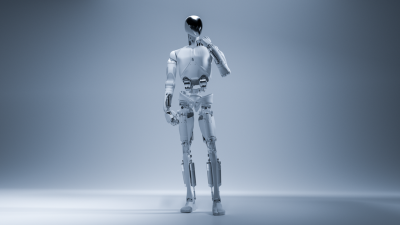
XPeng IRON is a full-size humanoid robot developed by Chinese electric vehicle maker XPeng, standing 178 cm (5 ft 10 in) tall and weighing about 70 kg.[17] XPeng describes the mass-production robot as having 76 degrees of freedom across the body and 21 in each hand, powered by three of the company's in-house Turing AI chips delivering up to 2,250 TOPS of effective computing power.[13][14] First shown at XPeng AI Day 2024 in November 2024, the robot represents the company's expansion into embodied AI and robotics.[3] The next-generation IRON, revealed at the 2025 AI Day on November 5, 2025, attracted global attention for its human-like appearance and walking, becoming a viral sensation after XPeng cut the robot open on stage the following day to prove it was not a person in a costume.[4]
On September 8, 2026, XPeng said it had commissioned its humanoid robot production lines and that an IRON unit had completed assembly and then walked off the line under its own power. The company described the lines as "the world's first automated production lines for advanced humanoid robots" and said more than 80% of their core processes are automated.[13] Commissioning the lines is not the same as entering mass production: XPeng reiterated that mass production is due by the end of 2026, with first commercial use in its own stores and campuses, followed by an official launch and deliveries in China and overseas markets in 2027.[13][15]
XPeng positions IRON as part of its broader "Physical AI" ecosystem, alongside AI vehicles, robotaxis, and flying cars, and has said it will target commercial service applications first rather than factory floors or households.[5][31] For XPeng's wider robotics program, see XPeng Robotics.
When was XPeng IRON unveiled?
Company background and strategic rationale
XPeng Motors, founded in 2014 and headquartered in Guangzhou, China, is primarily known as an electric vehicle manufacturer. XPeng delivered 190,068 vehicles in 2024, a 34.2% increase year on year, and is listed on both the NYSE (XPEV) and the Hong Kong Stock Exchange (9868).[30] In 2025, XPeng officially repositioned itself from a "future mobility explorer" to "a mobility explorer in the physical AI world and a global embodied intelligence company."[1]
Strategic vision: He Xiaopeng has described humanoid robotics as a decades-long commitment rather than a near-term product line. Speaking on the sidelines of China's annual parliamentary session in March 2025, he said XPeng had "been working in the humanoid robot industry for five years, may continue to be in the business for another 20 years, invest additional 50 billion yuan and even 100 billion yuan" (about US$13.8 billion), without disclosing what the company had spent to that point. He described the spending so far as conservative for such an early stage and said XPeng was ready to invest much more.[28]
The company's robotics strategy leans on its autonomous driving work. XPeng says the physical-world foundation model it trains in the cloud is cross-domain and can be applied to AI cars, humanoid robots and flying cars at the same time, and that the robot's VLA and VLM models come from the automotive stack.[1] At the press conference after the 2025 AI Day, co-president Brian Gu said there were areas, flying cars and humanoid robots among them, where XPeng "probably started earlier than Tesla", while acknowledging that Tesla had been more public about its commercialization plans.[26]
Seven-year robotics journey
At the 2025 AI Day, He Xiaopeng said XPeng had iterated through seven generations of robots, five of them quadrupeds, before arriving at the next-generation IRON. He has also said the version intended for mass production in late 2026 will be an eighth generation:[29][31]
-
First five generations: quadruped robots
-
Sixth generation (2024): first-generation IRON humanoid
-
Seventh generation (2025): the next-generation IRON shown at AI Day 2025
-
Eighth generation: the version intended for mass production in late 2026
The pivot from quadrupeds to humanoids was driven by practical limitations. He Xiaopeng said the four-legged designs lacked hands and struggled in complex home environments, and argued that a human-like form is what makes it possible to collect valuable data from people: if a robot's structure is "totally different from humans, then we cannot collect realistic data," which makes it harder to generalize to human-centric settings such as homes, offices and shopping malls.[31]
Generational evolution
| Model / Year | Unveil Date | Height | Weight | Degrees of Freedom (DoF) | Key Features / Notes |
|---|---|---|---|---|---|
| First-gen IRON | November 2024 | 178 cm | 70 kg | 200 (over 60 joints) | Powered by the Turing AI chip; already working on XPeng's lines assembling the P7+[3] |
| Next-gen IRON (as unveiled) | November 5, 2025 | 178 cm (5 ft 10 in) | ~70 kg (154 lbs) | 82 across the body | All-solid-state battery; 3 Turing AI chips at 3,000 TOPS effective; 22 DoF per hand[1] |
| Next-gen IRON (mass-production description) | August-September 2026 | 178 cm (5 ft 10 in)[17] | ~70 kg (154 lbs)[17] | 76 across the body | Fully enclosed flexible lattice structure; 3 Turing AI chips at up to 2,250 TOPS effective; 21 DoF per hand[13][14] |
The published figures for the robot are not consistent across documents, and the two compute figures were both in circulation on the day of the unveiling. XPeng's own English-language release of November 5, 2025 gives 82 degrees of freedom across the body, 22 per hand, and 3,000 TOPS of effective computing power from three Turing AI chips; the same release uses 3,000 TOPS for the four-chip Robotaxi configuration and 2,250 TOPS for the three-chip Ultra vehicle.[1] Reporting from that same day put the robot at 2,250 TOPS: CnEVPost, Electrek and Humanoids Daily all gave that figure on November 5, New Atlas and Live Science repeated it in the days that followed.[6][25][31][4][32] XPeng's own August 24 and September 8, 2026 releases describe the three-chip configuration as delivering up to 2,250 TOPS, alongside 76 degrees of freedom across the body and 21 in each hand.[14][13] This article gives both sets and attributes each to the document it comes from.
Key milestones
November 2024: First-generation IRON unveiled[3]
-
Event: XPeng AI Day 2024 in Guangzhou
-
Specifications: 178 cm tall, 70 kg weight, over 60 joints, 200 degrees of freedom
-
Computing: Powered by the Turing AI chip, with a 40-core CPU capable of running AI models with 30 billion parameters
-
Status: Already working on XPeng's production lines, assembling the P7+ electric sedan[3]
-
Capabilities: Standing, lying down, sitting, walking, grasping
November 5, 2025: Next-generation IRON revealed[1]
-
Event: XPeng AI Day 2025 ("Emergence" theme) at XPeng Science Park, Guangzhou
-
Major advancement: Dramatically improved human-like appearance and movement
-
Viral moment: so realistic that, 24 hours later, He Xiaopeng and his team returned to the stage and took scissors to the robot's clothed leg to expose the machinery beneath[2][4]
-
Became a trending topic on Chinese social media, with many commenters initially believing it was a human in disguise
2019-2025: AI development evolution
-
Development of autonomous driving technology with LiDAR, stereo cameras, and AI perception systems
-
2024: Introduction of the Vision-Language-Action (VLA) model
-
2025: Launch of VLA 2.0 and a new VLT (Vision-Language-Task) model specifically for robotics
2026: from prototype to production line
| Date | Event |
|---|---|
| January 19, 2026 | He Xiaopeng said on Weibo that XPeng had completed its first "ET1" version robot prototype built to automotive standards[17] |
| February 25, 2026 | XPeng announced a humanoid robot production base of about 110,000 square meters in Guangtang Sci-Tech Innovation City, Tianhe district, Guangzhou, with groundbreaking planned for the first quarter[16] |
| June 10, 2026 | He Xiaopeng said in an internal letter that he would personally act as "CEO" of the robotics business[18] |
| June 2026 | The robotics center was reorganized into nine new second-tier departments, with He Xiaopeng also heading the product department[18] |
| August 24, 2026 | XPeng's robotics business signed share purchase agreements raising over US$900 million at a post-money valuation of over US$6.3 billion[14][20] |
| September 8, 2026 | XPeng commissioned its humanoid robot production lines; an IRON unit completed assembly and walked off the line autonomously[13] |
What are the technical specifications of XPeng IRON?
Physical attributes
-
Height: 178 cm (5 feet 10 inches)[17]
-
Weight: approximately 70 kg (154 pounds)[17]
-
Degrees of freedom across the body: 76 in XPeng's 2026 description of the mass-production robot, against 82 in the November 2025 unveiling[13][1]
-
Hand dexterity: 21 degrees of freedom per hand in the 2026 description, 22 per hand at the 2025 unveiling[13][1]
-
Structure: a proprietary fully enclosed flexible lattice structure that XPeng says balances the human-like appearance against safety[13][14]
Design philosophy: "Born from within"
The next-generation IRON embodies XPeng's "extreme anthropomorphism" design philosophy, featuring:[1]
-
Humanoid spine: Flexible vertebral structure allowing natural bending, twisting, and weight distribution, supporting dynamic balance and even recovery from stumbles
-
Bionic muscles: Synthetic muscle system that stretches and contracts, providing strength and smooth motion profiles similar to human muscle movements
-
Full-coverage soft synthetic skin: Embedded with touch sensors throughout for environmental awareness, making the robot feel warmer and more lifelike to the touch
-
3D curved display head: a head-mounted 3D curved display serving as a "face" capable of showing emotions[6][31]
-
Passive toe joints: He Xiaopeng said the team gave IRON's stride its light, gentle quality by adding passive degrees of freedom at the toes[6]
Hardware components
Actuators and joints:
-
Custom self-developed actuators with a bionic muscle system
-
Among the industry's smallest harmonic joints, supporting close to 1:1 human hand proportions[1]
-
Lattice-like actuator arrays providing fluid motion versus traditional servo motors
Sensors and perception systems:
-
720-degree AI vision system: XPeng said in a statement that IRON "features a 720 degree AI vision system that can also be found in XPENG's autonomous driving technology"[33]
-
LiDAR sensors: Borrowed from autonomous vehicle systems
-
Stereo cameras: High-resolution depth cameras for spatial awareness
-
Microphone arrays: Positioned near the ears for audio input
-
Touch sensors: Embedded throughout the full-body synthetic skin for tactile feedback
-
Object recognition and obstacle detection: Real-time processing capabilities
Computing hardware:
-
Three Turing AI chips: XPeng's proprietary in-house silicon[1][13]
-
Effective computing power: up to 2,250 TOPS (trillion operations per second) in XPeng's 2026 releases; the November 2025 unveiling gave 3,000 TOPS for the same three-chip configuration[13][14][1]
-
Custom compiler and software stack optimized for chip-operator-model integration
-
XPeng says this is enough on-device compute to run its Physical AI foundation model on the robot itself, so IRON can carry out complex tasks without remote operation while keeping inference latency low and data local[13]
Power system:
-
Battery technology as announced: Described by XPeng as the world's first humanoid robot to use an all-solid-state battery[1][8]
-
Composition: Uses solid electrolytes (ceramics or polymers) instead of flammable liquid electrolytes
-
Safety advantages: Lower overheating risk, intended to be safer for enclosed environments like homes and offices
-
Rationale: XPeng chose to debut this technology in IRON (versus cars) due to stringent safety requirements for devices operating near humans in confined spaces
On September 3, 2026, CnEVPost reported, citing the Chinese industry outlet Jipian Lab, that the production version of IRON will instead use high-energy solid-liquid hybrid ("semi-solid") pouch cells from a second-tier Chinese battery maker, after XPeng failed to find an all-solid-state product that met its installation requirements. The report says XPeng has not publicly disclosed the change, and XPeng's September 8, 2026 production-line announcement did not mention batteries.[19][13]
Mobility capabilities
Walking performance:
-
Gait characteristics: Human-like stride with natural, fluid motion, demonstrated in the viral 2025 stage walk[4]
-
Training method: Trained on human walking footage using machine learning rather than preset movement rules
-
Balance system: Dynamic stability with shock-absorbing foot joints
Range of motion:
-
82 degrees of freedom throughout the body enabling natural shrugging, twisting, balancing on uneven ground, and complex human-like actions
-
Flexible spine allows natural bending and weight distribution
-
Can perform squatting, bending, sitting down and standing up unaided
Navigation:
-
Real-time navigation without pre-programming or teleoperation
-
Avoids obstacles dynamically while moving
-
720-degree spatial awareness for path planning
Manipulation capabilities
Hand design and dexterity:
-
21 degrees of freedom per hand in XPeng's 2026 description, 22 per hand as announced in November 2025[13][1]
-
Close to 1:1 human hand proportions achieved through small harmonic/bevel gear joints
-
Capable of holding small tools and grasping larger boxes with controlled grip
Real-world testing: He Xiaopeng said XPeng had run IRON in its own manufacturing operations for about a year on what it took to be the easiest human task to replace, tightening screws with a drill on the assembly line. Humanoids Daily reported him saying the complex hands wear out in as little as a month and that it is more cost-effective to hire human workers in China; Electrek reported the same conclusion, that the robot did not perform as well as employees and that repair and replacement costs made it uneconomic at scale.[31][25]
How does XPeng IRON's AI work?
Three-brain AI architecture
XPeng IRON uses a VLT + VLA + VLM cognitive stack:[1]
1. VLT (Vision-Language-Task), new in 2025
-
Core engine for autonomous actions and decision-making
-
Enables in-depth reasoning and task planning in the physical world
-
Announced for the first time at 2025 AI Day
2. VLA 2.0 (Vision-Language-Action), adapted from autonomous driving
-
Direct "Vision-Implicit Token-Action" path
-
End-to-end generation from visual signals to action commands, links what IRON sees directly with its next actions
3. VLM (Vision-Language-Model), from automotive intelligent cockpit systems
-
Natural language dialogue capabilities
-
Logical conversation and active reasoning
-
Real-time interaction with humans
AI model parameters and training infrastructure
-
On-device model capacity: XPeng says the Turing AI chip can run large models with up to 30 billion parameters[3]
-
Cloud base model: 72 billion parameters[1]
-
VLA 2.0 training data: nearly 100 million clips used without data annotation, which XPeng equates to the extreme driving scenarios a human driver would meet in 65,000 years of driving[1]
-
Cloud computing cluster: 30,000-card cluster operating at 90%+ efficiency[1]
-
Data factory: first embodied intelligence data factory established in Guangzhou
Operating system and software platform
-
Tianji AIOS: operating system managing perception, control, and voice interaction[1]
-
Remote updates: cloud connectivity for continuous improvement
-
Privacy architecture: implements XPeng's "Fourth Law of Robotics", that "privacy data does not leave the robot," ensuring local processing of sensitive information[1]
Autonomy
-
Current capability: real-time perception, decision-making, and action without pre-programming or teleoperation
-
Learning approach: reinforcement learning with generalization learning
-
Inherited from VLA 2.0: XPeng reports that during testing of VLA 2.0 in vehicles the model picked up capabilities it had not been trained for, including recognising hand gestures and responding to traffic light changes. Those are driver-assistance results rather than robot behaviours; the robot runs the same VLA family of models.[1]
How was XPeng IRON trained to walk?
IRON's gait and behaviors were learned from data rather than hand-coded movement rules:[1]
-
Learning from video: trained on large volumes of human movement footage so the robot acquires a natural, human-like stride instead of executing preset trajectories
-
Shared model lineage: IRON's VLA and VLM models are adapted from XPeng's driver-assistance stack, which is where the company's data-annotation-free training pipeline and its nearly 100 million training clips belong[1][31]
-
Generalization over memorization: the system is designed to generalize across scenarios rather than memorize specific actions
Partnerships and collaborations
Industrial partners
Baoshan Iron & Steel (Baosteel)[1][7]
-
Announced at 2025 AI Day as primary industrial ecosystem partner
-
IRON will be deployed at Baosteel facilities
-
Focus: industrial inspection applications in complex manufacturing environments
-
Application: equipment monitoring for wear detection and fault prediction
Automotive industry partners
Volkswagen Group[25]
- Volkswagen was announced at the 2025 AI Day as the first automaker to use XPeng's new VLA-backed autonomous driving system
Ecosystem partners
Alibaba/Amap[1]
-
Announced at 2025 AI Day
-
First global ecosystem partner for XPeng Robotaxi
-
Collaboration for ride-hailing integration within the broader Physical AI ecosystem
Developer community
Open SDK Partnership[1]
-
IRON's Software Development Kit announced November 2025
-
Goal: collaborate with global developers to build an application ecosystem
-
XPeng said only that IRON would open its SDK and jointly build a humanoid robot application ecosystem with global developers; it did not publish a list of what the kit would contain[1]
-
No public developer documentation or access process as of August 1, 2026[11][12]
How is XPeng IRON manufactured?
The Guangzhou production base
XPeng announced on February 25, 2026 that it would break ground in the first quarter on a humanoid robot production base of about 110,000 square meters in Guangtang Sci-Tech Innovation City, Tianhe district, Guangzhou, under a strategic cooperation agreement with the Tianhe district government. The company said the base would cover the whole chain from R&D validation and small-batch trial production through to large-scale manufacturing, with the first phase comprising factory buildings, power stations and supporting infrastructure.[16]
The month before, He Xiaopeng had said on Weibo that XPeng completed its first "ET1" version robot prototype built to automotive standards, which he called a crucial step toward mass-producing high-level humanoid robots during 2026.[17]
Commissioning of the robot production lines, September 2026
On September 8, 2026 XPeng announced from Guangzhou that its humanoid robot production lines had gone into operation and that an IRON unit had completed production-line assembly and then walked off the lines autonomously. The company framed this as the move "from R&D prototyping to line manufacturing" rather than the start of volume output.[13]
Details XPeng gave in the announcement:[13]
-
More than 80% of the lines' core processes are automated
-
The lines apply automotive-grade quality systems from XPeng's smart EV business to humanoid robot manufacturing, which the company says establishes a quality system for mass-producing advanced humanoid robots
-
XPeng described the result as the world's first automated production lines for advanced humanoid robots
-
He Xiaopeng put a staff badge on the robot, which XPeng presented as IRON formally joining the company
XPeng did not disclose the lines' capacity or the robot's price in the announcement.[15] He Xiaopeng was quoted saying: "the robot production lines were created from scratch with no precedent to follow. Today's step is small, but XPENG is building the production lines for an entirely new product category. Looking ahead, XPENG will continue to explore faster production rhythms and greater scale in robot manufacturing, charting a new path toward a leading robot manufacturing industry in China and globally."[13]
The "world's first" framing is XPeng's own, and He Xiaopeng repeated it on X, where he called the line the world's first automated production line for advanced general-purpose humanoid robots and wrote: "This was uncharted territory, and we solved it from scratch."[23] Xianming Liu, whom XPeng identifies as head of its General Intelligence Center, wrote in a post quoting He that the production line "features core process automation exceeding 80%, laying a solid foundation for mass production" and that "IRON is powered by 3 Turing AI chips."[21][24]
Capacity and commercialization plans
-
Monthly capacity target: more than 1,000 units by the end of 2026, a figure He Xiaopeng gave on a March 2026 earnings call and that The Wall Street Journal reported in July 2026[12]
-
First deployments: XPeng's own stores and campuses, before general sale[13]
-
Launch and deliveries: China and overseas markets in 2027[13][14]
-
Store roll-out: IRON is planned as a sales assistant in XPeng stores in China from the first quarter of 2027, expanding to overseas stores later that year[12]
Robotics financing
On August 24, 2026 XPeng announced that its robotics business had entered into share purchase agreements with multiple investors, raising over US$900 million at a post-money valuation of over US$6.3 billion, which the company called the largest single-round private capital raise in China's embodied AI industry to date. The round was led by IDG Capital with participation from Gaorong Ventures and strategic support from Tencent and Alibaba. XPeng said it would retain control of the business and continue to consolidate it.[14] The related Form 6-K filed with the U.S. Securities and Exchange Commission names the robotics entity Dogotix.[20]
In XPeng's second-quarter 2026 results, announced August 24, 2026 and filed on Form 6-K the following day, He Xiaopeng said that "the development of the mass-production version of XPENG's humanoid robot has recently reached several significant milestones."[22] The September announcement said XPeng expects gross margin per robot to be significantly higher than for its new energy vehicles, without giving a figure.[13]
How much does XPeng IRON cost and when will it ship?
Pricing information
Official pricing: XPeng has not announced a price for IRON. Its September 8, 2026 production-line announcement did not disclose one.[15]
Target market: Commercial and industrial clients initially, with consumer versions planned for the future at lower cost.
Production timeline
-
Production base: groundbreaking in Guangzhou in the first quarter of 2026[16]
-
Production lines commissioned: September 8, 2026[13]
-
Full mass production target: end of 2026[13]
-
Initial deployment: XPeng's own stores and campuses[13]
-
Launch and deliveries: China and overseas markets in 2027[13]
-
CEO vision: expects to eventually sell more robots than cars over the long term
Deployment strategy
Phase 1: Commercial services (2026-2027)
Primary focus on retail and hospitality applications:[1]
-
Tour guides in XPeng showrooms and commercial settings
-
Shopping guides and sales assistants
-
Receptionists in offices and hotels
-
Customer service representatives
First deployment location: XPeng's own stores and campuses, before an official launch and deliveries in China and overseas markets in 2027[13]
Phase 2: Industrial applications (2026+)
Limited industrial deployment:
-
Equipment inspection at Baosteel facilities
-
Visual monitoring and anomaly detection
-
Safety inspections in hazardous areas
-
Not for assembly line work: trials concluded this is uneconomical due to high repair costs and component wear
Phase 3: Future applications (5-10+ years)
Long-term vision includes:
-
Museum guides
-
Office environments
-
Eventually household applications for chores and companionship
Explicitly ruled out initially:
-
Factory assembly work: not cost-effective versus human workers; hands wear out too quickly
-
Household/domestic environments: safety concerns and the "immense generalization challenge" of navigating unstructured, cluttered homes
Demonstrations and public exhibitions
2024 XPeng AI Day (November 2024)
-
Event: first-generation IRON unveiled in Guangzhou
-
Demonstrations: standing, sitting, lying down, walking, grasping objects
-
Status: robot already working in XPeng production lines for P7+ model assembly[3]
2025 XPeng AI Day (November 5, 2025)
-
Location: XPeng Science Park, Guangzhou, China
-
Theme: "Emergence"[1]
-
Major reveal: next-generation IRON with markedly more human-like appearance and movement
-
Viral demonstration: a catwalk-style walk across the stage
Why did XPeng cut open the IRON robot on stage?
IRON's movements were so realistic that many online commenters questioned whether a real person was hidden inside the costume. According to New Atlas, He Xiaopeng and his team returned to the stage 24 hours after the AI Day launch and took a pair of scissors to the robot's clothed leg to expose the machinery beneath. He called it a "rather forced last-resort solution" and said his robotics team "felt quite wronged, they didn't sleep all night and they didn't let me sleep either." After the reveal he quipped, "We believe we don't need any more proof," and IRON walked the stage again.[4]
Public and industry reaction
Social media response:
-
Trending topic on Chinese social media (Weibo)
-
Global viral sensation, with "human in a suit" speculation dominating discussion
Market response: CnEVPost reported that in early Hong Kong trading on November 11, 2025 XPeng was up 15.11% at HK$105.90 a share, its highest intraday level since March 13, pushing its market capitalisation back above HK$200 billion to HK$202.2 billion. The US-listed ADSs had closed up 16.15% at $26.04 in the previous session.[9]
Elon Musk's acknowledgment: Elon Musk commented on XPeng IRON, stating: "Not bad. Tesla and China companies will dominate the market. Other companies in the West are weak."[10] He added: "I have great respect for China competition. So many smart, hardworking people in China."[10]
How does XPeng IRON compare to other humanoid robots?
Tesla Optimus
| Feature | Tesla Optimus | XPeng IRON |
|---|---|---|
| Height | ~173 cm | 178 cm (5'10") |
| Weight | ~60 kg | ~70 kg |
| Computing power | FSD-based (TOPS not disclosed) | up to 2,250 TOPS (3 Turing chips)[13] |
| Battery | Lithium-ion | All-solid-state as announced; reported to be semi-solid in production[1][19] |
| Target price | $20,000-$30,000 (stated goal) | Not disclosed[15] |
| Timeline | Mass production targeted 2026 | Mass production end-2026; launch and deliveries 2027[13] |
| Initial use cases | Tesla factories, then general purpose | Commercial services first |
Key difference: Tesla aims for affordability and mass production for factories and homes, while XPeng targets commercial service applications with higher-end technology. IRON is already deployed in XPeng production facilities.
Other competitors
-
Boston Dynamics Atlas: research platform with extreme agility and dynamic movements; not commercially available
-
Figure 02/03: focused on warehouse automation and manufacturing; backed by Microsoft, Nvidia, OpenAI, and others
-
Unitree G1 / H1: among the most affordable humanoids (G1 around $16,000; H1 around $90,000), with impressive agility but less sophisticated AI than IRON or Optimus
-
Agility Robotics Digit: logistics and warehouse focus, deployed in Amazon facilities
-
Xiaomi CyberOne: 177 cm, 52 kg, R&D platform from another Chinese technology company
Market positioning
XPeng IRON occupies a middle ground: more advanced and realistic than budget options (Unitree), more commercially focused than research platforms (Atlas), but more expensive than mass-market targets (Tesla Optimus). The robot's "extreme anthropomorphism" strategy and premium positioning differentiate it from competitors.
What is XPeng IRON used for?
Commercial service applications (primary focus)
XPeng explicitly designed IRON for service-oriented roles where human-like appearance and interaction matter most:[1]
-
Retail environments: product demonstrations, customer greeting, shopping assistance, brand ambassadors
-
Hospitality industry: hotel receptionists, concierge services, information desks
-
Corporate settings: office receptionists, visitor management, tour guides
-
Event spaces: conference guides, exhibition staff, crowd management
Industrial inspection (Baosteel partnership)
-
Equipment monitoring for wear and tear detection
-
Visual inspection in hazardous or hard-to-reach areas
-
Fault detection before breakdowns occur
-
Not for: repetitive assembly line tasks (concluded as uneconomical)
Future household applications (5-10+ years)
He Xiaopeng has said the household market is on hold, chiefly because of safety and the "generalization" challenge of navigating unstructured, cluttered homes.[31] Pressed for a timeline at the 2025 AI Day, he put industrial applications at roughly three to five years away and safe, useful home deployment at scale at five to ten years.[25]
Market strategy rationale
XPeng's conservative commercialization approach stems from real-world testing. The company ran IRON on its own assembly lines on tasks like tightening screws for about a year, and reported:
-
Hands wearing out in as little as a month[31]
-
High repair and replacement costs[25]
-
Not cost-effective compared with human workers in China[31]
This testing informed the decision to focus initially on commercial service applications where human-like appearance, movement, and interaction provide genuine value.[31]
Development team
Executive leadership
He Xiaopeng[1]
-
Title: Chairman and CEO of XPeng Motors
-
Role: primary visionary behind the IRON project
-
Background: former President of Alibaba Mobile Business Group; founded UCWeb (later sold to Alibaba)
-
Vision statement, as XPeng's release words it: "When digital and physical worlds integrate, it will give rise to 'Physical AI'. The wave of Physical AI is about to arrive, and XPENG is already prepared to stand firm in the face of this wave."[1]
Dr. Xianming Liu[21]
-
Title: Head of XPeng's General Intelligence Center
-
Also head of the general foundation model department inside XPeng's robotics center, according to a June 2026 report by 21jingji[18]
-
Background: doctorates in computer science from the Harbin Institute of Technology and in electrical and computer engineering from the University of Illinois at Urbana-Champaign, with earlier stints at Microsoft Research Asia, Baidu, Adobe, Facebook, Horizon Robotics and Cruise; joined XPeng in March 2024[27]
-
Represented XPeng at CVPR 2026, where he gave a keynote and set out the company's world model roadmap for the first time[21]
Dr. Hongdi Brian Gu
-
Title: honorary vice chairman of the board and a co-president of the company, as described in XPeng's August 2026 Form 6-K[34]
-
Told reporters after the 2025 AI Day that there were areas where XPeng probably started earlier than Tesla, naming flying cars and humanoid robots[26]
Infrastructure and resources
-
Cloud computing cluster: 30,000-card system with 90%+ operating efficiency[1]
-
AI model base: 72 billion parameter cloud model
-
Data factory: first embodied intelligence data factory in Guangzhou
-
Manufacturing: automotive-grade production facilities in Guangzhou, plus a dedicated humanoid robot production base of about 110,000 square meters in the city's Tianhe district[16]
-
R&D centers: Guangzhou (headquarters), Shenzhen, Shanghai, and Santa Clara (USA)
Company statements and vision
Design philosophy statements
XPeng's release puts the design argument this way: "'Whether robots should be human-like' is a topic that has attracted a lot of attention in the industry. XPENG's answer is to 'extreme anthropomorphism'. Because when humanoid robots achieve 'extreme anthropomorphism', how to achieve several major problems that are easier to commercialize, easier to generalize, and easier to obtain training data can be solved."[1]
He Xiaopeng put the same point negatively on stage: if a robot's structure is "totally different from humans, then we cannot collect realistic data," which makes it harder to generalize to human-centric scenarios like homes, offices and shopping malls.[31]
Future vision and customization
Speaking at the unveiling, He Xiaopeng said: "In the future, robots will be life partners and colleagues. I suspect that, just like when you buy a car, you can choose different colors, exteriors, and interiors. In the future, when you buy a robot, you can choose the sex, hair length, or clothing for your desired purpose."[32]
XPeng has described the following customization options for IRON:
-
Different body shapes, which He Xiaopeng illustrated as "a little bit fatter iron or a slimmer iron"[31]
-
Male and female forms[31]
-
Hair style[26]
-
Industry-specific clothing, which XPeng illustrated with a slide showing IRON units dressed as workers from different industries[31]
Fourth Law of Robotics
XPeng extended Asimov's traditional Three Laws of Robotics with a "Fourth Law": "Privacy data does not leave the robot." This architectural decision ensures local processing of sensitive information, addressing data security concerns for home and public deployment.[1]
Positioning statement
At 2025 AI Day, XPeng officially upgraded its positioning to "a mobility explorer in the physical AI world and a global embodied intelligence company."[1] The company's "Physical AI" vision encompasses four pillars:
-
AI Cars (electric vehicles with autonomous driving)
-
Robotaxis (autonomous ride-hailing vehicles)
-
Humanoid Robots (IRON)
-
Flying cars (XPeng AeroHT eVTOL)
Technical innovations and industry firsts
Solid-state battery breakthrough
XPeng describes IRON as the world's first humanoid robot to use an all-solid-state battery. This technology uses solid electrolytes (ceramics or polymers) instead of the flammable liquid electrolytes found in conventional lithium-ion batteries.[1][8]
Advantages cited by XPeng:
-
Higher energy density
-
Enhanced safety with lower overheating risk
-
Safer for enclosed environments (homes, offices)
-
Lightweight construction
XPeng chose to debut this technology in IRON (rather than vehicles) due to stringent safety requirements for devices operating in close proximity to humans in confined spaces. Whether the shipping robot keeps that chemistry is unclear: CnEVPost reported in September 2026, citing Jipian Lab, that XPeng had settled on solid-liquid hybrid cells for the production version because all-solid-state industrialization had not kept pace with IRON's schedule.[19]
Small harmonic joints
IRON features among the industry's smallest harmonic/bevel gear joints, supporting close to 1:1 human hand proportions.[1] This enables human-sized hands without oversizing and precise manipulation of small objects. XPeng gave 22 degrees of freedom per hand at the 2025 unveiling and 21 per hand in its 2026 descriptions of the mass-production robot.[1][13]
VLT brain architecture
The Vision-Language-Task (VLT) model, announced for the first time at 2025 AI Day, represents a new approach to robotic cognition: a core decision-making engine for autonomous actions, integrated with VLA 2.0 and VLM for a comprehensive perception-action pipeline.[1]
Market analysis and industry context
Humanoid robot market projections
Market forecasts for humanoid robots vary widely. Goldman Sachs has projected a market on the order of tens of billions of dollars by 2035, while Morgan Stanley has projected the total addressable market could reach trillions of dollars by 2050. Analysts cite advances in AI and large models adapted for robotics, falling component costs, aging populations and labor shortages, and a maturing component supply chain in China as key growth drivers.
Competitive landscape dynamics
Elon Musk's acknowledgment that "Tesla and China companies will dominate the market" while "other companies in the West are weak" signals a shift in competitive dynamics.[10] Chinese manufacturers benefit from integrated supply chains, government support and funding, domestic market access, lower manufacturing costs, and rapid iteration.
Additional information
SDK and developer ecosystem
XPeng announced the release of IRON's Software Development Kit at its AI Day on November 5, 2025, inviting global developers to create applications and build a humanoid robot application ecosystem.[1] XPeng did not publish a list of what the kit would contain. No public developer documentation, download, or sign-up process had appeared by August 1, 2026. An internal letter from He Xiaopeng dated February 24, 2026 still described opening the SDK to global developers as an intention rather than something already shipped, and XPeng's July 2026 update on IRON, which set a year-end capacity target of more than 1,000 robots a month and a 2027 global rollout, did not mention the SDK.[11][12]
Real-world deployment experience
Unlike many competitors showcasing prototypes, XPeng has been testing IRON in real production environments:
-
Already deployed in XPeng factories for P7+ model assembly line work[3]
-
A previous-generation IRON gave reporters a tour of XPeng's Guangzhou headquarters on AI Day 2025[25]
-
Factory testing for tasks like tightening screws revealed durability limitations, with He Xiaopeng saying the hands wear out in as little as a month, which informed the decision to focus on commercial services rather than industrial assembly[31]
International expansion plans
XPeng plans to expand its retail presence to dozens of countries and regions, with IRON robots serving as brand ambassadors and product guides in these locations.[1]
See also
References
- ^1 ^2 ^3 ^4 ^5 ^6 ^7 ^8 ^9 ^10 ^11 ^12 ^13 ^14 ^15 ^16 ^17 ^18 ^19 ^20 ^21 ^22 ^23 ^24 ^25 ^26 ^27 ^28 ^29 ^30 ^31 ^32 ^33 ^34 ^35 ^36 ^37 ^38 ^39 ^40 ^41 ^42XPeng. "XPENG Shares Achievements in Physical AI Emergence: Unveils XPENG VLA 2.0, Robotaxi, Next-Gen IRON, and Flying Car." XPeng Newsroom, November 2025. xpeng.com/...019a56f54fe99a2a0a8d8a0282e402b7
- ^"XPeng engineers cut open humanoid robot Iron after it walked on stage to prove it wasn't a human in a costume." Notebookcheck, November 2025. notebookcheck.net/...-human-in-a-costume.1157939.0
- ^1 ^2 ^3 ^4 ^5 ^6 ^7"China's XPENG unveils humanoid robot with 60 joints for factory tasks." Interesting Engineering, November 2024. interestingengineering.com/...-iron-humanoid-robot
- ^1 ^2 ^3 ^4 ^5"Xpeng cuts open its humanoid robot to prove it's real." New Atlas, November 2025. newatlas.com/...watch-iron-humanoid
- ^"XPeng unveils new IRON humanoid robot with full-solid-state battery and AI brain." TechNode, November 5, 2025. technode.com/...l-solid-state-battery-and-ai-brain
- ^1 ^2 ^3"Xpeng unveils next-gen Iron humanoid robot at 2025 AI Day." CnEVPost, November 5, 2025. cnevpost.com/...veils-next-gen-iron-humanoid-robot
- ^"Chinese EV maker XPENG unveils Next-Gen IRON humanoid at its AI Day 2025." CGTN, November 6, 2025. news.cgtn.com/...p
- ^1 ^2"IRON: Xpeng's humanoid robot uses solid-state battery for long life." Interesting Engineering, November 2025. interestingengineering.com/...-solid-state-battery
- ^"Xpeng surges to 8-month high in Hong Kong as AI progress fuels optimism." CnEVPost, November 11, 2025. cnevpost.com/...xpeng-surges-hk-ai-progress
- ^1 ^2 ^3"Musk on Xpeng's Iron humanoid robot: 'Tesla and China companies will dominate the market'." CnEVPost, November 7, 2025. cnevpost.com/...-musk-on-xpeng-iron-humanoid-robot
- ^1 ^2"XPENG CEO Targets Late 2026 for Massive IRON Deployment." Humanoids Daily, February 24, 2026, reporting an internal letter from He Xiaopeng. humanoidsdaily.com/...-for-massive-iron-deployment
- ^1 ^2 ^3 ^4"Xpeng aims to build over 1,000 robots a month ahead of 2027 global roll-out." CnEVPost, July 15, 2026. cnevpost.com/...-robots-month-2027-global-roll-out
- ^1 ^2 ^3 ^4 ^5 ^6 ^7 ^8 ^9 ^10 ^11 ^12 ^13 ^14 ^15 ^16 ^17 ^18 ^19 ^20 ^21 ^22 ^23 ^24 ^25 ^26 ^27 ^28 ^29XPeng. "IRON, the First General-Purpose Humanoid Robot, Rolls Off XPENG's New Production Line." XPeng Newsroom, September 8, 2026. xpeng.com/...01a080371029a057bc8e8a02a2c6012b
- ^1 ^2 ^3 ^4 ^5 ^6 ^7 ^8 ^9XPeng. "XPENG Robotics Business Raises Over US$900 Million at a Post-Money Valuation of Over US$6.3 Billion, Accelerating Physical AI Deployment." XPeng Newsroom, August 25, 2026 (dateline August 24, 2026). xpeng.com/...01a03797fccda01e0de68a02a256006a
- ^1 ^2 ^3 ^4"Xpeng opens Iron humanoid robot production line, paving way for year-end mass production." CnEVPost, September 8, 2026. cnevpost.com/...ron-humanoid-robot-production-line
- ^1 ^2 ^3 ^4"Xpeng to break ground on humanoid robot factory in Q1, with mass delivery targeted in 2026." CnEVPost, February 25, 2026. cnevpost.com/...round-on-humanoid-robot-factory-q1
- ^1 ^2 ^3 ^4 ^5 ^6 ^7"Xpeng produces 1st robot prototype developed to automotive standards." CnEVPost, January 19, 2026. cnevpost.com/...bot-prototype-automotive-standards
- ^1 ^2 ^3"Xpeng overhauls robotics unit, adds nine departments in production push." CnEVPost, June 26, 2026. cnevpost.com/...auls-robotics-unit-production-push
- ^1 ^2 ^3"Xpeng Iron reportedly shifts to semi-solid batteries as all-solid-state tech lags." CnEVPost, September 3, 2026. cnevpost.com/...ron-shifts-to-semi-solid-batteries
- ^1 ^2XPENG Inc. Form 6-K, filed August 24, 2026 (Exhibit 99.1: Discloseable Transaction and Connected Transaction in relation to the Subscription, the Grant of the Redemption Rights and the Adoption of the Dogotix 2026 Equity Incentive Plan). U.S. Securities and Exchange Commission. sec.gov/...d46050d6k
- ^1 ^2 ^3XPeng. "XPENG Invited to CVPR for the Third Time, Showcasing China's Advances in Physical AI to the World." XPeng Newsroom, June 3, 2026. xpeng.com/...019e95aed2899e8226228a028d650112
- ^XPENG Inc. "XPENG Reports Second Quarter 2026 Unaudited Financial Results." Form 6-K Exhibit 99.1, August 25, 2026. U.S. Securities and Exchange Commission. sec.gov/...d75446dex991
- ^Xiaopeng He (@xiaopenghexpeng), post on X, September 8, 2026. x.com/...2097135503015616798
- ^Xianming Liu (@liuxianming), post on X, September 8, 2026. x.com/...2097151760720880057
- ^1 ^2 ^3 ^4 ^5 ^6"Xpeng AI Day: new AI model powering robots, robotaxis, and flying cars." Electrek, November 5, 2025. electrek.co/...ng-robots-robotaxis-and-flying-cars
- ^1 ^2 ^3"Chinese EV maker Xpeng to launch robotaxis, humanoid robots with self-developed AI chips." CNBC, November 5, 2025. cnbc.com/...axis-humanoid-robots-with-own-ai-chips
- ^"Who's Leading XPeng Robotics? The Four Key Figures Behind IRON." QbitAI via 36Kr, November 11, 2025. eu.36kr.com/...3548013284880518
- ^"China's Xpeng may invest up to $13.8 billion in humanoid robots, state media reports." Reuters, March 11, 2025 (syndicated by The Kathmandu Post). kathmandupost.com/...id-robots-state-media-reports
- ^"Xpeng Sets 2026 Target for Mass-Produced 'Iron' Robot, Eyes 1 Million Units by 2030." Humanoids Daily. humanoidsdaily.com/...eyes-1-million-units-by-2030
- ^XPENG Inc. "XPENG Reports Fourth Quarter and Fiscal Year 2024 Unaudited Financial Results." Form 6-K Exhibit 99.1, March 18, 2025. U.S. Securities and Exchange Commission. sec.gov/...d829413dex991
- ^1 ^2 ^3 ^4 ^5 ^6 ^7 ^8 ^9 ^10 ^11 ^12 ^13 ^14 ^15 ^16"Xpeng Debuts 'Most Human-Like' Iron Robot, Details VLT Brain and 2026 Production Goal." Humanoids Daily, November 5, 2025. humanoidsdaily.com/...ain-and-2026-production-goal
- ^1 ^2"Watch: Chinese company's new humanoid robot moves so smoothly, they had to cut it open to prove a person wasn't hiding inside." Live Science, November 7, 2025. livescience.com/...ve-a-person-wasnt-hiding-inside
- ^"XPENG's humanoid robot Iron gets super brainpower, 720-degree AI vision." Interesting Engineering. interestingengineering.com/...wer-eagle-eye-vision
- ^XPENG Inc. Form 6-K, Exhibit 99.1: "Discloseable Transaction and Connected Transaction in relation to the Subscription, the Grant of the Redemption Rights and the Adoption of the Dogotix 2026 Equity Incentive Plan," filed August 24, 2026. U.S. Securities and Exchange Commission. sec.gov/...d46050dex991
External links
Improve this article
Add missing citations, update stale details, or suggest a clearer explanation. Every suggestion is reviewed for sourcing before it goes live.
9 revisions · v10 · 6,625 words · full history
Fact-checks are independent of edits: a reviewer re-verifies the article against its sources and stamps the date. How we verify
Research and drafting on this wiki are AI-assisted, under named human editorial standards. How AI is used here
Reviewer note: Specifications, dates and quotations re-checked against XPeng's own press releases, its SEC filings and the cited press reports on September 8, 2026. A fabricated quotation and several claims their citations did not support were removed, and XPeng's two conflicting published compute figures are now given with the document and date of each.
Cite this page: AI Wiki. "XPeng IRON." aiwiki.ai, updated 8 Sept 2026, fact-checked 8 Sept 2026. CC BY 4.0. https://aiwiki.ai/wiki/xpeng_iron