

GPT-4.5
GPT-4.5 is a large language model developed by OpenAI and released as a research preview on February 27, 2025, then deprecated and removed from the API on July 14, 2025, less than five months later. Internally codenamed Orion, it was OpenAI's largest and most knowledgeable model at launch, built by scaling unsupervised pre-training (broader world knowledge, better instruction-following, and lower hallucination rates) rather than the chain-of-thought reasoning track the company had opened with o1 and o3. It was also the most expensive model OpenAI had sold up to that point, priced at $75 per million input tokens and $150 per million output tokens, roughly 30 times the input rate of GPT-4o.[1][2][4]
The codename Orion had been the subject of speculation in AI press for more than a year. Sam Altman framed GPT-4.5 as "our last non-chain-of-thought model," signaling that subsequent flagships, beginning with GPT-5, would combine pre-trained intuition with explicit reasoning in a single system.[2][3]
The release shipped first to ChatGPT Pro ($200 per month) subscribers, and to developers on all paid API usage tiers on the same day, then to ChatGPT Plus and Team the following week. API pricing was set at $75 per million input tokens and $150 per million output tokens, more than 25 times the per-token rate of GPT-4o and the highest rate OpenAI had charged for any model up to that point. The price reflected the unusual amount of compute the model used during training and the fact that, on a per-request basis, it was substantially heavier to serve than any previous OpenAI release.[1][4][5]
Reception was mixed and, in important quarters, harshly negative. On reasoning-style benchmarks such as AIME and GPQA, GPT-4.5 trailed both OpenAI's own o1 and o3-mini models and several competitors, including DeepSeek-R1 and Claude 3.7 Sonnet. On knowledge benchmarks like SimpleQA, it set a new high among non-reasoning models, with a hallucination rate of 37.1% (compared to 61.8% for GPT-4o). Press coverage from outlets including TechCrunch, Fortune, The Verge, and the Financial Times treated the launch as evidence that gains from scaling pre-training alone had begun to plateau, a debate that had been brewing since reports of an underwhelming Orion training run leaked the previous autumn.[2][6][7][8]
GPT-4.5 had a short commercial life. On April 14, 2025, OpenAI announced GPT-4.5's deprecation alongside the launch of GPT-4.1, citing GPT-4.1's ability to match or exceed GPT-4.5 "on many key capabilities at much lower cost and latency." The model was removed from the API on July 14, 2025, less than five months after its public debut. In ChatGPT, GPT-5 replaced it as the default in August 2025, but it stayed available to ChatGPT Pro subscribers as a legacy model until OpenAI retired it from ChatGPT on June 27, 2026.[43] The episode is now widely cited as the cleanest public example of pre-training scaling running into diminishing returns at the frontier, and as the moment OpenAI's product strategy pivoted decisively toward reasoning-augmented models.[5][9][10]
Snapshot
| Aspect | Detail |
|---|---|
| Developer | OpenAI |
| Codename | Orion |
| Announcement date | February 27, 2025 |
| Research preview launch | February 27, 2025 (ChatGPT Pro and all paid API usage tiers) |
| ChatGPT Plus rollout | Week of March 3, 2025 (after GPU expansion) |
| Type | Non-reasoning large language model |
| Predecessors | GPT-4, GPT-4o |
| Successor | GPT-4.1 (API), GPT-5 (consumer) |
| Context window | 128,000 tokens |
| Maximum output | 16,384 tokens |
| Knowledge cutoff | October 2023 |
| Modalities | Text input and output, image input |
| Native audio | No |
| Reasoning mode | None (no chain-of-thought) |
| API model ID | gpt-4.5-preview, gpt-4.5-preview-2025-02-27 |
| API deprecation announced | April 14, 2025 |
| API removal date | July 14, 2025 |
| ChatGPT removal | Replaced as default by GPT-5 on August 7, 2025; retired from ChatGPT (Pro legacy models) on June 27, 2026 |
Background and Orion rumors
The codename Orion had circulated in AI press throughout 2024 as the working name for OpenAI's next pre-training run. Reuters, The Information, and Bloomberg ran a steady cadence of stories describing a single very large model that the company hoped would represent the kind of generational leap GPT-4 had delivered over GPT-3. Internal expectations, according to those reports, were that Orion would be the foundation of GPT-5.[6][11]
By late 2024, the picture had shifted. The Information reported in November 2024 that Orion had fallen short of internal targets, with the gain from GPT-4 to Orion looking smaller than the gain from GPT-3 to GPT-4 had been. The Wall Street Journal followed with a long piece describing two failed pre-training attempts and a debate inside the company about whether to ship the model at all. Bloomberg framed it as the AI industry's first serious encounter with the limits of pure scaling, noting that Anthropic and Google DeepMind were experiencing similar slowdowns on their own large pre-training runs.[6][11][12]
At the same time, OpenAI launched o1 in December 2024 and announced o3 at the end of the "12 Days of OpenAI" event the same month. The reasoning track demonstrated that test-time compute could deliver large benchmark gains without a new pre-training run. Several commentators, including the SemiAnalysis newsletter and AI researcher Nathan Lambert, argued that this was the emerging answer to Orion's underperformance: capability gains would now come more from inference-time reasoning than from pre-training scale.[13][14]
In this context, Altman's February 12, 2025 roadmap announcement that the company would "next ship GPT-4.5, the model we called Orion internally, as our last non-chain-of-thought model" carried two messages. First, Orion would in fact ship, repackaged as a half-step (4.5) rather than a flagship (5). Second, OpenAI was telegraphing that the era of releasing a new flagship by training a larger pure pre-trained model was ending. Subsequent flagships would combine the "intuition" of pre-training with the deliberation of reasoning, an architecture that arrived with GPT-5 in August 2025.[3][6]
Launch and rollout
February 27, 2025 announcement
OpenAI announced GPT-4.5 in a blog post titled "Introducing GPT-4.5" published on February 27, 2025, accompanied by a live stream featuring OpenAI researchers and Altman. The post framed the model as "a step forward in scaling up pre-training and post-training" and emphasized that GPT-4.5 had been trained with substantially more compute than any prior OpenAI model. The phrase that drew the most attention from press was OpenAI's description of GPT-4.5 as the result of "scaling unsupervised learning" one more time, which several outlets read as a quiet acknowledgement that this generation of pre-training had reached its commercial ceiling.[1][7]
Access at launch was tiered. ChatGPT Pro subscribers got the model in ChatGPT on the day of launch, and developers on all paid API usage tiers got it the same day. OpenAI said Plus and Team users would get access the next week, then Enterprise and Edu users "the following week." Free-tier ChatGPT users were not given access at any point during the research preview.[1][2]
Capacity issues and GPU shortage
Within hours of the launch, capacity became a problem. Altman posted on X on February 27, 2025 that OpenAI was "out of GPUs" and would "add tens of thousands of GPUs next week and roll it out to the plus tier then." Tom's Hardware, TechCrunch, and TechSpot all ran stories on the GPU shortage that week, citing it as the proximate reason ChatGPT Plus users had to wait. Several Plus subscribers reported being unable to access GPT-4.5 even after the official rollout began, and rate limits on the model in ChatGPT were tighter than for GPT-4o for the duration of the research preview.[15][16][17]
The API capacity story was similar. OpenAI opened the API preview to developers on all paid usage tiers from launch day and warned that it was evaluating whether to keep serving such a compute-intensive model in the API long-term.[4][16]
Rollout timeline
| Date | Milestone |
|---|---|
| February 27, 2025 | Research preview launch; ChatGPT Pro and API tier 5+ |
| February 27, 2025 | Altman tweets that OpenAI is "out of GPUs"; staggered rollout confirmed |
| Week of March 3, 2025 | ChatGPT Plus, Team rollout begins, capacity-permitting |
| Mid-March 2025 | ChatGPT Enterprise and Edu rollout, the week after Plus and Team |
| April 14, 2025 | API deprecation notice issued; July 14, 2025 set as removal date |
| April 14, 2025 | GPT-4.1 launched as API replacement |
| July 14, 2025 | gpt-4.5-preview removed from API |
| August 7, 2025 | GPT-5 replaces GPT-4.5 as a default ChatGPT model; Pro keeps it as a legacy model |
| June 27, 2026 | GPT-4.5 retired from ChatGPT |
Architecture
OpenAI did not disclose GPT-4.5's parameter count, training data composition, hardware footprint, or expert configuration. The company has been consistent in keeping these details private since GPT-4, citing competitive and safety considerations. What is on the public record is qualitative: GPT-4.5 was trained with "substantially more" compute than GPT-4o, it does not use chain-of-thought reasoning during inference, and it was the largest non-reasoning model OpenAI had built as of February 2025.[1][2][7]
Independent analysts speculated about the underlying design, but no parameter count has been published or confirmed. Andrej Karpathy, who tested the model before launch, wrote that GPT-4.5 "saw 10X more pretraining compute than GPT4," a figure OpenAI itself did not publish.[22]
Most outside observers assumed GPT-4.5 inherited the mixture of experts architecture that has been widely reported for GPT-4, since dense scaling at the implied parameter count would be uneconomical to serve at scale. The very high API price ($75 input, $150 output per million tokens) was generally read as a tell. At those rates, the model was almost certainly running on substantially more active compute per token than GPT-4o, whether through more experts active per pass, longer per-token compute paths, or both.[5][13]
Capabilities the architecture supports
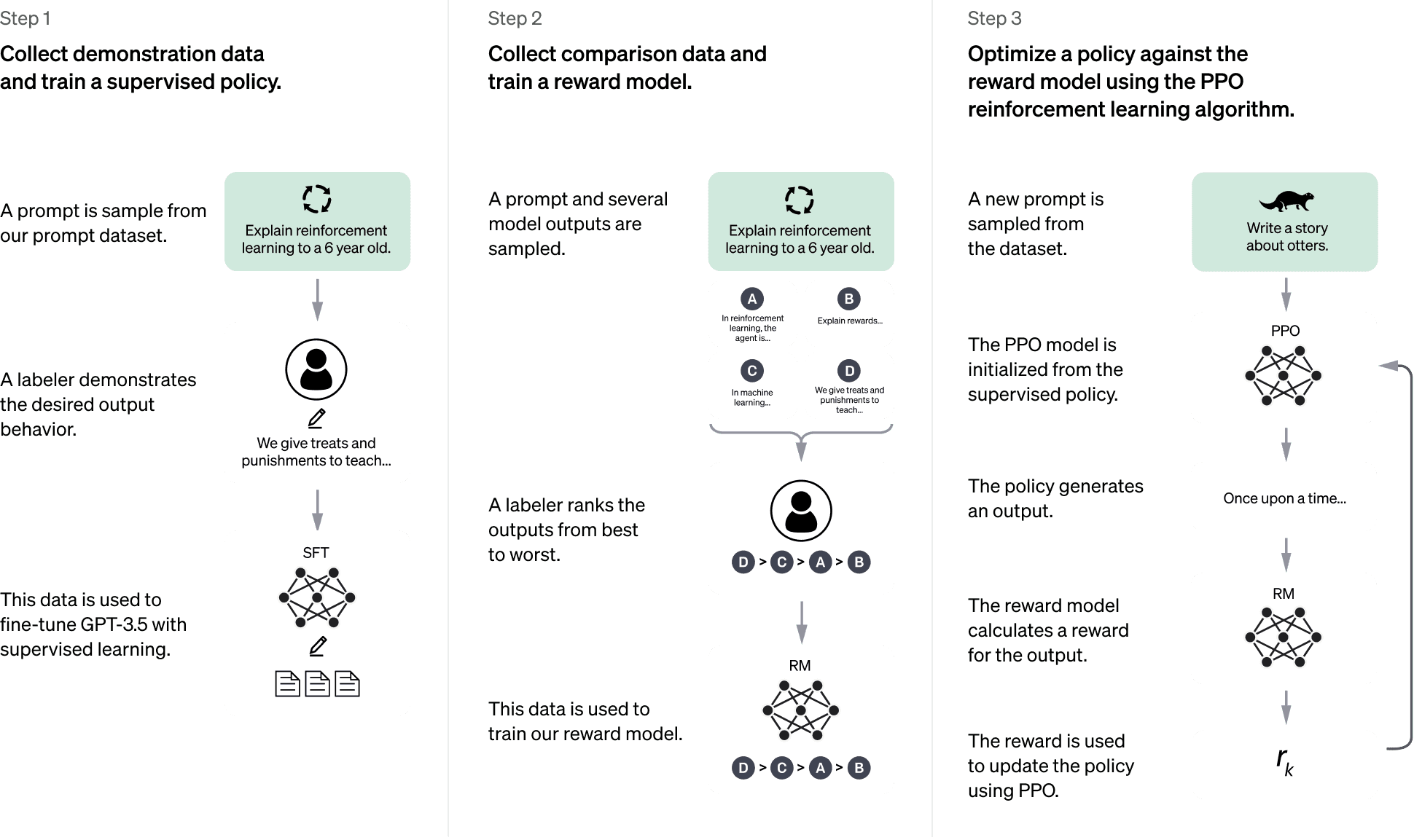
GPT-4.5 is a non-reasoning model in OpenAI's terminology. It does not produce a hidden chain of thought before answering. It does not expose a reasoning_effort parameter. It does not have an extended thinking mode. The post-training pipeline did include reinforcement learning from human feedback and supervised fine-tuning, but it did not include the deliberative alignment training that powers the o-series.[1][2][18]
GPT-4.5 accepts text and image inputs and produces text outputs. It does not natively process audio, which had been one of the headline capabilities of GPT-4o. It also does not generate images natively (the gpt-image-1 launch was still two months in the future). For developers, the model supported function calling, structured outputs (JSON Schema), streaming, and the standard chat completions and Responses APIs.[1][4][18]
Capabilities
OpenAI's framing for GPT-4.5 emphasized two qualitative capability claims: better world knowledge and higher emotional intelligence. The launch post said the model had "broader knowledge and a deeper understanding of the world" and greater "EQ," with an improved ability to follow user intent and lower hallucination rates. It said early testing showed interactions felt "more natural" and described "warm and intuitive conversations."[1][19]
For concrete capabilities, the model supports:
- Text generation and conversation across the standard ChatGPT and API surfaces.
- Code generation in dozens of programming languages, with no specialized coding-only mode.
- Vision input from photographs, screenshots, charts, and diagrams.
- Function calling and structured outputs, including JSON Schema constraints.
- Search, file and image uploads, and canvas inside ChatGPT.
The model does not support:
- Native audio input or output. Voice mode in ChatGPT continued to use GPT-4o.
- Native image generation. Image generation continued to route through DALL-E 3 (and later gpt-image-1).
- Chain-of-thought reasoning. The o-series remained the recommended choice for hard reasoning tasks.
- Fine-tuning. OpenAI did not open fine-tuning on GPT-4.5 during the research preview.
Personality and EQ claims
The "emotional intelligence" framing was the most distinctive piece of OpenAI's pitch. In the launch post, the company claimed that GPT-4.5 was better at picking up subtext, choosing when to advise versus listen, and adapting tone to the user's emotional state. Internal A/B tests showed humans preferring GPT-4.5 responses to GPT-4o responses 57.0% of the time on everyday queries, 63.2% on professional queries, and 56.8% on creative intelligence queries. OpenAI did not publish detailed methodology for these evaluations.[1][2]
Altman amplified this framing on X. His launch-day post described GPT-4.5 as "the first model that feels like talking to a thoughtful person to me," adding "i have had several moments where i've sat back in my chair and been astonished at getting actually good advice from an AI." The same post called the model "a giant, expensive model." The deliberate juxtaposition of "thoughtful person" against "giant, expensive" was widely read as Altman managing expectations: the model was meant to feel different in tone, not necessarily to top reasoning leaderboards.[20][21]
Independent reactions to the personality claim were mixed. Andrej Karpathy's informal blind polls on X found that voters preferred the older model's answers on four of five prompts, even though Karpathy said he personally preferred GPT-4.5 on all of them.[22][44] Others, including several Substack-based AI commentators, argued that GPT-4.5 felt qualitatively warmer and more conversationally natural than its predecessors. Nathan Lambert, in a widely circulated Interconnects post, observed that "many prominent AI figures online were touting how GPT-4.5 is much nicer to use and better at writing" but cautioned that vibes-based capability claims were hard to test rigorously.[14][22]
Hallucinations and SimpleQA
The most defensible quantitative claim OpenAI made was on hallucinations. On SimpleQA, an internal benchmark of factual questions, GPT-4.5 reached 62.5% accuracy with a hallucination rate of 37.1%, compared to GPT-4o's hallucination rate of 61.8% and o3-mini's 80.3%. The reduction was substantial and drew positive coverage from VentureBeat, DataCamp, and Constellation Research. The improvement did not, however, close the gap with reasoning models on factually demanding tasks once those models had access to web search.[1][23][24]
Benchmarks
The benchmark story for GPT-4.5 was uneven, and the unevenness explains most of the launch's reception problems. On knowledge-heavy and language-style evaluations, the model led OpenAI's prior non-reasoning lineup. On reasoning-style evaluations such as AIME and GPQA, it trailed not only OpenAI's own o-series but also competing reasoning models from Anthropic and DeepSeek. Competitors using extended thinking or chain-of-thought outperformed GPT-4.5 by roughly 40 to 55 percentage points on AIME 2024 competition math, though by much less on GPQA science questions.[1][2][7]
OpenAI's published benchmarks
| Benchmark | What it measures | GPT-4.5 | GPT-4o | o1 | o3-mini |
|---|---|---|---|---|---|
| SimpleQA accuracy | Factual recall on short questions | 62.5% | 38.2% | 47.0% | 15.0% |
| SimpleQA hallucination rate | Lower is better | 37.1% | 61.8% | 44.0% | 80.3% |
| MMMLU | Multilingual MMLU (15 languages) | 85.1% | 81.5% | 87.7% | 81.1% |
| MMMU | Multimodal college reasoning | 74.4% | 69.1% | 78.2% | n/a |
| GPQA (Diamond) | Graduate-level science | 71.4% | 53.6% | 75.7% | 79.7% |
| AIME 2024 | Competition mathematics | 36.7% | 9.3% | 74.3% (high) | 87.3% (high) |
| SWE-bench Verified | Real GitHub issues solved | 38.0% | 30.7% | 48.9% | 61.0% |
| SWE-Lancer Diamond | Multi-task software development | 32.6% | 23.3% | n/a | 10.8% |
| Aider Polyglot diff | Multi-language code edits | 44.9% | 18.2% | 61.7% (high) | 60.4% (high) |
Numbers are taken from OpenAI's GPT-4.5 launch post, the system card, the appendix of the GPT-4.1 launch post (o1 and Aider figures), and the Helicone benchmarks summary.[1][2][5][24]
The pattern is consistent. On knowledge tasks (SimpleQA, MMMLU, MMMU) GPT-4.5 outperforms GPT-4o by 4 to 24 points. On reasoning tasks (AIME, GPQA Diamond, SWE-bench), it trails dedicated reasoning models by roughly 4 to 51 points. For code, the model is better than GPT-4o on real-world bugs (SWE-bench Verified) but worse than o3-mini and far worse than reasoning models on competition-style problems.
Comparison to competitors
The more painful comparison was with non-OpenAI competitors. Anthropic's Claude 3.7 Sonnet, launched on February 24, 2025, three days before GPT-4.5, posted SWE-bench Verified scores of 62.3% in standard mode and 70.3% with a high-compute scaffold, and led on the Aider Polyglot benchmark. Google's Gemini 2.5 Pro, launched on March 25, 2025, scored 92.0% on AIME 2024, 84.0% on GPQA Diamond and 18.8% on Humanity's Last Exam while costing roughly one-sixtieth of GPT-4.5's input price in the API. DeepSeek-R1, the open-weight reasoning model that had set off a January 2025 stock-market wobble, scored 79.8% on AIME 2024 and 71.5% on GPQA Diamond at a fraction of GPT-4.5's API cost.[25][26][27]
| Model | Lab | Architecture | AIME 2024 | GPQA Diamond | SWE-bench Verified | Input price/1M |
|---|---|---|---|---|---|---|
| GPT-4.5 | OpenAI | Non-reasoning | 36.7% | 71.4% | 38.0% | $75.00 |
| GPT-4o | OpenAI | Non-reasoning | 9.3% | 53.6% | 30.7% | $2.50 |
| o1 | OpenAI | Reasoning | 74.3% | 75.7% | 48.9% | $15.00 |
| o3-mini (high) | OpenAI | Reasoning | 87.3% | 79.7% | 61.0% | $1.10 |
| Claude 3.7 Sonnet | Anthropic | Hybrid (extended thinking) | ~80% | ~78% | 70.3% | $3.00 |
| Gemini 2.5 Pro | Google DeepMind | Reasoning | 92.0% | 84.0% | 63.8% | ~$1.25 |
| DeepSeek-R1 | DeepSeek | Reasoning (MoE) | 79.8% | 71.5% | 49.2% | $0.55 |
GPT-4.5 was substantially more expensive than any of these alternatives while underperforming all of them on the benchmarks most associated with frontier capability. Its only clear win was on SimpleQA-style factuality, and even that win narrowed once reasoning models were given web search.[24][26][28]
"Personality" preference scores
The one place GPT-4.5 led most peers was in human preference comparisons of conversational tone. OpenAI's internal A/B testing showed humans preferring GPT-4.5 outputs to GPT-4o outputs 56.8 to 63.2% of the time across query categories. Andrej Karpathy ran his own informal blind polls on X, pitting GPT-4.5 against an older GPT-4-series model on five creative and humor prompts. Voters preferred the older model on four of the five prompts, while Karpathy said he personally preferred GPT-4.5 on all of them.[1][22]
Pricing and availability
API pricing
GPT-4.5 launched at API rates that were unprecedented for a production OpenAI model.
At $75 input and $150 output per million tokens, GPT-4.5 was 30 times more expensive on input and 15 times more expensive on output than GPT-4o. It was 5 times the input price and 2.5 times the output price of o1, the previous most expensive frontier OpenAI model. Compared to its eventual successors, GPT-4.5 was 37 times the input price of GPT-4.1 and 60 times the input price of GPT-5.[5][29]
The price was justified internally as a reflection of training cost and serving cost, not a deliberate gating mechanism. OpenAI did not publish the inference compute per request, but called GPT-4.5 "a very large and compute-intensive model." Even at $75 input and $150 output, the rate-limited capacity meant that most production users could not have shifted to GPT-4.5 even if the price had been a bargain.[4][14][16]
ChatGPT availability
In the consumer product, GPT-4.5 was gated more aggressively than any prior flagship.
| ChatGPT tier | GPT-4.5 access |
|---|---|
| Free | None during research preview |
| Plus ($20/month) | Limited; capped messages per week, after week-of-March-3 rollout |
| Team | Limited; same caps as Plus |
| Pro ($200/month) | Available from launch day |
| Enterprise | Rollout scheduled for mid-March 2025, the week after Plus and Team |
| Education | Rollout scheduled for mid-March 2025, the week after Plus and Team |
The practical effect was that for the first several weeks, GPT-4.5 was almost exclusively a Pro-tier feature. ChatGPT Pro had launched in December 2024 alongside o1 Pro Mode at the $200 monthly price point, and GPT-4.5 was the second flagship to debut as a Pro-only feature. Several Plus users reported being unable to access GPT-4.5 even after the official rollout for capacity reasons, and rate limits were tighter than for any concurrently available model in ChatGPT.[1][16]
Reception
The reception of GPT-4.5 was historically significant for two reasons. First, it was one of the few times a major OpenAI flagship received broadly muted to negative coverage at launch. Second, it was the first OpenAI release where a substantial fraction of mainstream press explicitly framed the result as evidence that pre-training scaling alone was no longer producing the gains it once had.
Positive responses
Not all coverage was negative. OpenAI's own blog post and follow-up media briefings emphasized the SimpleQA improvements and the personality claim. Constellation Research wrote that GPT-4.5's higher emotional intelligence could expand its use cases.[45] The New York Times, in a piece by Cade Metz, presented the launch as the end of an era, since GPT-4.5 was OpenAI's last chatbot without chain-of-thought reasoning. VentureBeat ran a launch piece titled "OpenAI releases 'largest, most knowledgable' model GPT-4.5 with reduced hallucinations and high API price" that was net positive on capability while flagging the cost.[1][7][24][30]
A contingent of working creative writers and editors gave the model warmer reviews. Several Substack-based critics described GPT-4.5 as the first model where the writing style felt distinctly different from generic chatbot prose, and a few argued that the difference was particularly pronounced on prompts about emotionally complex topics. These accounts varied considerably in how rigorous they were, and many were quickly contested by users running blind comparisons.[14][22]
Negative responses
Most coverage from established AI press was sceptical. TechCrunch's headline read "OpenAI unveils GPT-4.5 'Orion,' its largest AI model yet," but the body of the piece focused on GPT-4.5 underperforming "newer AI 'reasoning' models from Chinese AI startup DeepSeek, Anthropic, and OpenAI itself." Fortune's launch story, headlined "OpenAI launches long-awaited GPT-4.5, but 'Orion's' capabilities already lag competitors," quoted AI critic Gary Marcus calling GPT-4.5 "a nothing burger." The Verge led with OpenAI's own warning that GPT-4.5 was "not a frontier AI model."[2][6][7][31][32]
Developer communities responded similarly. Hacker News threads from the launch week ran heavily towards "underwhelming for the price." Sinan Onur Altinuc argued that the launch showed pre-training had hit its limits at the frontier, in a piece titled "GPT-4.5 Just Hit the AI Scaling Wall," echoing Erik Hoel's November 2024 argument that AI progress had plateaued. Alberto Romero of The Algorithmic Bridge took the other side, calling the release a letdown but "not a setback but the setup."[8][33][34]
Nathan Lambert's Interconnects analysis was the most carefully argued of the technical responses. Lambert pointed out that OpenAI's own draft system card included the line "GPT-4.5 is not a frontier model," later removed from the published version. He argued that GPT-4.5 was actually a frontier-capability model that had arrived "oddly, ahead of its time," because the field had already pivoted toward reasoning and test-time compute. His core conclusion was that "scaling pretraining alone" no longer delivered breakthroughs at the frontier, and that the future belonged to combinations of pre-training, reasoning, and reinforcement learning.[14]
Sam Altman's framing
The most quoted text from launch week was Altman's X post on February 27, 2025. The full quote, frequently truncated in subsequent reporting, ran:
"GPT-4.5 is ready! good news: it is the first model that feels like talking to a thoughtful person to me. i have had several moments where i've sat back in my chair and been astonished at getting actually good advice from an AI. bad news: it is a giant, expensive model. we really wanted to launch it to plus and pro at the same time, but we've been growing a lot and are out of GPUs. we will add tens of thousands of GPUs next week and roll it out to the plus tier then. (hundreds of thousands coming soon, and i'm pretty sure y'all will use every one we can rack up.) this isn't how we want to operate, but it's hard to perfectly predict growth surges that lead to GPU shortages."[20]
The quote was used in two contradictory ways. Bullish takes treated the "thoughtful person" line as evidence of a qualitative leap. Bearish takes paired "giant, expensive" with the model's middling benchmark performance to argue that OpenAI was launching what it knew was a flawed product because it had run out of options on Orion. The same post ended with "a heads up: this isn't a reasoning model and won't crush benchmarks. it's a different kind of intelligence and there's a magic to it i haven't felt before," a line widely read as an effort to set expectations downward.[20][21]
Why was GPT-4.5 seen as evidence of a pre-training plateau?
The most consequential strand of GPT-4.5's reception was the debate over what the launch said about scaling laws and pre-training. The proper way to read this debate is as a continuation of an argument that was already underway in late 2024, not as something the GPT-4.5 launch settled on its own.
What the primary sources say
OpenAI's launch post described GPT-4.5 as "a step forward in scaling up pre-training and post-training" and characterized the model as the result of "scaling unsupervised learning," without using the words "plateau" or "wall." The system card contained a draft passage saying "GPT-4.5 is not a frontier model," which OpenAI removed from the published version, with Lambert's analysis arguing that the draft phrasing reflected internal uncertainty about how to position the release.[1][14]
Altman's framing in his February 27 tweet acknowledged the model was "giant" and "expensive" but did not concede a plateau. His earlier February 12 roadmap note that GPT-4.5 would be "our last non-chain-of-thought model" was probably the strongest internal signal: future flagships would not rely on pre-training scale alone.[3][20][21]
Ilya Sutskever, OpenAI's former chief scientist now running Safe Superintelligence Inc., said at NeurIPS 2024 that "pre-training as we know it will unquestionably end" because the world is running out of human-created text data. The quote was widely cited in coverage of GPT-4.5 as evidence from the inside that pre-training had a ceiling, although Sutskever made the comments before GPT-4.5 was launched and was speaking generally about the training paradigm rather than about GPT-4.5 specifically.[36]
What press said
Mainstream coverage settled on "plateau" framing more confidently than the primary sources warranted. Fortune's February 25 piece, published two days before the launch, was titled "The $19.6 billion pivot: How OpenAI's 2-year struggle to launch GPT-5 revealed that its core AI strategy has stopped working." The Wall Street Journal, in a December 2024 feature, had described troubled Orion training runs and the cost of each attempt.[6][12]
It is worth being careful with the framing. "Plateau" implies that no further capability gains are possible from scaling, which is a stronger claim than the evidence supports. What the primary sources support is the weaker claim that the marginal benchmark gain per dollar of training compute has shrunk substantially at the frontier, and that this has shifted resources toward reasoning, test-time compute, and post-training techniques. Several commentators, including Lambert, argued for the weaker version of the claim. Others, including Marcus and Hoel, argued for the stronger "wall" or "plateau" version.[8][14][33][34]
What happened next
Whatever the right framing, OpenAI's subsequent product moves were consistent with deemphasizing pure pre-training scale. GPT-4.1, launched on April 14, 2025, was explicitly positioned as a smaller, cheaper, faster model that matched or exceeded GPT-4.5 on most production-relevant tasks. GPT-5, launched on August 7, 2025, combined a fast non-reasoning model with a deep reasoning model behind a router. The GPT-5 launch post described it as "one unified system," ending the earlier split between GPT-4.5-style and o-series-style models.[5][37]
This is not the same as saying pre-training is dead. OpenAI continued to scale pre-training in GPT-5 and subsequent flagships. What changed was the assumption that a flagship release could be carried by pre-training alone. GPT-4.5 is widely understood as the last release where OpenAI tried, and the experience clearly informed everything that followed.
Why was GPT-4.5 deprecated?
April 14, 2025 announcement
OpenAI announced GPT-4.5's API deprecation on April 14, 2025, the same day it launched GPT-4.1. The deprecation notice gave developers exactly three months to migrate, setting July 14, 2025 as the date when gpt-4.5-preview would be removed from the API. The official rationale, given in the GPT-4.1 launch post and mirrored on OpenAI's deprecations page, was that GPT-4.1 "offers improved or similar performance on many key capabilities at much lower cost and latency."[5][9]
The pricing comparison made the migration economics obvious. GPT-4.1 was priced at $2.00 input and $8.00 output per million tokens, less than 3% of GPT-4.5's per-token cost on input and roughly 5% on output. On coding and long-context benchmarks (SWE-bench Verified, Aider's polyglot diff, OpenAI-MRCR multi-needle recall), GPT-4.1 beat GPT-4.5 by roughly 8 to 19 points, although GPT-4.5 still scored higher on OpenAI's instruction-following evaluations such as MultiChallenge. The 1 million token context window in GPT-4.1, eight times GPT-4.5's 128,000 token cap, was a further argument for migration.[5]
Developer reaction
Developer response to the deprecation was sharply negative in tone, even among developers who agreed that GPT-4.1 was the better choice on cost. The complaint was about the timeline: a four-and-a-half-month API life for a flagship model was unusually short. The OpenAI Developer Community thread on the deprecation drew a few dozen replies, several of them objecting to losing the model.[9][38]
VentureBeat ran a follow-up piece headlined "OpenAI moves forward with GPT-4.5 deprecation in API, triggering developer anguish and confusion" reporting that some developers had built workflows around the model's distinctive tone and were not satisfied that GPT-4.1 reproduced it. Others noted that the deprecation effectively confirmed what skeptics had said at launch: GPT-4.5 was a research preview that OpenAI did not consider commercially sustainable.[10]
July 14, 2025 removal
gpt-4.5-preview was removed from the API on July 14, 2025 as scheduled. Existing API requests to the deprecated endpoint began returning errors directing developers to GPT-4.1, GPT-4.1 mini, or the o-series. ChatGPT Pro retained access to GPT-4.5 through July and into August, although the model picker increasingly emphasized GPT-4.1 and the o-series for paid users.[9][39]
When GPT-5 launched on August 7, 2025, it replaced GPT-4.5 and the rest of the prior model picker as the default in ChatGPT. ChatGPT Pro subscribers kept GPT-4.5 as a legacy model after OpenAI restored legacy access during the GPT-5 backlash, and it stayed there until OpenAI announced in its late-May 2026 ChatGPT release notes that GPT-4.5 would be retired from ChatGPT on June 27, 2026.[37][40][43]
Connection to GPT-5
The clearest line from GPT-4.5 to subsequent OpenAI models runs through GPT-5. GPT-5's launch post, published on August 7, 2025, framed the model as a unified system combining the pre-trained intuition that GPT-4.5 represented with the reasoning capabilities of the o-series. The framing echoed Altman's February 2025 roadmap: GPT-4.5 had been the company's last attempt to push pre-training alone to the frontier, and GPT-5 was the synthesis that followed.[37]
Several concrete features of GPT-5 trace directly to lessons OpenAI seems to have learned from GPT-4.5. The router in GPT-5, which sends each prompt to either a fast model or a thinking model, is essentially an automated version of the choice that ChatGPT users had been making manually between GPT-4.5 (for tone and knowledge) and o3 (for reasoning). The 50 to 80% reduction in reasoning tokens that GPT-5 thinking mode achieved relative to o3 made it commercially viable to ship a reasoning-default product, something GPT-4.5's pricing had made impossible. The hallucination reductions in GPT-5, about six times fewer hallucinations than o3 on the LongFact and FActScore benchmarks, built directly on the SimpleQA gains that had been GPT-4.5's most defensible benchmark win.[37]
The reception story also influenced GPT-5. The August 2025 "we want our 4o back" backlash, in which paying users objected to the removal of GPT-4o from ChatGPT, played out partly because the GPT-5 default tone felt colder than GPT-4o's. Several writers noted that GPT-4.5's emphasis on personality presaged the personality preset system that shipped with GPT-5.1 in November 2025, which gave users explicit control over default warmth, friendliness, and verbosity. The lesson OpenAI took from both GPT-4.5 and the GPT-4o controversy was that personality and tone are first-class product features, not afterthoughts.[37][41]
Legacy
GPT-4.5 has the unusual distinction of being one of the most expensive AI models ever trained and one of the shortest-lived commercial AI products at the frontier. Its API life was 137 days (February 27 to July 14, 2025), although it lingered in ChatGPT for Pro subscribers until June 2026.[43] Its commercial output, in dollar terms, was almost certainly a small fraction of its training cost.[4][9]
The model is now widely cited in three contexts. First, as the test case that closed out the era of treating pre-training scale as the sole path to frontier capability. The shift to reasoning-augmented systems was already underway when GPT-4.5 launched, but the launch's reception accelerated it. Second, as the moment OpenAI internalized that personality and tone were product features that could carry a model even when its benchmarks were unimpressive. Third, as a cautionary tale about pricing. The $75 input and $150 output rate was an experiment in monetizing a very heavy model that did not survive the comparison to GPT-4.1 and the o-series.
For OpenAI's product story, GPT-4.5 was the bridge between the GPT-4 era and the GPT-5 era. It carried over the conversational personality that defined the GPT-4o experience and pre-figured the personality presets that arrived with GPT-5.1. It established that very large pre-trained models could substantially reduce hallucinations on factual questions. And it confirmed, by negative example, that the future of frontier flagships would belong to systems that could reason, not just remember.
Continue reading
- GPT-4GPT-4 (Generative Pre-trained Transformer 4) is a large language model developed by OpenAI and released on March 14, 2023.Mentioned 140 times above
- OpenAIOpenAI is an American artificial intelligence research and deployment organization.Mentioned 78 times above
- ChatGPTChatGPT is a conversational artificial intelligence chatbot developed by OpenAI and built on the company's GPT series of large language models.Mentioned 34 times above
- GPT-5GPT-5 is a family of proprietary large language models released by OpenAI on August 7, 2025.Mentioned 28 times above
- GPT-4oGPT-4o (Generative Pre-trained Transformer 4 Omni) is a natively multimodal large language model developed by OpenAI and announced on May 13, 2024 at the company's "Spring Update" livestream.Mentioned 22 times above
- GPT-4.1GPT-4.1 is a family of multimodal large language models developed by OpenAI and announced on April 14, 2025, with a 1 million token context window and a SWE-bench Verified coding score of 54.6%Mentioned 20 times above
More from See also
References
- ^1 ^2 ^3 ^4 ^5 ^6 ^7 ^8 ^9 ^10 ^11 ^12 ^13 ^14 ^15 ^16OpenAI. "Introducing GPT-4.5." OpenAI Blog, February 27, 2025. openai.com/...introducing-gpt-4-5
- ^1 ^2 ^3 ^4 ^5 ^6 ^7 ^8 ^9 ^10Zeff, Maxwell. "OpenAI unveils GPT-4.5 'Orion,' its largest AI model yet." TechCrunch, February 27, 2025. techcrunch.com/...5-orion-its-largest-ai-model-yet
- ^1 ^2 ^3Altman, Sam. "OpenAI roadmap update for GPT-4.5 and GPT-5." X (Twitter), February 12, 2025. x.com/...1889755723078443244
- ^1 ^2 ^3 ^4 ^5 ^6OpenAI. "GPT-4.5 model release notes." OpenAI Help Center, February 27, 2025. help.openai.com/...9624314-model-release-notes
- ^1 ^2 ^3 ^4 ^5 ^6 ^7 ^8OpenAI. "Introducing GPT-4.1 in the API." OpenAI Blog, April 14, 2025. openai.com/...gpt-4-1
- ^1 ^2 ^3 ^4 ^5 ^6Kahn, Jeremy. "OpenAI launches long-awaited GPT-4.5, but 'Orion's' capabilities already lag competitors." Fortune, February 27, 2025. fortune.com/...-orion-launch-sam-altman-benchmarks
- ^1 ^2 ^3 ^4 ^5 ^6"OpenAI Launches Its Largest AI Model Yet in Research Preview." Campus Technology, February 28, 2025. campustechnology.com/...el-yet-in-research-preview
- ^1 ^2 ^3Hoel, Erik. "AI progress has plateaued below GPT-5 level." The Intrinsic Perspective, November 14, 2024. theintrinsicperspective.com/...as-plateaued-at-gpt
- ^1 ^2 ^3 ^4 ^5"GPT-4.5-preview model will be removed from the API on 2025-07-14." OpenAI Developer Community, April 14, 2025. community.openai.com/...1230050
- ^1 ^2Franzen, Carl. "OpenAI moves forward with GPT-4.5 deprecation in API, triggering developer anguish and confusion." VentureBeat, June 17, 2025. venturebeat.com/...developer-anguish-and-confusion
- ^1 ^2Efrati, Amir. "OpenAI Shifts Strategy as Rate of 'GPT' AI Improvements Slows." The Information, November 2024. theinformation.com/...of-gpt-ai-improvements-slows
- ^1 ^2Seetharaman, Deepa. "The Next Great Leap in AI Is Behind Schedule and Crazy Expensive." The Wall Street Journal, December 21, 2024. wsj.com/...openai-gpt5-orion-delays-639e7693
- ^1 ^2Patel, Dylan. "Scaling Laws: O1 Pro Architecture, Reasoning Training Infrastructure, Orion and Claude 3.5 Opus 'Failures'." SemiAnalysis, December 11, 2024. semianalysis.com/...n-and-claude-3-5-opus-failures
- ^1 ^2 ^3 ^4 ^5 ^6 ^7Lambert, Nathan. "GPT-4.5: 'Not a frontier model'?" Interconnects, February 28, 2025. interconnects.ai/...gpt-45-not-a-frontier-model
- ^Altman, Sam. "GPT-4.5 GPU shortage, rollout staggered." X (Twitter), February 27-28, 2025. x.com/...1895203654103351462
- ^1 ^2 ^3 ^4Morales, Jowi. "OpenAI has run out of GPUs, says Sam Altman, GPT-4.5 rollout delayed due to lack of processing power." Tom's Hardware, February 28, 2025. tomshardware.com/...ue-to-lack-of-processing-power
- ^"OpenAI rolls out GPT-4.5 to Pro users only, faces shortage of GPU horsepower." TechSpot, February 28, 2025. techspot.com/...ai-rolls-out-gpt-45-pro-users-only
- ^1 ^2OpenAI. "GPT-4.5 System Card." OpenAI, February 27, 2025. openai.com/...gpt-4-5-system-card ; PDF: cdn.openai.com/gpt-4-5-system-card-2272025.pdf
- ^Aten, Jason. "OpenAI says ChatGPT-4.5 comes with a killer feature: emotional intelligence." Inc., February 28, 2025. inc.com/...91154092
- ^1 ^2 ^3 ^4Altman, Sam. "GPT-4.5 is ready! good news..." X (Twitter), February 27, 2025. x.com/...1895203654103351462
- ^1 ^2 ^3"Sam Altman calls it 'magic' as OpenAI rolls out GPT-4.5: 'Feels like talking to a thoughtful person to me'." Benzinga, February 28, 2025. benzinga.com/...lking-to-a-thoughtful-person-to-me
- ^1 ^2 ^3 ^4 ^5Karpathy, Andrej. "GPT 4.5 + interactive comparison." X (Twitter), February 27, 2025. x.com/...1895213020982472863
- ^"OpenAI releases 'largest, most knowledgable' model GPT-4.5 with reduced hallucinations and high API price." VentureBeat, February 27, 2025. venturebeat.com/...openai-releases-gpt-4-5
- ^1 ^2 ^3 ^4Helicone. "GPT 4.5 Released: Here Are the Benchmarks." Helicone Blog, February 28, 2025. helicone.ai/...gpt-4.5-benchmarks
- ^Anthropic. "Claude 3.7 Sonnet and Claude Code." Anthropic Blog, February 24, 2025. anthropic.com/...claude-3-7-sonnet
- ^1 ^2Vellum. "LLM Leaderboard 2026: Compare Top AI Models." 2025-2026. vellum.ai/llm-leaderboard
- ^Google DeepMind. "Gemini 2.5: Our most intelligent AI model." Google Blog, March 25, 2025. blog.google/...i-model-thinking-updates-march-2025
- ^Willison, Simon. "Initial impressions of GPT-4.5." Simon Willison's Weblog, February 27, 2025. simonwillison.net/...introducing-gpt-45
- ^OpenAI. "API pricing." OpenAI Platform. openai.com/...pricing
- ^Metz, Cade. "OpenAI Unveils GPT-4.5 for More 'Natural Conversation'." The New York Times, February 27, 2025. nytimes.com/...-artificial-intelligence-technology
- ^Warren, Tom. "OpenAI announces GPT-4.5, warns it's not a frontier AI model." The Verge, February 27, 2025. theverge.com/...nai-gpt-4-5-orion-ai-model-release
- ^Kruppa, Miles. "OpenAI launches GPT-4.5 amid concerns over slower AI progress." Financial Times, February 27, 2025. ft.com/...openai-gpt-4-5-orion-launch
- ^1 ^2Altinuc, Sinan Onur. "GPT-4.5 Just Hit the AI Scaling Wall. Is it Time to Change Direction?" Medium, February 28, 2025. medium.com/...ime-to-change-direction-2ccf702bbef7
- ^1 ^2Romero, Alberto. "GPT-4.5 Feels Like a Letdown But It's OpenAI's Biggest Bet Yet." The Algorithmic Bridge, February 28, 2025. thealgorithmicbridge.com/...like-a-letdown-but-its
- "OpenAI Debuts GPT-4.5 'Orion'." Redmond Magazine, February 28, 2025. redmondmag.com/...OpenAI-Debuts-GPT-4-5
- ^Sutskever, Ilya. "Pre-training as we know it will end." NeurIPS 2024 keynote, December 2024. Reported by VentureBeat: venturebeat.com/...er-pretraining-end-neurips-2024
- ^1 ^2 ^3 ^4 ^5OpenAI. "Introducing GPT-5." OpenAI Blog, August 7, 2025. openai.com/...introducing-gpt-5
- ^Jessica, Ebimaro. "OpenAI Deprecates GPT-4.5 API in July 2025, Forcing Developers to Migrate to GPT-4.1 Amid Backlash." The Synapse Times via Medium, April 15, 2025. medium.com/...o-gpt-4-1-amid-backlash-417a4a31eb0d
- ^"OpenAI Retires GPT-4.5 Model from ChatGPT Website and API." Hipa AI Blog, August 13, 2025. blog.hipa.ai/...model-from-chatgpt-website-and-api
- ^"GPT-5's model router ignited a user backlash against OpenAI." Fortune, August 12, 2025. fortune.com/...t-5-model-router-backlash-ai-future
- ^OpenAI. "GPT-5.1: A smarter, more conversational ChatGPT." OpenAI Blog, November 12, 2025. openai.com/...gpt-5-1
- Wikipedia. "GPT-4.5." en.wikipedia.org/...GPT-4.5
- ^1 ^2 ^3Kerns, Taylor. "ChatGPT is retiring this beloved legacy model in June." Android Authority, May 29, 2026. androidauthority.com/chatgpt-4-5-o3-retired-3672713
- ^"AINews: not much happened today" (Twitter recap of Karpathy's GPT-4.5 polls). AINews, February 28, 2025. news.smol.ai/...-28-ainews-not-much-happened-today
- ^Constellation Research. "OpenAI's GPT-4.5 has more emotional intelligence, could expand use cases." February 2025. constellationr.com/...gence-could-expand-use-cases
Improve this article
Add missing citations, update stale details, or write a clearer explanation. Anyone can edit: changes go live when you publish, and every edit is checked by an editor.
8 revisions · v8 · 6,549 words · full history
Fact-checks are independent of edits: a reviewer re-verifies the article against its sources and stamps the date. How we verify
Research and drafting on this wiki are AI-assisted, under named human editorial standards. How AI is used here
Reviewer note: Independent fact-check of the full article against its cited sources (150 claims, 31 sources fetched); 25 material + 29 minor fixed
Cite this page: AI Wiki. "GPT-4.5." aiwiki.ai, updated 28 Oct 2026, fact-checked 2 Nov 2026. CC BY 4.0. https://aiwiki.ai/wiki/gpt-4.5