

CIFAR (Canadian Institute for Advanced Research)
The CIFAR (Canadian Institute for Advanced Research) is a Toronto-based charitable research organization that funds international, interdisciplinary research programs and, since 2017, has led the federal government's Pan-Canadian Artificial Intelligence Strategy [1][2][9]. In AI it is best known for two things: its long support of Geoffrey Hinton's neural network research, including the 2004 program now called Learning in Machines & Brains that brought Hinton together with Yoshua Bengio and Yann LeCun, and its administration of the Canada CIFAR AI Chairs program that funds researchers at the three national AI institutes, Amii, Mila and the Vector Institute [1][2][5]. Since 2024 it has also run one of the Canadian AI Safety Institute's two research programs [20].
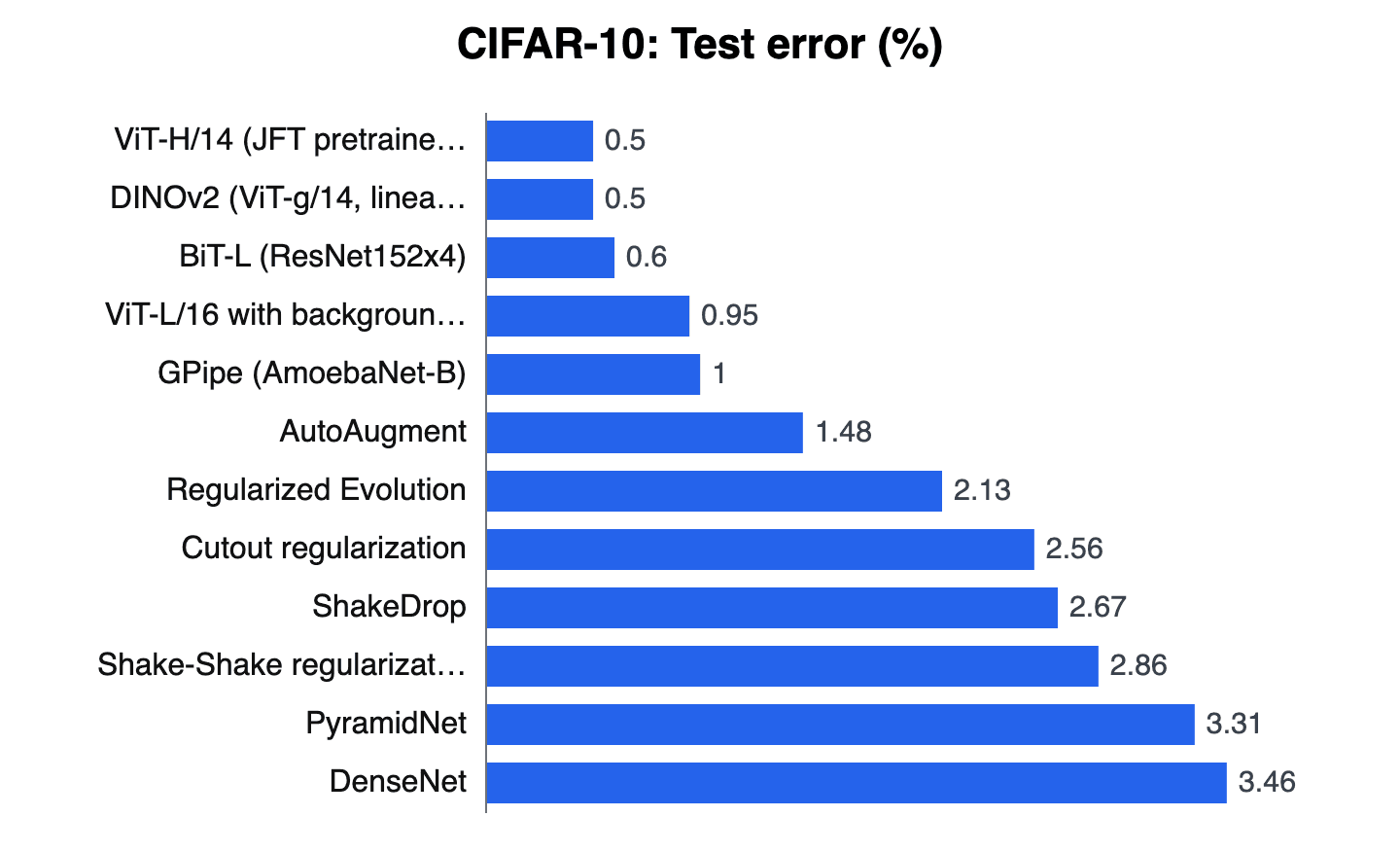
This article is about the research organization. The CIFAR-10 and CIFAR-100 image datasets were named after the institute, which funded the project that produced them [8].

History
Founding
The idea for the institute came from John Leyerle, Dean of Graduate Studies at the University of Toronto, who began rallying support for a Canadian hub for advanced research in 1978 [1]. CIFAR says it was formally founded as the Canadian Institute for Advanced Research in August 1981 and officially opened on July 1, 1982, with Fraser Mustard as its first president and CEO [1][2]. The organization originally used the acronym CIAR; it changed to CIFAR in 2006, while the full name stayed the same [1][2].
CIFAR's stated focus is bringing leading scholars and scientists together across disciplines to work on high-risk, complex questions; it later added the development of early-career researchers, knowledge mobilization and leadership of the national AI strategy [1]. Its first program, Artificial Intelligence, Robotics and Society, launched in 1983 [3]. According to CIFAR, researchers in that program made contributions to computer vision and knowledge representation over the following decade, and in 1987 the program helped set up the Pre-Competitive Applied Research Network (Precarn) to link universities and companies working on AI [2][3]. Later programs ranged widely beyond AI, from cosmology and population health to evolutionary biology and economic growth [3].
| President and CEO | Term |
|---|---|
| Fraser Mustard | 1982-1996 |
| Stefan Dupré | 1996-2000 |
| Chaviva Hošek | 2000-2012 |
| Alan Bernstein | 2012-2022 |
| Stephen Toope | 2022-present |
The terms above are as CIFAR lists them [1].
Support for Hinton's neural network research
Hinton joined CIFAR in 1987 as a fellow in the Artificial Intelligence, Robotics & Society program, after moving to Canada from the United States and taking up a position at the University of Toronto [4][5]. CIFAR says his work was then supported by CIFAR and the Natural Sciences and Engineering Research Council of Canada at a time when neural network research faced widespread skepticism and the funding droughts known as the AI winters [4]. In a 1992 article in Scientific American, written while he held the title of Noranda Fellow at CIFAR, Hinton defended the study of artificial neural networks [4].
Learning in Machines & Brains
Neural Computation and Adaptive Perception (2004)
In 2004, Hinton and collaborators including Bengio and David Fleet proposed a new CIFAR program, Neural Computation and Adaptive Perception (NCAP) [4]. The proposal set out to draw on many disciplines to understand how the brain learns and interprets visual information, and to use those insights to build machines that learn in similar ways [4]. Hinton directed the program from 2004 until 2013 [5].
CIFAR lists Bengio and LeCun among the program's early members, together with researchers such as Andrew Ng, Sebastian Seung, Max Welling and Ruslan Salakhutdinov, and Canadian researchers including Richard Zemel, Brendan Frey, Nando de Freitas and Fleet [4]. CIFAR's own history describes 2004 as the point at which Bengio, Hinton and LeCun "came together at CIFAR" [2]. In 2005 the program began a summer school for graduate students, first held in Toronto with 28 selected participants and modelled on the Connectionist Models Summer School that Hinton had led at the University of California, San Diego [4]. The school, later called the Deep Learning + Reinforcement Learning (DLRL) Summer School, had more than 2,700 alumni by October 2024 [4]; CIFAR now describes its CIFAR AI Frontiers School as evolving from the DLRL school [19].
Renaming and later leadership
NCAP was later renamed Learning in Machines & Brains (LMB) [3][4]. CIFAR records 2004 as the program's founding year and lists renewals in 2008, 2014, 2019 and 2025 [6]. Hinton was named a CIFAR Distinguished Fellow in 2014, according to the Canadian federal budget of 2017 [9]. A Brain Canada Foundation article describing the program's activities in 2016 named Bengio and LeCun as its co-directors and put its membership at 38 fellows [7]. In November 2024 CIFAR still described Bengio as co-director [20].
As of November 2026, CIFAR's program page lists Konrad Kording (University of Pennsylvania) and Timothy Lillicrap (Google DeepMind) as program co-directors, Bengio as chair of the advisory committee, LeCun as an advisor, and Hinton as a distinguished fellow [6]. Its listed fellows and associate fellows include Chelsea Finn, Surya Ganguli, Doina Precup, Max Welling and Léon Bottou [6]. The program has a standing partnership with Inria, the French national research institute for digital science and technology [6].
CIFAR describes the program's aim as understanding the computational and mathematical principles behind learning in neural networks, "be it in brains or in machines", with two directions: using neuroscience and cognitive science to improve machine learning, and using machine learning to understand brains and cognition [6]. Its stated research topics include reinforcement learning, unsupervised learning, credit assignment and memory architectures [6].
Recognition
In 2019 the Association for Computing Machinery named Hinton, Bengio and LeCun recipients of the 2018 Turing Award for conceptual and engineering breakthroughs that made deep neural networks a critical component of computing [1]. CIFAR's history links the award to the collaboration that began in its program in 2004 [2]. In October 2024 Hinton shared the Nobel Prize in Physics with John Hopfield "for foundational discoveries and inventions that enable machine learning with artificial neural networks" [4]. In its announcement, CIFAR president Stephen Toope said CIFAR was proud to have supported Hinton's work over the decades [4]. The 2017 federal budget also credited the program with pioneering deep learning [9].
The CIFAR-10 dataset
In his April 2009 technical report "Learning Multiple Layers of Features from Tiny Images", Alex Krizhevsky described creating reliable class labels for two sets of small images drawn from a web-collected tiny images dataset [8]. He wrote that the first was called the CIFAR-10 dataset "after the Canadian Institute for Advanced Research, which funded the project", and named the second, 100-class set CIFAR-100 [8]. The datasets themselves are covered in the CIFAR-10 article.
Pan-Canadian Artificial Intelligence Strategy
Phase one (2017)
Canada's Budget 2017 proposed $125 million to launch a Pan-Canadian Artificial Intelligence Strategy for research and talent, to retain and attract academic researchers and to increase the number of graduate trainees in AI and deep learning [9]. The budget said the strategy would promote collaboration between the country's main centres of expertise in Montréal, Toronto-Waterloo and Edmonton, and that CIFAR would be responsible for administering its funding [9]. The same budget proposed $35 million over five years, starting in 2017-18, in renewed and enhanced funding for CIFAR itself, saying its past collaborations were credited with fostering Canada's leadership in AI and deep learning [9]. According to CIFAR, a group of leaders from the Canadian AI community, Hinton among them, advised CIFAR and the government while the strategy was being developed in 2016 [4]. CIFAR describes it as the first national AI strategy in the world [10][2].
In the first phase, CIFAR led the work of attracting, retaining and training AI researchers and encouraged collaboration among the three national AI institutes: Amii in Edmonton, Mila in Montréal and the Vector Institute in Toronto [11]. CIFAR says it collaborated in launching the three institutes [4]. Provincial funding was less stable: when Ontario's government cut $24 million in planned AI research funding in May 2019, most of the cut fell on the Vector Institute, and The Canadian Press reported that $4 million less would flow to CIFAR [14].
Phase two (2021 onward)
Budget 2021 proposed up to $443.8 million over ten years for the strategy's renewal [12]. The second phase, which the Minister of Innovation, Science and Industry, François-Philippe Champagne, launched on June 22, 2022, shifted weight toward commercialization and the adoption of AI standards while keeping a talent and research pillar under which CIFAR runs the chairs and its national programs [13][11].
| Budget 2021 item | Amount | Period | Delivered by |
|---|---|---|---|
| Commercialization of AI innovations and research | $185 million | 5 years from 2021-22 | National AI institutes and Global Innovation Clusters |
| Retaining and attracting academic talent | $162.2 million | 10 years from 2021-22 | CIFAR |
| Renewing CIFAR research, training and knowledge mobilization programs | $48 million | 5 years from 2021-22 | CIFAR |
| Dedicated computing capacity for researchers at the national AI institutes | $40 million | 5 years from 2022-23 | Digital Research Alliance of Canada |
| AI standards | $8.6 million | 5 years from 2021-22 | Standards Council of Canada |
Amounts are as proposed in Budget 2021 [12]; delivery partners are as listed by Innovation, Science and Economic Development Canada (ISED) [11]. The June 2022 launch announcement gave CIFAR's talent allocation as $160 million, and ISED's strategy page lists $208 million for CIFAR's talent and research work over ten years, from 2021-22 to 2030-31 [13][11]. ISED's page also lists $174 million from the 2024 Fall Economic Statement, all of it for the commercialization pillar: $24 million more for the three institutes and $150 million more for the Global Innovation Clusters [11]. It describes the talent and research pillar as expanding the Canada CIFAR AI Chairs program, continuing national programs and giving researchers access to advanced computing [11]. CIFAR's AI pages list a Pan-Canadian AI Compute Environment (PAICE) initiative that provides dedicated computing capacity for research teams applying AI methods [10].
AI for All (2026)
On June 4, 2026, Prime Minister Mark Carney launched AI for All, described by his office as Canada's new national AI strategy, with new legislation, investments and programs planned over five years [29]. Its talent measures include expanding Canada's AI talent base through investments in the CIFAR AI Chairs program, alongside faster entry for highly skilled workers through the Global Talent Stream [29].
Canada CIFAR AI Chairs
CIFAR calls the Canada CIFAR AI Chairs program the cornerstone of the strategy [15]. Its stated goal is to recruit leading AI researchers to Canada and retain those already there, by giving them long-term, dedicated research funding and support to train students [15]. Each chair is affiliated with one of the three national institutes and, as of 2025, receives five years of funding [15][16].
CIFAR announced the first cohort of 29 chairs on December 3, 2018, at AICan, the first annual meeting of the strategy, with $30 million in funding [17]. At the time it said the program was designed to attract and retain more than 50 researchers, that chairs were nominated by the institutes, and that nominations were reviewed by an International Scientific Advisory Committee with members from Google, DeepMind, Microsoft, Facebook, Stanford, Princeton and the French National Center for Scientific Research [17]. About half of that first cohort were taking up their first faculty positions in Canada [17].
The program has grown since. CIFAR's figures for 2025-2026 count 135 Canada CIFAR AI Chairs [1]. In October 2025 it welcomed two new chairs and ten renewed ones, including Zhijing Jin, Gauthier Gidel, Liam Paull, Aishwarya Agrawal and David Rolnick [16]. Several chairs told CIFAR that the funding's flexibility mattered to them: Paull said the funds are unrestricted, which let his students pursue a range of ideas, and Siamak Ravanbakhsh said the program enabled risk-taking and exploratory research in his group [16].
CIFAR's impact page states that the strategy has attracted more than 130 researchers through the chairs program and that Canada CIFAR AI Chairs rank behind only Google and Stanford for the number of highly cited publications in the top 10 percent; these are CIFAR's own claims [18].
Other AI programs
Alongside the chairs, CIFAR runs several smaller AI programs under the strategy [10]:
| Program | What it funds or does |
|---|---|
| AI Catalyst Grants | Short-term, targeted grants to start new collaborations in machine learning and its applications [10] |
| Solution Networks | Interdisciplinary teams of up to six core members funded for three years to build responsible AI solutions to specific problems [21] |
| Next Generation AI programs | Training for students from high school to postdoctoral level, including the DLRL school and the AI4Good Summer Lab [10][19] |
| AI Insights for Policymakers | Meetings between policymakers and scientists on AI and policy [10] |
| AICan | The annual meeting of the Canada CIFAR AI Chairs program [16][17] |
CIFAR's wider early-career program, the CIFAR Azrieli Global Scholars, was launched in 2016 with a $10 million gift from the Azrieli Foundation, which CIFAR described as the largest in its history [2]. Several LMB members, including Kyunghyun Cho and Alona Fyshe, have held these scholarships [6].
CAISI Research Program at CIFAR
On November 12, 2024, in Montréal, the federal government announced the Canadian AI Safety Institute (CAISI), to be led by ISED, with a research program at CIFAR funded by a $27 million federal contribution [20]. Budget 2024 had committed $50 million over five years to CAISI as part of a $2.4 billion AI package [22]. A second component, a government-directed research program run by the National Research Council of Canada, focuses on priorities such as cybersecurity and national security [20][23].
CIFAR said the program's initial priorities would follow the International Scientific Report on the Safety of Advanced AI, the effort led by Bengio [20]. The program is guided by a council drawn from CIFAR, the National Research Council and the three institutes, and is co-directed by Nicolas Papernot (University of Toronto, Vector Institute) and Catherine Régis (Université de Montréal, Mila) [20][23][25]. Elissa Strome, CIFAR's executive director for the Pan-Canadian AI Strategy, told BetaKit that she expected the institute's work to inform how AI is used and regulated in Canada and abroad [22].
| Date | Funding round | Details |
|---|---|---|
| June 2025 | First AI Safety Catalyst Grants | 10 projects at $100,000 each for one year, each supporting up to two postdoctoral researchers [24] |
| 2025 (full year) | Year in review | $2.4 million to 12 projects [25] |
| February 2026 | AI Alignment Project | 4 projects at $165,000 for one year, under a coalition led by the UK AI Security Institute; program total reaches 16 projects [26] |
| March 2026 | Second Catalyst cohort | 8 sociotechnical projects sharing more than $1 million [27] |
First-round topics included Bengio's work on using generative flow networks to produce more trustworthy explanations of large language model outputs and Gillian Hadfield's work on AI alignment through debate in multi-agent reinforcement learning [24]. The second catalyst cohort brought in social scientists working on misinformation, Indigenous data governance, democratic alignment of language models and the political effects of chatbots [27]. CIFAR has also funded AI safety Solution Networks on AI-generated fake evidence in courts and on dialect discrimination by language models [21].
Organization and funding
CIFAR is a registered Canadian charity supported by the governments of Canada, Alberta and Québec and by foundations, individuals, corporations and partner organizations [1]. In 2017 it moved its headquarters to the MaRS Discovery District in Toronto after 19 years at 180 Dundas Street West [2]. As of November 2026 its president and CEO is Stephen Toope, its board is chaired by Irfhan Rawji, and Elissa Strome is executive director of the Pan-Canadian AI Strategy [28].
| Community (CIFAR figures, 2025-2026) | Count |
|---|---|
| Fellows | 263 |
| Advisors | 62 |
| CIFAR Azrieli Global Scholars | 22 |
| Canada CIFAR AI Chairs | 135 |
| CIFAR Solution Networks members | 24 |
| Institutions | 198 |
Source: CIFAR [1]. CIFAR also says more than 1,000 researchers from over 30 countries have taken part in its programs and that its research community includes 26 Nobel laureates and six Turing Award winners [1].
Continue reading
- Vector InstituteThe Vector Institute (formally the Vector Institute for Artificial Intelligence) is an independent, not-for-profit AI research institute in Toronto, Canada, launched on March 30, 2017 with about $90 million in…Mentioned 4 times above
- Mila (Quebec AI Institute)Mila, formally styled Mila - Quebec Artificial Intelligence Institute (in French, Mila - Institut quebecois d'intelligence artificielle), is a non-profit research institute in Montreal, QuebecMentioned 3 times above
- CIFAR-10CIFAR-10 is a labeled dataset of 60,000 small color images sorted into 10 mutually exclusive object categories, with 6,000 images per class, used as a standard benchmark for image classification.Mentioned 3 times above
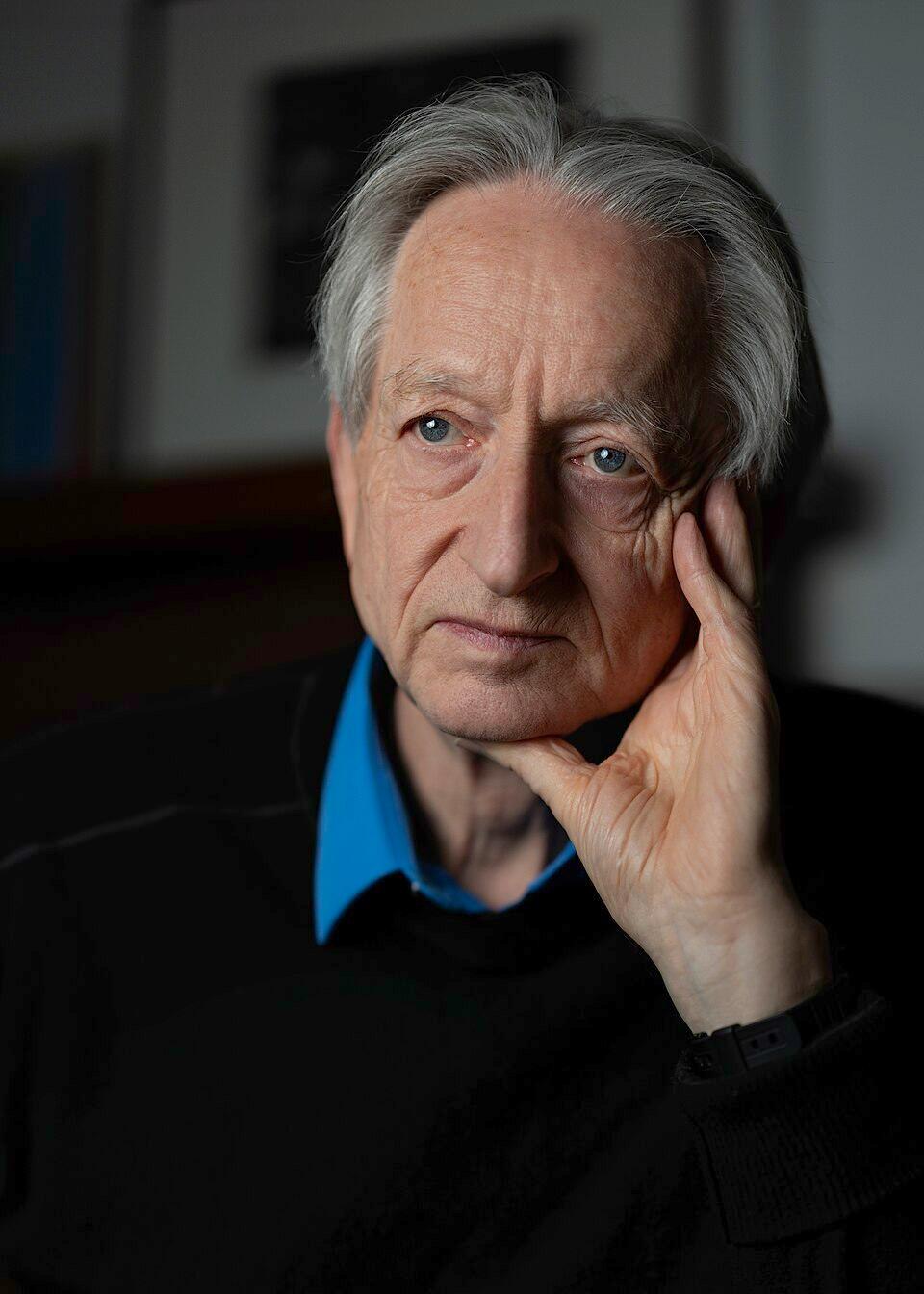
- Geoffrey HintonGeoffrey Hinton (born December 6, 1947) is a British-Canadian computer scientist whose research has focused on neural networks, representation learning, and computational accounts of learning in the brain.Mentioned twice above
- AI Safety InstitutesAI Safety Institutes are government-established organizations that test, evaluate, and research the safety and security risks of advanced artificial intelligence systemsListed in See also
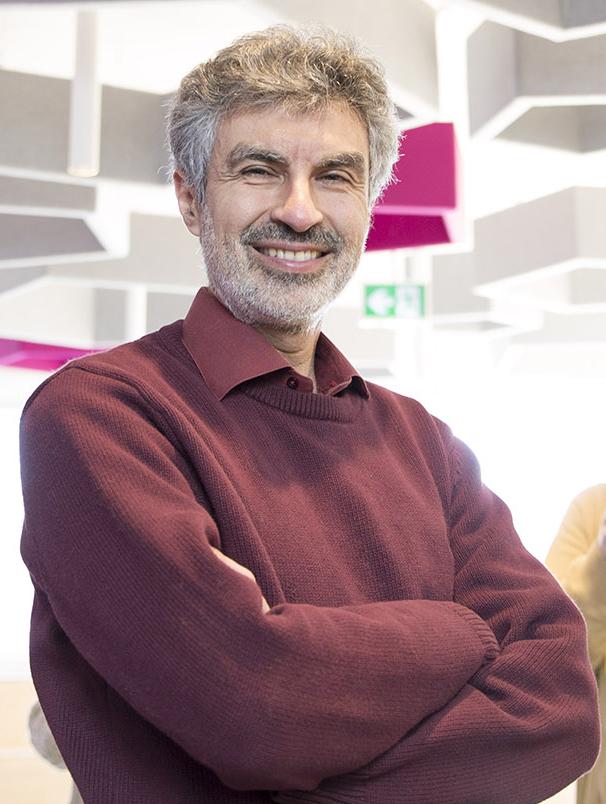
- Yoshua BengioYoshua Bengio (born March 5, 1964) is a Canadian computer scientist whose research has focused on deep learning, representation learning, neural language models, and generative models.Mentioned twice above


More to read
- Yann LeCun
- Inria
- UK AI Security Institute
- ACM A.M. Turing Award
- International AI Safety Report
- Google Brain
Topics:AI HistoryAI Policy & RegulationResearch Organizations
References
- ^1 ^2 ^3 ^4 ^5 ^6 ^7 ^8 ^9 ^10 ^11 ^12CIFAR. "Our Story". CIFAR, accessed November 2026. cifar.ca/our-story
- ^1 ^2 ^3 ^4 ^5 ^6 ^7 ^8 ^9 ^10CIFAR. "CIFAR 40". CIFAR, accessed November 2026. cifar.ca/40-years
- ^1 ^2 ^3 ^4CIFAR. "CIFAR Programs Through the Years". CIFAR, accessed November 2026. cifar.ca/...programs-through-the-years
- ^1 ^2 ^3 ^4 ^5 ^6 ^7 ^8 ^9 ^10 ^11 ^12 ^13Sandusky, Kathleen. "Long-time CIFAR Fellow Geoffrey Hinton awarded 2024 Nobel Prize in Physics". CIFAR News, October 8, 2024. cifar.ca/...on-awarded-2024-nobel-prize-in-physics
- ^1 ^2 ^3CIFAR. "Geoffrey Hinton" (fellow biography). CIFAR, accessed November 2026. cifar.ca/...geoffrey-hinton
- ^1 ^2 ^3 ^4 ^5 ^6 ^7CIFAR. "Learning in Machines & Brains". CIFAR, accessed November 2026. cifar.ca/...learning-in-machines-brains
- ^Brain Canada Foundation. "Creating computers that work like the human brain". Brain Canada, April 10, 2018. braincanada.ca/...s-that-work-like-the-human-brain
- ^1 ^2 ^3Krizhevsky, Alex. "Learning Multiple Layers of Features from Tiny Images". Technical report, April 8, 2009. cs.toronto.edu/...learning-features-2009-TR.pdf
- ^1 ^2 ^3 ^4 ^5 ^6Government of Canada. "Budget 2017: Chapter 1 - Skills, Innovation and Middle Class Jobs". Department of Finance Canada, 2017. budget.canada.ca/...chap-01-en
- ^1 ^2 ^3 ^4 ^5 ^6CIFAR. "Pan-Canadian AI Strategy". CIFAR, accessed November 2026. cifar.ca/ai
- ^1 ^2 ^3 ^4 ^5 ^6Innovation, Science and Economic Development Canada. "Pan-Canadian Artificial Intelligence Strategy". Government of Canada, modified July 30, 2026. ised-isde.canada.ca/...icial-intelligence-strategy
- ^1 ^2Government of Canada. "Part 2 - Creating Jobs and Growth". Budget 2021, Department of Finance Canada, April 2021. budget.canada.ca/...p2-en
- ^1 ^2Innovation, Science and Economic Development Canada. "Government of Canada launches second phase of the Pan-Canadian Artificial Intelligence Strategy". Government of Canada news release, June 22, 2022. canada.ca/...dian-artificial-intelligence-strategy
- ^The Canadian Press. "Ontario government cuts $24 million in funding to two artificial intelligence research institutes". Global News, May 21, 2019. globalnews.ca/...s-artificial-intelligence-funding
- ^1 ^2 ^3CIFAR. "Canada CIFAR AI Chairs". CIFAR, accessed November 2026. cifar.ca/...canada-cifar-ai-chairs
- ^1 ^2 ^3 ^4Brooks, Justine. "Advancing AI research in Canada: Meet the newest Canada CIFAR AI Chairs". CIFAR News, October 2, 2025. cifar.ca/...meet-the-newest-canada-cifar-ai-chairs
- ^1 ^2 ^3 ^4CIFAR. "29 researchers named to first cohort of Canada CIFAR Artificial Intelligence Chairs". CIFAR News, December 3, 2018. cifar.ca/...a-cifar-artificial-intelligence-chairs
- ^CIFAR. "AICan: The impact of the Pan-Canadian AI Strategy". CIFAR, accessed November 2026. cifar.ca/...impact
- ^1 ^2CIFAR. "Next Generation AI Programs". CIFAR, accessed November 2026. cifar.ca/...next-generation-ai-programs
- ^1 ^2 ^3 ^4 ^5 ^6Brooks, Justine. "Government of Canada announces Canadian AI Safety Institute". CIFAR News, November 12, 2024. cifar.ca/...announces-canadian-ai-safety-institute
- ^1 ^2CIFAR. "CIFAR Solution Networks". CIFAR, accessed November 2026. cifar.ca/...cifar-solution-networks
- ^1 ^2Scott, Josh. "CIFAR leader expects CAISI to help inform AI policy in Canada and abroad". BetaKit, November 18, 2024. betakit.com/...form-ai-policy-in-canada-and-abroad
- ^1 ^2CIFAR. "Canadian AI Safety Institute Research Program at CIFAR". CIFAR, accessed November 2026. cifar.ca/...caisi
- ^1 ^2Brooks, Justine. "CIFAR announces first AI safety Catalyst Grants under new national program". CIFAR News, June 4, 2025. cifar.ca/...lyst-grants-under-new-national-program
- ^1 ^2Davidson, Krista. "A Year of Impact for AI Safety in Canada". CIFAR News, January 21, 2026. cifar.ca/...a-year-of-impact-for-ai-safety-in-canada
- ^Brooks, Justine. "CIFAR commits $1M to global AI safety initiative". CIFAR News, February 19, 2026. cifar.ca/...mits-1m-to-global-ai-safety-initiative
- ^1 ^2Davidson, Krista. "CIFAR awards over $1M to support sociotechnical challenges in AI safety". CIFAR News, March 28, 2026. cifar.ca/...sociotechnical-challenges-in-ai-safety
- ^CIFAR. "Leadership". CIFAR, accessed November 2026. cifar.ca/leadership
- ^1 ^2Prime Minister of Canada. "Prime Minister Carney launches AI for All: Canada's new national artificial intelligence strategy". News release, June 4, 2026. pm.gc.ca/...ai-all-canadas-new-national-artificial
Improve this article
Add missing citations, update stale details, or write a clearer explanation. Anyone can edit: changes go live when you publish, and every edit is checked by an editor.
2 revisions · v2 · 3,324 words · full history
Fact-checks are independent of edits: a reviewer re-verifies the article against its sources and stamps the date. How we verify
Research and drafting on this wiki are AI-assisted, under named human editorial standards. How AI is used here
Reviewer note: Independent fact-check before publication on November 18, 2026: 96 claims checked against 31 cited and independent sources; 2 material and 7 minor corrections applied before publication.
Cite this page: AI Wiki. "CIFAR (Canadian Institute for Advanced Research)." aiwiki.ai, updated 18 Nov 2026, fact-checked 18 Nov 2026. CC BY 4.0. https://aiwiki.ai/wiki/cifar