

Estun Codroid 02
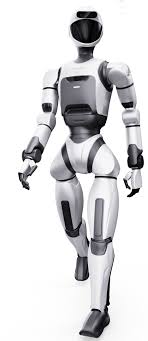 | |
| Developer | Estun Automation (Estun Codroid) |
| Type | Humanoid robot |
| Generation | 2nd |
| Predecessor | Codroid 01 |
| Unveiled | June 11, 2025 |
| Country of origin | China |
| Height | 170 cm (5 ft 7 in) |
| Weight | 70 kg (154 lb) excluding battery |
| Degrees of Freedom | 31 (body, excluding dexterous hands); up to 44 (with hands) |
| Arm payload | 5 kg per arm |
| Battery | 15 Ah |
| Navigation | Laser SLAM (up to 1.5 m/s) |
| Actuators | Self-developed SA and PA series |
| AI Architecture | Dual fast-slow system (VLM + flow matching MPC) |
| IP Rating | IP54 |
| Website | codroid.ai |
The Estun Codroid 02 is a second-generation industrial humanoid robot developed by Nanjing Estun Codroid Technology, a subsidiary of Estun Automation Co., Ltd. (SZSE: 002747; HKEX: 2715). Officially unveiled on June 11, 2025, at the Intelligent Robotics Development Conference in China, the Codroid 02 was designed from the ground up for flexible manufacturing environments.[1] The robot features 31 degrees of freedom (excluding dexterous hands), self-developed integrated joint modules, and a hierarchical AI control architecture that combines vision-language models with real-time model predictive control.
The Codroid 02 represents the convergence of Estun Automation's three decades of expertise in servo systems, industrial robots, and motion control with emerging embodied AI technologies. Estun is the largest domestic industrial robot manufacturer in China by shipment volume and ranks among the top industrial robot solution providers in the country. The company's transition into humanoid robotics through its Codroid subsidiary leverages a vertically integrated supply chain spanning actuators, controllers, and complete robot systems.
Background
Estun Automation
Estun Automation was founded in March 1993 in Nanjing, Jiangsu Province, by Wu Bo, a former lecturer at Nanjing Forestry University who later worked at the Jiangsu Machinery and Equipment Import and Export Corporation. The company initially focused on computer numerical control (CNC) systems for machine tools before expanding into servo drives and motion control.[3]
Estun is recognized as the earliest company in China to independently research and design AC servo systems. Over three decades, the company built a comprehensive automation portfolio that includes AC servo systems, inverters, programmable logic controllers (PLCs), human-machine interfaces (HMIs), vision products, and integrated motion control solutions. In 2012, Estun entered the industrial robot market, shifting its strategy toward developing complete robot solutions for manufacturing automation.[3]
The company held its initial public offering on the Shenzhen Stock Exchange in March 2015 under the ticker symbol 002747.[3] In March 2026, Estun completed a secondary listing on the Hong Kong Stock Exchange (ticker: 2715), raising approximately HK$1.49 billion and establishing an "A+H" dual capital platform.[13] As of 2024, Estun reported annual revenue of approximately 4 billion yuan (roughly $550 million USD).[12]
Estun's industrial robot division produces more than 54 robot specifications, primarily six-axis articulated robots with payload capacities ranging from 3 kg to 600 kg.[3] According to Frost and Sullivan, Estun has ranked first in shipments among domestic enterprises in the Chinese industrial robot solutions market for multiple consecutive years. In 2020, Forbes named Estun the only industrial robot company on its list of China's Most Innovative Enterprises. For the first three quarters of 2024, domestic robot manufacturers including Estun collectively outsold foreign competitors in China for the first time.[19]
International Acquisitions
Estun pursued an aggressive international acquisition strategy throughout the late 2010s, assembling a portfolio of overseas technology companies to strengthen its capabilities across the robotics value chain.
| Year | Acquisition | Country | Value | Focus Area |
|---|---|---|---|---|
| 2016 | Euclid Labs (20% stake) | Italy | Undisclosed | 3D vision and robot bin picking |
| 2017 | Trio Motion Technology[11] | United Kingdom | 15.5 million GBP | Motion controllers and HMIs |
| 2017 | M.A.i GmbH (50.01% stake) | Germany | 8.87 million EUR | Robotic system integration (automotive, electronics, aerospace) |
| 2017 | Barrett Technology (52% stake) | United States | $9 million | Robotic manipulators and dexterous hands |
| 2019 | Carl Cloos Schweißtechnik GmbH[4] | Germany | 196 million EUR | Welding technology and welding robots |
The acquisition of Carl Cloos in August 2019 was the most significant of these deals.[5] Carl Cloos Schweisstechnik, founded in 1919, is a German market leader in welding technology and robotics. The purchase price of 196 million euros (approximately $216 million USD) exceeded Estun's total sales in 2018 of roughly 184 million euros, reflecting the strategic importance Estun placed on acquiring Cloos's century-old welding expertise and established brand. The leadership and headquarters of Cloos remained in Haiger, Germany, following the acquisition.
The Trio Motion Technology acquisition gave Estun access to advanced multi-axis motion controllers, which combined with Estun's servo systems to create integrated motion control solutions for high-end customers.[10] Barrett Technology, based in the United States, brought expertise in robotic manipulators and dexterous hands, technology that would later prove relevant to Estun's humanoid robotics ambitions.
Estun has established six overseas subsidiaries across the United Kingdom, the United States, Italy, Turkey, India, and Eastern Europe, integrating R&D resources from these global subsidiaries and partners.[18]
Estun Codroid Technology
Nanjing Estun Codroid Technology (also referred to as Estun Kuzhuo or Estun CoDroid) was established in July 2022 as a subsidiary of Estun Automation focused specifically on humanoid robots, collaborative robots (cobots), and embodied AI technologies.[9] The subsidiary is headquartered at No. 1888, Jiyin Avenue, Jiangning Economic Development Zone, Nanjing, Jiangsu Province.[16]
The company's stated vision is "to be the vital promoter of embodied AI technologies and applications," and its mission centers on what it calls "Cocreate the Human-CoDroid Future" through three pillars: cognitive capabilities, collaborative systems, and coexisting technologies. Estun Codroid provides one-stop robotics solutions across ten application areas: welding, palletizing, machine tending, screwdriving, vision inspection, glue application, polishing, transport and packing, assembly, and sorting.[9]
Beyond humanoid robots, Estun Codroid's product portfolio includes S-Series collaborative robots (S-Eco and S-Pro models), S-Series ingress protection cobots, and M-Series mobile manipulators. The subsidiary also sells its proprietary actuator modules as standalone components to third-party robot developers.
Codroid 01
Estun Codroid's first humanoid robot, the Codroid 01, debuted in September 2022 at the China International Industry Expo (CIIE). The Codroid 01 was designed primarily for industrial scenarios requiring high protection ratings and heavy payload handling.[15]
The first-generation robot stood 170 cm tall and weighed less than 80 kg. It featured a maximum of 44 degrees of freedom across the full body, with 7 DOF per arm, 6 DOF per leg, and 6 to 7 DOF per dexterous hand. The single-arm payload capacity was 5 kg, and the robot could walk at speeds up to 5 km/h. The Codroid 01 used integrated joint modules and was equipped with IP68-level environmental protection, enabling operation in demanding factory conditions.[15]
The Codroid 01 established Estun's baseline humanoid platform and provided the foundation upon which the second-generation Codroid 02 was built.
Development and Unveiling
Estun Codroid completed the iteration from the first-generation Codroid 01 to the second-generation Codroid 02 in approximately nine months. The development cycle focused on achieving comprehensive upgrades in gait stability, finger dexterity, motion control precision, and AI-driven task planning.[1]
The Codroid 02 was officially launched on June 11, 2025, at the 2025 Intelligent Robotics Development Conference.[1] During the unveiling event, the robot demonstrated its capabilities through live on-stage performances, taking what the company described as "steady and powerful" steps to showcase its improved locomotion. The demonstrations highlighted the robot's industrial versatility, with the Codroid 02 performing component grasping, material handling, screw fastening, and quality inspection tasks in real time.[14]
Estun Codroid positioned the Codroid 02 as a solution to what it described as the persistent challenge facing the humanoid robot industry: the gap between laboratory demonstrations and practical industrial deployment. The company emphasized three dimensions of advancement embodied in the new robot: autonomous core components, intelligent architecture innovation, and full-scenario industrial deployment.[14]
By June 2025, Estun Codroid had reportedly secured initial orders of dozens of Codroid units and was undergoing small-batch validation in industrial scenarios.[14]
Technical Specifications
Physical Design
The Codroid 02 stands 170 cm (5 ft 7 in) tall and weighs 70 kg (154 lb) excluding the battery. The robot features a modular design that supports manual height adjustment between 138 cm and 168 cm, allowing operators to configure the robot's working height to fit diverse manufacturing scenarios. The body measures 810 x 545 x 228 mm, and the head weighs approximately 2 kg with a pitch adjustment range of -25 degrees to 10 degrees (manual).[7]
Each arm measures 602 mm in length (excluding the hand) and weighs 8.5 kg or less. The all-metal upper limb construction uses 7-DOF rotating joints, providing a broad workspace for manipulation tasks.[7]
Degrees of Freedom
The Codroid 02 has 31 degrees of freedom in its core body (excluding dexterous hands),[6] distributed as follows:
| Body Part | Degrees of Freedom |
|---|---|
| Head | 2 DOF |
| Waist | 1 to 3 DOF (configurable) |
| Single arm | 7 DOF (x2 = 14 DOF) |
| Single leg | 6 DOF (x2 = 12 DOF) |
| Subtotal (body) | 29 to 31 DOF |
| Dexterous hand (optional) | 6 DOF per hand |
| Maximum total | Up to 43 to 44 DOF |
The 7-DOF arm configuration provides the kinematic redundancy necessary for complex manipulation in constrained workspaces, while the 6-DOF legs enable stable bipedal locomotion across factory floors.
Detailed Specifications
| Parameter | Value |
|---|---|
| Height | 170 cm (5 ft 7 in) |
| Height range (adjustable) | 138 to 168 cm |
| Weight (excluding battery) | 70 kg (154 lb) |
| Body dimensions | 810 x 545 x 228 mm |
| Degrees of freedom (body) | 31 (excluding hands) |
| DOF per arm | 7 |
| DOF per leg | 6 |
| DOF per dexterous hand | 6 (optional) |
| Single arm length | 602 mm (excluding hand) |
| Single arm weight | 8.5 kg or less |
| Upper limb payload | 5 kg per arm |
| Maximum payload | 10 kg (dual arm) |
| Navigation type | Laser SLAM |
| Maximum navigation speed | 1.5 m/s |
| Navigation accuracy | plus or minus 5 mm |
| Battery capacity | 15 Ah |
| IP rating | IP54 |
| Communication protocols | EtherCAT, RS-485, MODBUS RTU, MODBUS TCP, CAN |
| Interfaces | HDMI, USB 3.0, Ethernet (RJ45), emergency stop |
| Head pitch range | -25 degrees to 10 degrees (manual) |
| Positioning accuracy (actuators) | plus or minus 0.01 degrees |
Self-Developed Actuators
One of the defining features of the Codroid 02 is its use of fully self-developed integrated joint modules. Estun Codroid manufactures two proprietary actuator product lines that power its humanoid robots:
Stiff Actuator (SA Series): The SA series is a modular joint module that integrates the drive, dual encoder, harmonic reducer, torque sensor, motor, and brake into a single compact unit. The series includes six models (SA14, SA17, SA20, SA25, SA32, and SA40) covering a wide range of torque requirements. These actuators are optimized for collaborative robots, bionic robots, medical robots, and humanoid robots.[8]
| Model | Rated Torque (Nm) | Max Instantaneous Torque (Nm) | Rated Speed (rpm) | Rated Power (W) | Gear Ratio |
|---|---|---|---|---|---|
| SA14 | 10 | 70 | 49.5 | 159 | 101 |
| SA17 | 31 | 143 | 34.6 | 183 | 101 |
| SA20 | 52 | 191 | 34.6 | 366 | 101 |
| SA25 | 87 | 395 | 28.9 | 732 | 121 |
| SA32 | 178 | 892 | 24.7 | 1,000 | 121 |
| SA40 | 382 | 1,530 | 18.6 | 1,257 | 161 |
All SA series actuators operate on 48V DC power, use the EtherCAT communication protocol with CiA402 support, and feature dual absolute magnetic encoders with 19-bit resolution. The servo communication frequency reaches up to 4 kHz. Each actuator supports multiple control modes including position, speed, and torque modes, with free switching between modes. The IP54-rated actuators include an electromagnetic friction brake and comprehensive protection systems covering over-current, over-voltage, low-voltage, over-temperature, and PWM-related faults.[8]
Proprioceptive Actuator (PA Series): The PA series prioritizes high response speed, high torque density, and low-noise operation. While detailed specifications for the PA series have not been publicly disclosed in the same detail as the SA series, Estun Codroid describes these actuators as designed for applications requiring rapid dynamic response and smooth motion, complementing the high-precision characteristics of the SA series.
Estun's ability to design and manufacture its own actuators in-house is a significant competitive advantage. Most humanoid robot startups must source critical components like harmonic drives, motors, and encoders from external suppliers, creating supply chain dependencies and limiting customization. Estun's decades of experience in servo systems and motion control allowed it to develop actuators specifically optimized for humanoid robot applications.
Sensors and Perception
The Codroid 02 is equipped with head and chest cameras for visual perception of its environment. The sensor suite supports the robot's AI system in understanding workspace layouts, identifying objects, and planning manipulation sequences. Optional expansion modules include tactile sensors on the dexterous hands, additional cameras, and voice modules with microphone and speaker for human-robot interaction.[2]
AI Architecture
The Codroid 02 employs a hierarchical embodied intelligence architecture based on what Estun Codroid calls a "fast-slow system" design. This dual-system approach draws conceptual parallels to the dual-process theory of human cognition and to similar architectures adopted by other humanoid robot developers such as Figure AI's Helix model.[2]
Slow System (High-Level Planning)
The Slow System relies on a Vision-Language Large Model (VLLM) to process text commands and scene images. It handles high-level task comprehension and semantic parsing, translating natural language instructions and visual scene understanding into structured task plans. This system operates at a lower frequency but provides the contextual understanding necessary for complex, multi-step industrial operations.[2]
Fast System (Real-Time Control)
The Fast System implements a flow matching strategy combined with model predictive control algorithms. It receives real-time environmental data along with joint position, force, and tactile status information, and outputs precise motion commands for low-latency motor control. This system operates at high frequency, ensuring the robot can react quickly to dynamic changes in its environment and maintain stable locomotion and manipulation.[2]
Integration
The hierarchical design ensures both complex task understanding and real-time responsiveness. The Slow System provides strategic decision-making, while the Fast System translates those decisions into smooth, precise physical actions. Estun Codroid describes this as a "Humanoid Brain Controller" and "Humanoid Cerebellum Controller" architecture, with the brain handling higher-order cognition and the cerebellum managing motor execution.
The robot also features online learning capabilities, allowing it to continuously expand its skill library. As operators demonstrate new tasks or the robot encounters novel manufacturing scenarios, the system can adapt and incorporate new manipulation behaviors without requiring a complete model retraining cycle.
Applications
The Codroid 02 targets several industrial and commercial application domains, leveraging Estun's established customer relationships in manufacturing automation.
Manufacturing Automation
The primary use case for the Codroid 02 is flexible manufacturing, where production lines must handle multiple product variants or frequent changeovers. The robot's combination of bipedal mobility, dexterous manipulation, and AI-driven task planning allows it to move between workstations and adapt to different tasks without the fixed infrastructure required by conventional industrial robots. Target manufacturing sectors include automotive, 3C electronics (computers, communications, and consumer electronics), and building materials and furniture.
Material Handling and Logistics
With its mobile base supporting laser SLAM navigation at speeds up to 1.5 m/s and navigation accuracy of plus or minus 5 mm, the Codroid 02 can autonomously transport materials between locations within a facility. The 5 kg per-arm payload capacity (10 kg combined) suits medium-weight material handling tasks such as parts transport, bin picking, and inter-station logistics.[7]
Quality Inspection
The robot's camera system and AI perception capabilities enable it to perform visual quality inspection tasks, identifying defects or deviations in manufactured components. The combination of mobility and inspection capability allows a single Codroid 02 to monitor multiple stations along a production line.
Precision Assembly
Demonstrations at the June 2025 launch event highlighted the Codroid 02's ability to perform precision tasks such as screw fastening. The 7-DOF arms provide the dexterity needed for assembly operations that require careful alignment and controlled force application.[1]
Multi-Robot Collaboration
Estun Codroid has designed the Codroid 02 to support multi-robot collaborative operations, where several humanoid robots work together on a shared production line. This collaborative networking approach aims to solve automated coordination problems in manufacturing and logistics by allowing multiple robots to communicate and synchronize their activities.
Education and Research
The robot supports secondary development capabilities, making it suitable as a research platform for universities and research institutions working on robotics, computer vision, reinforcement learning, and human-robot interaction.
Product Family
The Codroid 02 sits within a broader product family developed by Estun Codroid for different application requirements.
| Product | Description | Key Characteristics |
|---|---|---|
| Codroid 02 | Full-size industrial humanoid | 170 cm, 31 DOF body, laser SLAM navigation, dual fast-slow AI |
| C05-U | Handy adaptive robot | Compact form factor for adaptable manipulation |
| C05-L | Full-scenario flexible robot | 16 DOF, 32 kg, designed for diverse operational scenarios |
| S-Series (S-Eco, S-Pro) | Collaborative robots | Traditional cobot form factor for direct human-robot collaboration |
| M-Series | Mobile manipulators | Wheeled mobile base with mounted collaborative arm |
This tiered product lineup allows Estun Codroid to address applications ranging from fixed-position collaborative assembly (S-Series) through mobile manipulation (M-Series) to fully humanoid bipedal operation (Codroid 02).
Competitive Landscape
The Codroid 02 enters a crowded and rapidly expanding Chinese humanoid robot market. China has become the world's most active region for humanoid robot development, with dozens of companies pursuing industrial and commercial humanoid platforms.[20]
| Company | Robot | Notable Features | Status |
|---|---|---|---|
| Estun Codroid | Codroid 02 | Industrial focus, self-developed actuators, 31 DOF | Small-batch validation (2025) |
| UBTECH Robotics | Walker S2 | Commercial orders worth hundreds of millions of yuan | Commercial deployment |
| Unitree Robotics | H1 / H2 | Low cost, open ecosystem, consumer-accessible pricing | Commercial (H1); announced (H2) |
| Fourier Intelligence | GR-2 | Rehabilitation and general-purpose applications | Commercial |
| Agibot | A2 | High shipment volumes, backed by CATL | Commercial |
| Figure AI | Figure 02 | BMW deployment, Helix VLA, $39B valuation | Limited commercial deployment |
| Tesla | Optimus | Mass production ambitions, target $20K-30K price | Prototyping |
Estun Codroid's primary competitive advantage lies in its parent company's industrial heritage. Unlike many humanoid robot startups that are building actuators, control systems, and manufacturing capabilities from scratch, Estun Codroid inherits Estun Automation's established supply chain for servo motors, motion controllers, and robot systems. The company's decades-long relationships with automotive, electronics, and manufacturing customers also provide a natural channel for deploying humanoid robots into existing industrial accounts.
However, Estun faces stiff competition from well-funded pure-play humanoid companies. Agibot and Unitree led Chinese humanoid robot shipments in 2025, while UBTECH secured large commercial orders in industrial automation. The broader Chinese humanoid robot ecosystem benefits from strong government policy support, with multiple cities and provinces establishing humanoid robot industrial zones and subsidies.
Technology Roadmap
Estun Codroid's publicly stated technology roadmap for 2025 and beyond includes several development milestones:
- Launching an industrial-grade humanoid robot with a 20 kg single-arm load capacity, significantly increasing the payload envelope for heavy industrial tasks[14]
- Developing more dexterous hands with greater manipulation capability
- Iterating the control system to improve task success rates and autonomous decision-making
- Initiating the first production line for commercial mass production of humanoid robots
These goals reflect Estun Codroid's ambition to scale from small-batch validation to volume production, leveraging the manufacturing infrastructure of its parent company.
See Also
- Estun Automation
- Humanoid robot
- Humanoid robots
- Embodied AI
- Industrial robot
- Cobot
- Servo motor
- Model predictive control
- Vision-language model
References
- ^1 ^2 ^3 ^4"Intelligent Agent Evolution! Estun Codroid Unveils Next-Gen Humanoid Robot Codroid 02." Estun Automation official news. en.estun.com
- ^1 ^2 ^3 ^4"Humanoid Robot." Estun Codroid product page. codroid.ai/...robot-humanoid
- ^1 ^2 ^3 ^4"Estun Automation." Wikipedia. en.wikipedia.org/...Estun_Automation
- ^"Orrick Advises Chinese Estun Group and CRCI on Acquisition of German Welding and Robotics Company Cloos." Orrick, August 2019. orrick.com/...-acquisition-of-german-company-cloos
- ^"Estun Automation acquires Carl Cloos Welding Technology." The Robot Report, August 2019. therobotreport.com/...arl-cloos-welding-technology
- ^"ESTUN CODROID 02 | Humanoid Robot | 31 DOF." RBTX product listing. rbtx.com/...-codroid-02-humanoid-robot-31-dof-32kg
- ^1 ^2 ^3"Codroid 02 - Robot Details, Use Case and Specifications." Aparobot. aparobot.com/...codroid-02
- ^1 ^2"Stiff Actuator - SA series." Estun Codroid. codroid.ai/...part-sa
- ^1 ^2"About Us." Estun Codroid. codroid.ai/...about
- ^"Estun Automation's Dynacon Industrial Ltd. acquires Trio Motion Technology." Association for Advancing Automation (A3). automate.org/...td-acquires-trio-motion-technology
- ^"Chinese firm buys UK's Trio Motion for 15.5m pounds." Drives and Controls Magazine, 2017. drivesncontrols.com/...s-uks-trio-motion-for-15-5m
- ^"Estun Automation (002747.SZ)." CompaniesMarketCap revenue data. companiesmarketcap.com/...revenue
- ^"China $3 Billion Industrial Robot Manufacturer Estun Automation Hong Kong Secondary Listing IPO." Caproasia, February 2026. caproasia.com/...nded-in-1993-by-bob-wu-bo-current
- ^1 ^2 ^3 ^4"The intelligent body has evolved comprehensively! Estun Codroid releases the new generation of humanoid robot Codroid 02." SaulPLC. saulplc.com/...f%20humanoid%20robot%20Codroid%2002
- ^1 ^2"Estun Automation (002747.SZ): Estun's debut humanoid robot CODROID 01 is mainly used in industrial scenarios." Moomoo News. moomoo.com/...estun-s-debut-humanoid-robot-codroid
- ^"Nanjing Estun Codroid Technology." EtherCAT Technology Group member listing. ethercat.org/...s_58AB12D5FBB144FC97CB7E3D8E83229B
- "The Rise of China's Robotics and Automation Sector: Part 1." TechZephyr. techzephyr.substack.com/...robotics-and-automation
- ^"Estun Automation: the Chinese robotics player set to conquer Europe." Robot Magazine. robot-magazine.fr/...-player-set-to-conquer-europe
- ^"Chinese Robots Hit the Factory Floor." The Wire China, December 2024. thewirechina.com/...t-the-factory-floor-industrial
- ^"A 2025 Full Overview of 40 Humanoid Robot Enterprises in China." K-Robotics. k-robotic.com/...2025-chinese-robotic-market
Improve this article
Add missing citations, update stale details, or suggest a clearer explanation. Every suggestion is reviewed for sourcing before it goes live.
5 revisions · v6 · 3,689 words · full history
Fact-checks are independent of edits: a reviewer re-verifies the article against its sources and stamps the date. How we verify
Research and drafting on this wiki are AI-assisted, under named human editorial standards. How AI is used here
Cite this page: AI Wiki. "Estun Codroid 02." aiwiki.ai, updated 16 Jul 2026. CC BY 4.0. https://aiwiki.ai/wiki/estun_codroid_02